Mastering the perfect roasted vegetable recipe is about more than just heat; it is about the intersection of color, chemistry, and culinary technique. This vibrant sheet pan feast transforms humble garden staples into a gourmet side dish that captures the essence of professional food photography.
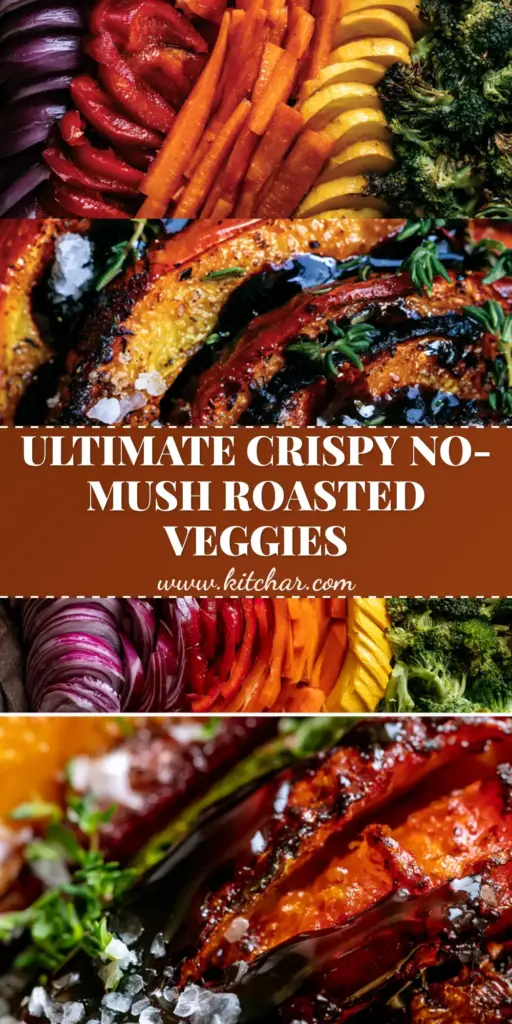
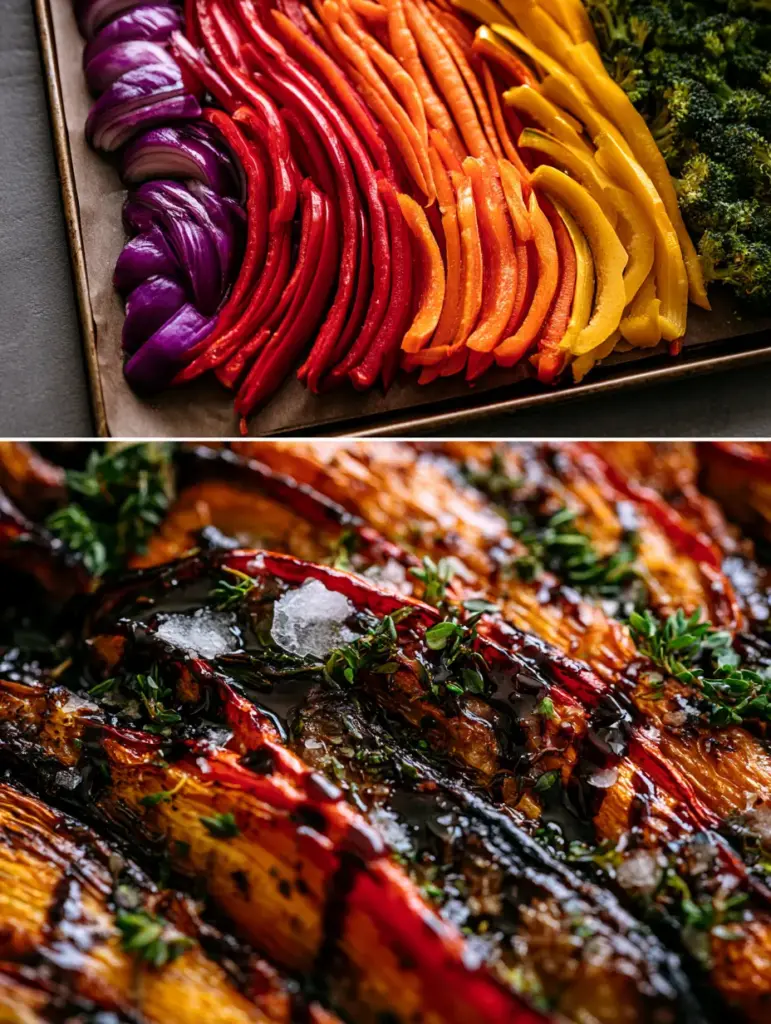
Imagine the sight of deep crimson peppers blistered to perfection and neon-orange carrots caramelized into candy-like morsels. Every bite offers a symphonic crunch from dark-tipped broccoli florets and the savory melt of charred purple onion wedges.
Whether you are looking for a show-stopping addition to your holiday table or a nutrient-dense weeknight staple, this method ensures a glossy, restaurant-quality finish every single time. Let’s dive into the science of the perfect roast.
Why This Vibrant Rainbow Medley Stands Above the Rest
- Textural Contrast: We achieve a specific “rugged” texture where edges are crispy and blistered while the interiors remain tender and succulent.
- Maillard Reaction Mastery: By using high-heat roasting, we unlock the natural sugars in the carrots and squash for a deep golden-brown caramelization.
- The Gloss Factor: A thick, syrupy balsamic reduction is applied at the precise moment to catch the light and add a sophisticated tang.
- Visual Precision: This dish is designed to look as good as it tastes, featuring a meticulously organized rainbow palette that pops against dark slate.
The Scientific Palette: Ingredients for Maximum Flavor and Color
Red Bell Peppers (150g / 1 Large): Sliced into thick strips, these provide the essential “blistered” skin visual and a sweet, smoky undertone. The high water content requires high heat to prevent steaming.
Purple Red Onion (110g / 1 Medium): Cut into thick wedges, the outer layers char beautifully while the inner layers soften into a jammy consistency. This adds a pungent depth that mellows with roasting.
Carrots (180g / 3 Large): We slice these into rounds to maximize surface area contact with the hot pan. This ensures every piece achieves that signature caramelized, deep-orange hue.
Yellow Squash (400g / 2 Medium): These are sliced into thick half-moons to ensure they turn golden without becoming mushy. They act as the perfect “sponge” for the balsamic glaze.
Broccoli Florets (300g / 1 Large Head): The “toasted tips” are the goal here. The tiny buds on the florets crisp up faster than any other vegetable, providing a necessary crunch.
Extra Virgin Olive Oil (45ml / 3 tbsp): This is our foundational invisible ingredient. It acts as a heat conductor to ensure even browning and prevents the vegetables from drying out.
Balsamic Reduction (60ml / 1/4 cup): A thick, glossy, and syrupy glaze that provides the “artistic drizzle” and a sharp acidic counterpoint to the sweet roasted sugars.
Flaky Sea Salt (To Taste): Unlike table salt, these large crystals provide a visual “pop” and a burst of clean salinity that highlights the rugged textures.
Fresh Thyme (4-5 Sprigs): The vibrant green leaves add a final layer of aromatic freshness and visual contrast against the dark, roasted tones.
Essential Tools for a Professional Roast
To achieve the results seen in our high-end smartphone photography, you need a heavy-duty, rimmed baking sheet. A dark, parchment-lined pan is preferred as it absorbs more heat, encouraging faster blistering of the pepper skins.
A sharp chef’s knife is non-negotiable for creating those clean, geometric arcs of onion and precise carrot rounds. Finally, use a small saucepan if you are making your glaze from scratch, ensuring it reaches that “syrupy” stage that clings to the spoon.
The Step-by-Step Blueprint for Caramelized Perfection
Preparation and the Rainbow Layout
Preheat your oven to 425°F (220°C). This high temperature is the secret to getting blistered edges without overcooking the centers of the softer vegetables.
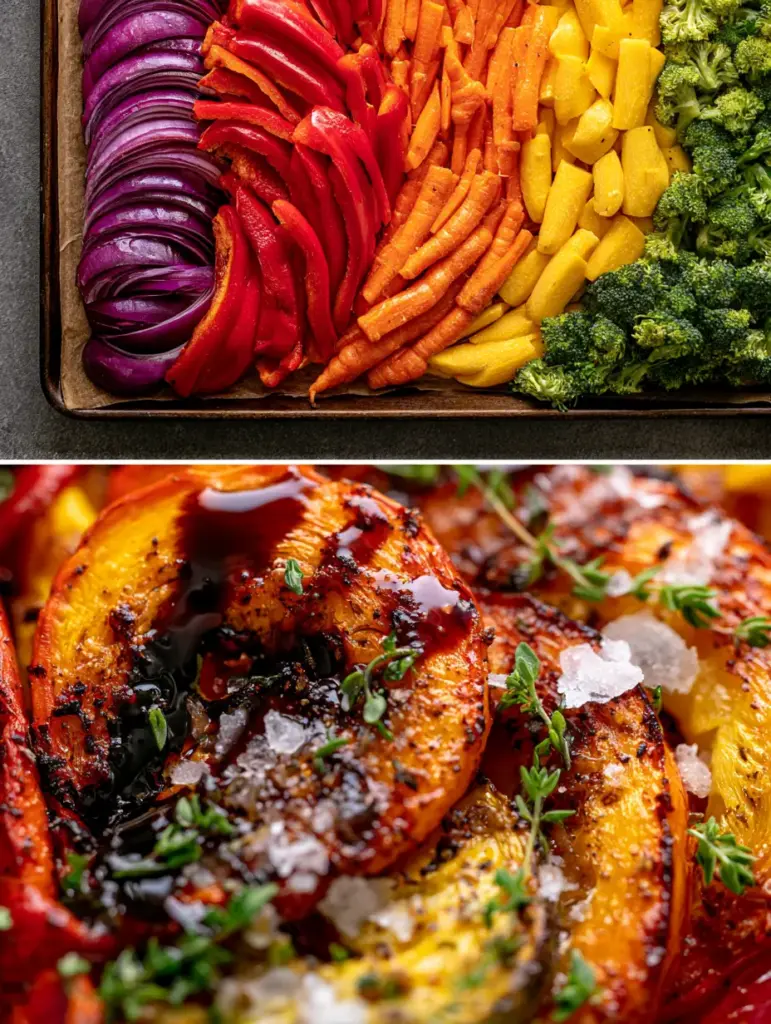
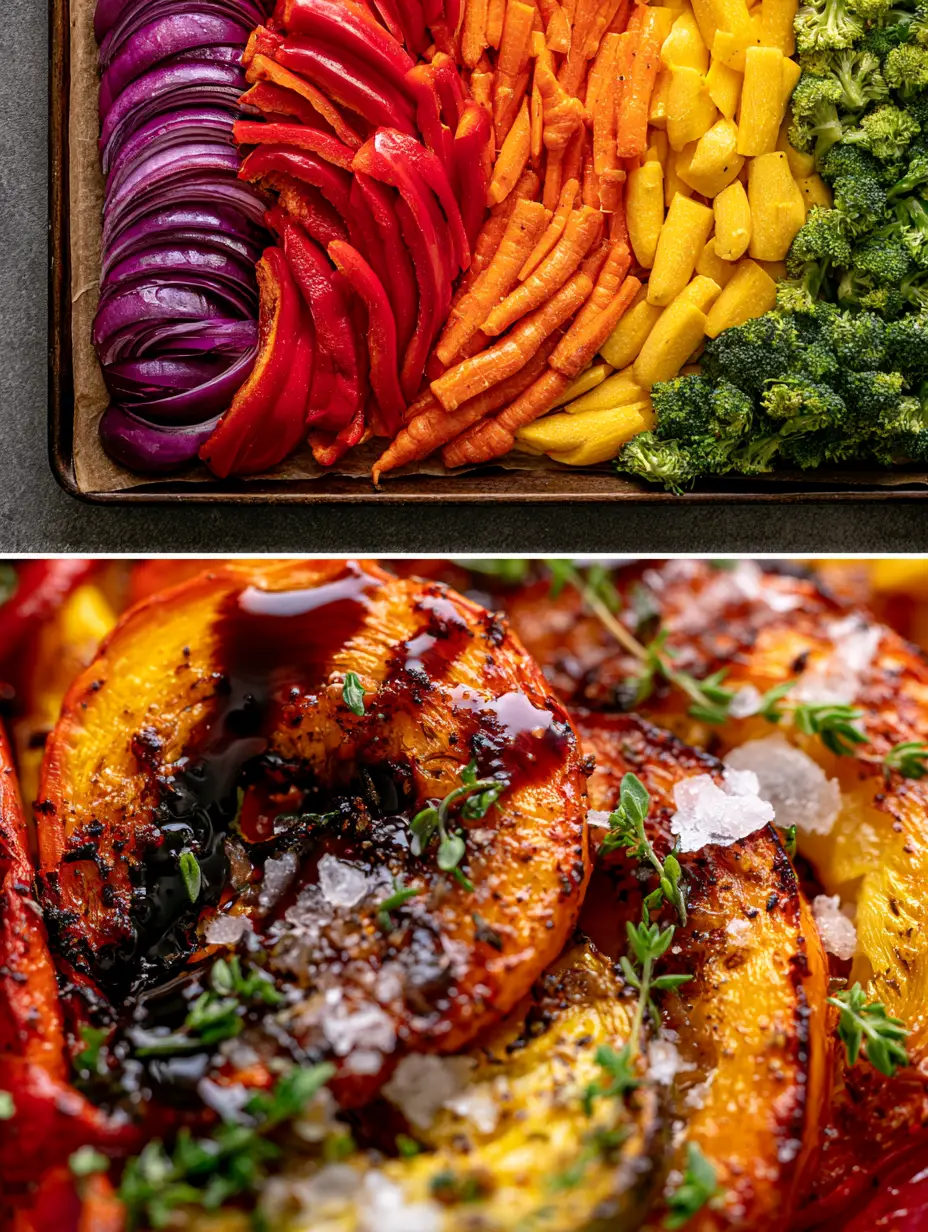
Line your baking sheet with dark parchment paper. Arrange your prepped vegetables in arcs—purple onions, red peppers, orange carrots, yellow squash, and green broccoli—to mimic the raw flat-lay aesthetic before roasting.
Seasoning for Structural Integrity
Drizzle the olive oil over the vegetables, ensuring every crevice of the broccoli florets is coated. Sprinkle with kosher salt and cracked black pepper, tossing gently to maintain the organized sections.
The oil is crucial; it prevents the “steaming” effect that happens when vegetables touch a dry pan. Ensure there is enough space between the pieces to allow for proper air circulation.
The Roasting Process and Sensory Cues
Slide the tray into the center of the oven and roast for 20-25 minutes. At the 15-minute mark, look for the “visual cues”: the broccoli tips should be turning dark brown, and the pepper skins should begin to pucker and blister.
Rotate the pan halfway through. You are looking for a “deep golden-brown” caramelization on the undersides of the carrots and squash before removing them from the heat.
The Artistic Drizzle and Finishing Touches
Once removed from the oven, immediately drizzle the thick, glossy balsamic reduction in a zig-zag pattern across the hot vegetables. The heat will help the glaze set into a syrupy sheen.
Strip the fresh thyme leaves from their stems and scatter them generously over the tray. Finish with a shower of flaky sea salt, allowing the large crystals to catch the light for that final macro close-up look.
Expert Tips for Roasting Success
- Dry Your Veggies: Any residual water from washing will cause the vegetables to steam rather than sear. Pat them dry with a lint-free towel before oiling.
- Don’t Crowd the Pan: If the vegetables are touching too much, they will release moisture and turn mushy. Use two pans if necessary to keep the edges crispy.
- Temperature Control: If your oven runs cool, don’t be afraid to go up to 450°F (230°C). The goal is rapid caramelization.
- The Glaze Timing: Always add the balsamic reduction *after* roasting or in the last 2 minutes. The high sugar content in the glaze can burn easily in a hot oven.
Strategic Pairings for Your Roasted Feast
This roasted vegetable recipe is incredibly versatile and serves as one of the best vegetable side dishes for any protein-heavy meal. The acidic balsamic notes pair beautifully with rich, fatty main courses.
For a plant-based dinner, serve these over a bed of quinoa or alongside a hearty vegetable lasagna. If you have leftover peppers, they are perfect for incorporating into stuffed bell peppers recipes the following day.
Looking for a complete sheet-pan experience? Toss these with some pre-cooked gnocchi like in this greek sheet pan gnocchi for a 15-minute meal. For those following specific diets, these veggies fit perfectly within a keto-friendly lifestyle if you moderate the carrot portions.
Storage, Reheating, and Make-Ahead Advice
Roasted vegetables are best served fresh, but they can be stored in an airtight container for up to 4 days. To maintain the crispy edges, avoid the microwave for reheating.
Instead, place them back on a baking sheet at 375°F (190°C) for 5-8 minutes until warmed through and the glaze becomes glossy again. We do not recommend freezing this dish, as the cell walls of the squash and peppers will break down, leading to a watery texture upon thawing.
Frequently Asked Questions
Regular balsamic vinegar is too thin and will run off the vegetables. For the glossy, syrupy look in the photos, you must use a reduction (glaze) which has been simmered until thick.
For this recipe, we recommend peeling the carrots for a smoother caramelization, but leaving the skin on the yellow squash helps it maintain its structural integrity during high-heat roasting.
The key is the oil coating. Ensure the florets are thoroughly tossed in oil; the fat protects the delicate tips, allowing them to turn ‘toasted’ and crunchy rather than just charred.
Extra virgin olive oil or avocado oil are ideal. They have high smoke points that can handle 425°F without burning, while providing excellent flavor and heat conduction.
Sogginess is usually caused by overcrowding the pan or roasting at too low a temperature. Ensure there is space between each vegetable piece for air circulation and keep your oven at 425°F (220°C).
The Ultimate Rainbow Roasted Vegetable Recipe
Roasted Vegetable Recipe: The Ultimate Rainbow Sheet Pan Medley with Balsamic Glaze
Ingredients
Equipment
Method
- Preheat your oven to 425°F (220°C) and line a large baking sheet with dark parchment paper.
- Place vegetables on the sheet in organized arcs to ensure even roasting and beautiful presentation.
- Drizzle with olive oil and toss to coat every surface, especially the broccoli tips.
- Roast for 20-25 minutes, rotating the pan halfway through until the pepper skins are blistered and broccoli tips are toasted.
- Remove from oven and immediately drizzle with the balsamic reduction while hot.
- Sprinkle with flaky sea salt and fresh thyme leaves before serving.
Notes
Use a high-smoke point oil like olive oil for the best caramelization at 425°F.
Transform Your Dinner with the Power of the Roast
This roasted vegetable recipe is more than a side dish; it is a masterclass in texture and visual appeal. By focusing on the “rugged” roast and the glossy finish, you bring a high-end restaurant experience directly to your kitchen table.
We would love to see your rainbow creations! If you made this dish, please leave a comment below and share your results. Don’t forget to save this to your favorite boards on Pinterest so you always have the blueprint for the perfect roast at your fingertips.