When it comes to mastering the art of the perfect party starter, few goat cheese appetizer recipes can compete with the visual and textural elegance of a whipped goat cheese crostini. Imagine a rustic white ceramic bowl overflowing with cloud-like, airy cheese, its surface glistening under the weight of a slow-moving, golden honey drizzle. This isn’t just a snack; it’s a sensory experience designed to bridge the gap between savory sophistication and natural sweetness.
The beauty of this dish lies in its contrasts: the crunch of fire-toasted sourdough against the velvet-smooth whipped chevre, and the peppery bite of fresh micro-arugula balanced by the jammy richness of ripe purple figs. Whether you are hosting a high-end gala or a casual brunch on a light-grey marble terrace, this recipe delivers a professional-grade aesthetic with minimal effort. In the following guide, we will break down the culinary science of aeration and the precise techniques needed to replicate the high-definition beauty of our visual blueprint.
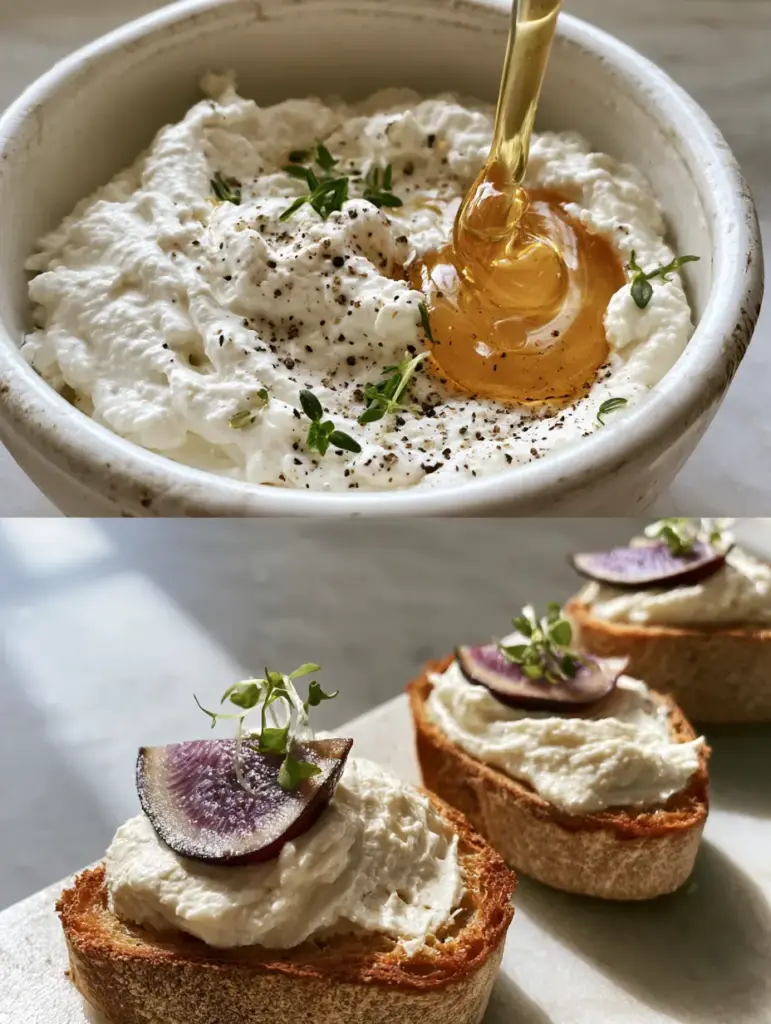
Why This Whipped Fig Medley Stands Out Among Goat Cheese Appetizer Recipes
- Cloud-Like Texture: By incorporating a touch of heavy cream and high-speed aeration, we transform dense goat cheese into a light, mousse-like spread.
- Glistening Visual Appeal: The thick, translucent golden honey drizzle provides a high-contrast sheen that captures light beautifully for photography.
- Perfectly Balanced Flavors: The combination of ultra-fine cracked black pepper and fresh thyme leaves ensures every bite has a savory, herbaceous finish.
- Textural Harmony: Every element, from the sturdy sourdough base to the delicate sprigs of micro-arugula, is chosen for its structural contribution to the mouthfeel.
The Anatomy of Ingredients for the Ultimate Aerated Spread
To achieve the result seen in professional food photography, we must look beyond the main components to the foundational “invisible” ingredients that make the magic happen.
Fresh Goat Cheese (Chevre): 8 oz (225g). This is the heart of the recipe; ensure it is at room temperature to prevent lumping during the whipping process.
Heavy Whipping Cream: 1/4 cup (60ml). This is the secret to the “airy, cloud-like” texture described in our visual prompt, providing the fat content necessary for stable aeration.
Extra Virgin Olive Oil: 2 tbsp (30ml). This is used to brush the sourdough crostini, ensuring they reach a deep golden-brown hue without drying out in the oven.
Sourdough Bread: 1 small baguette or loaf. The natural fermentation of sourdough provides a sturdy, tangy base that supports the weight of the whipped cheese and fig slices.
Fresh Purple Figs: 4-6 large. These must be ripe but firm enough to hold a clean, thin slice, providing a vibrant pop of color against the white cheese.
Wildflower Honey: 1/4 cup (60ml). Choose a high-quality, translucent honey that pours with a thick, syrupy consistency to mimic the mid-pour capture of our visual guide.
Fresh Thyme Leaves: 1 tbsp (4g). Stripped from the stems, these tiny green leaves provide a floral aroma and a visual contrast to the golden honey.
Micro-Arugula: 1/2 cup (15g). These delicate greens add a peppery punch that cuts through the richness of the cheese and the sweetness of the honey.
Cracked Black Pepper & Flaky Sea Salt: To taste. Use a coarse grind for the pepper to achieve those visible, dark specks on the surface of the cheese.
Essential Tools for Culinary Forensic Accuracy
To recreate the macro close-up textures shown in our visual blueprint, you will need a few specific kitchen tools. A high-speed food processor or a stand mixer with a whisk attachment is mandatory for achieving the necessary volume in the cheese spread. For the sourdough, a heavy-rimmed baking sheet ensures even heat distribution for that “golden” finish.
A precision mandoline or a very sharp chef’s knife is required for slicing the figs into uniform, thin rounds. Finally, use a small honey dipper or a narrow-spouted jar to control the honey pour, allowing you to create the “glistening” effect without overwhelming the other ingredients.
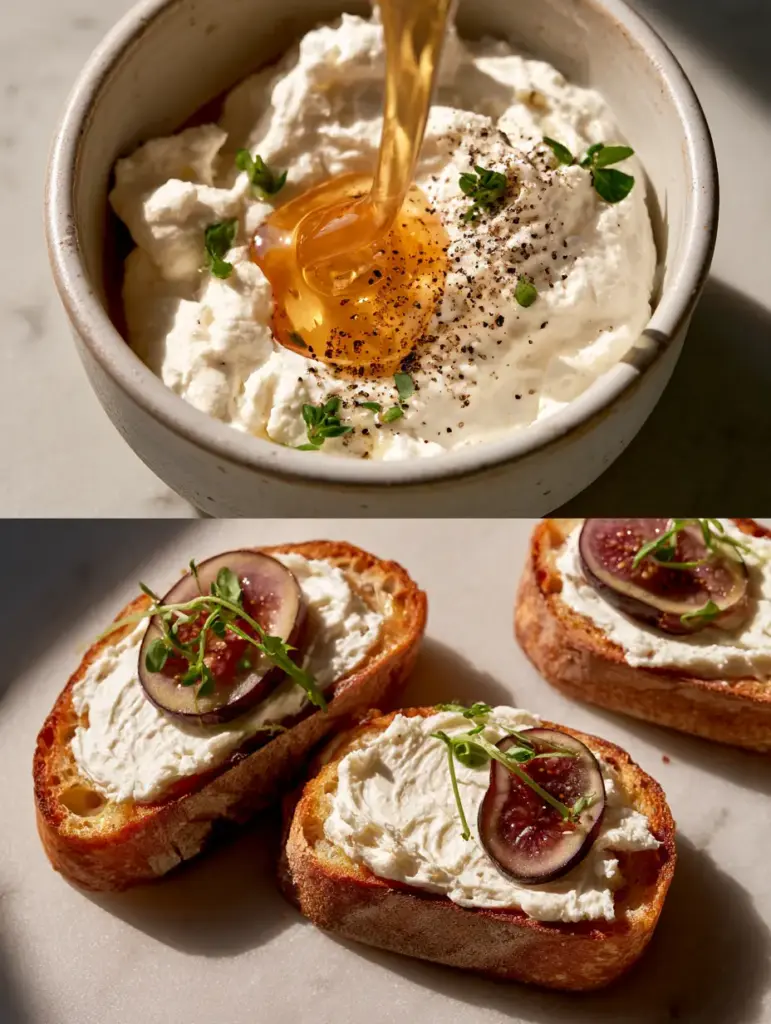
Mastering the Aeration: How to Whip Goat Cheese to Perfection
Preparing the Sourdough Foundation
Preheat your oven to 400°F (200°C). Slice the sourdough baguette into 1/2-inch (1.25cm) thick rounds. Use a pastry brush to apply a light coating of olive oil to both sides of each slice.
Place the slices on a baking sheet and toast for 8-10 minutes, flipping halfway through. Look for a visual cue of deep golden edges and a crisp, audible “thud” when tapped with a finger. Set these aside to cool slightly before topping.
The Science of the Cloud-Like Spread
Place the 8 oz (225g) of goat cheese and 1/4 cup (60ml) of heavy cream into your food processor. Pulse three times to break up the cheese, then switch to high speed for 2-3 minutes.
Stop and scrape down the sides of the bowl. Continue whipping until the mixture is completely smooth and has visibly increased in volume by about 25%. It should hold a soft peak, similar to a dense whipped cream.
The Final Assemble and Garnishing Cues
Transfer the whipped cheese to a rustic white ceramic bowl. Use the back of a spoon to create deep “swooshes” and valleys in the surface. This creates the perfect architecture for the honey to pool into.
Slowly pour the golden honey over the cheese, focusing on the crevices. Immediately sprinkle the fresh thyme leaves and a generous amount of cracked black pepper over the top. The pepper should look like fine obsidian dust against the white clouds of cheese.
Expert Tips for Success with Goat Cheese Appetizer Recipes
- Temperature Control: Never attempt to whip cold goat cheese. If the cheese is too cold, the fats will not emulsify with the cream, resulting in a grainy rather than “airy” texture.
- Honey Viscosity: If your honey is too thick or crystallized, microwave it for 10 seconds. You want a fluid, translucent pour that glitters under natural daylight.
- Fig Selection: Avoid overripe figs that feel mushy. A perfect fig for slicing should give slightly to pressure but retain its structural integrity when sliced thin.
- Herb Freshness: Only strip the thyme leaves just before serving. This prevents them from wilting and ensures they remain “vibrant green” as per the visual prompt.
Shelf Life and Make-Ahead Strategies
You can prepare the whipped goat cheese up to 48 hours in advance. Store it in an airtight container in the refrigerator, but allow it to sit at room temperature for 15 minutes before serving to regain its spreadability. Do not drizzle the honey or add the herbs until the moment of serving to prevent the honey from drawing moisture out of the cheese.
The sourdough crostini can be toasted a day ahead and kept in a sealed bag at room temperature. However, for the best “handheld smartphone photo” quality, assembly should be done just before guests arrive to prevent the bread from becoming soggy. Like many high-protein recipes, this dish is best enjoyed fresh.
Creative Pairings for an Elegant Spread
If you are looking to expand your appetizer table, consider serving these crostini alongside other savory bites. They pair beautifully with savory cheese-stuffed mini peppers or even a chilled tray of cold stuffed mini peppers for a variety of textures.
For those hosting a more substantial gathering, the creamy nature of the goat cheese complements the earthy tones found in balsamic mushroom goat cheese tarts. If you’re looking for a refreshing drink to cut through the richness, a vibrant selection of glow-boosting juice recipes can act as a sophisticated non-alcoholic pairing.
Common Questions About Whipped Goat Cheese
Yes, you can use a stand mixer with a whisk attachment or a hand mixer. It may take slightly longer (3-5 minutes) to achieve the same ‘cloud-like’ volume as a food processor.
Wait to assemble the crostini until just before serving. The whipped cheese contains moisture that will eventually soften the bread if left to sit for more than an hour.
You can use the hardened cream from a chilled can of coconut milk for a dairy-free aeration agent, though it will slightly alter the flavor profile of the chevre.
If purple figs are out of season, you can substitute with thin slices of ripe pear, fresh berries, or even a high-quality fig jam, though the visual ‘blueprint’ will differ.
Graininess usually occurs if the goat cheese was too cold when you started. Ensure the cheese is at room temperature to allow the fats to emulsify properly with the cream.
The Ultimate Whipped Goat Cheese and Fig Crostini Recipe
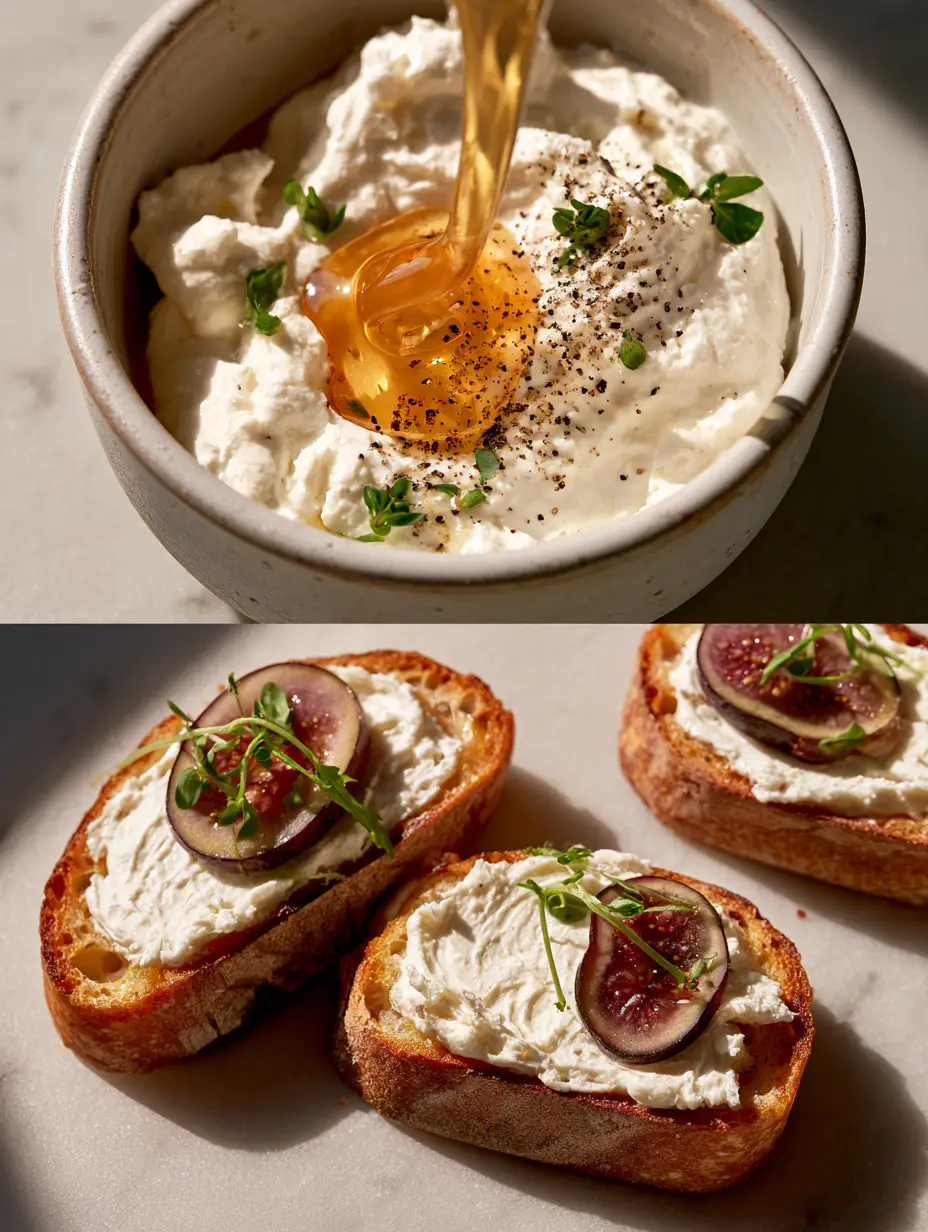
Goat cheese appetizer recipes: Whipped Honey and Fig Sourdough Crostini
Ingredients
Equipment
Method
- Preheat oven to 400°F (200°C). Arrange sourdough slices on a baking sheet and brush both sides with olive oil.
- Bake for 8-10 minutes, flipping halfway, until the crostini are a deep golden-brown and crisp.
- Place room-temperature goat cheese and heavy cream in a food processor. Pulse to combine.
- Whip on high for 2-3 minutes until the texture is airy, cloud-like, and smooth.
- Spread a generous swoosh of cheese onto each crostini. Place in a bowl and drizzle with thick golden honey.
- Top with a thin fig slice, micro-arugula, fresh thyme, and a heavy sprinkle of cracked black pepper.
Notes
Use a high-quality honey for the best visual 'pour' effect.

Bring This Vision to Your Kitchen
Mastering goat cheese appetizer recipes is about more than just following steps; it’s about understanding the visual and sensory cues that lead to a “perfect” dish. The contrast of the golden honey against the airy white cheese and the deep purple of the figs creates a plate that is as much a work of art as it is a delicious snack. We encourage you to try this recipe for your next gathering and see the difference that high-quality ingredients and proper aeration can make.
Did you try this recipe? We would love to see your results! Leave a comment below or share your photos on Pinterest to inspire other home cooks. For more elevated kitchen inspiration, sign up for our newsletter today!