There is a specific moment in early spring when the produce aisle transforms into a vibrant gallery of greens and oranges. This pasta primavera captures that exact transition, offering a masterclass in texture, color, and emulsified sauce technique. Unlike the heavy, weighed-down versions of the past, this iteration focuses on a glossy, velvety pale-yellow lemon garlic cream sauce that clings to every strand of al dente linguine without pooling at the bottom of the bowl.
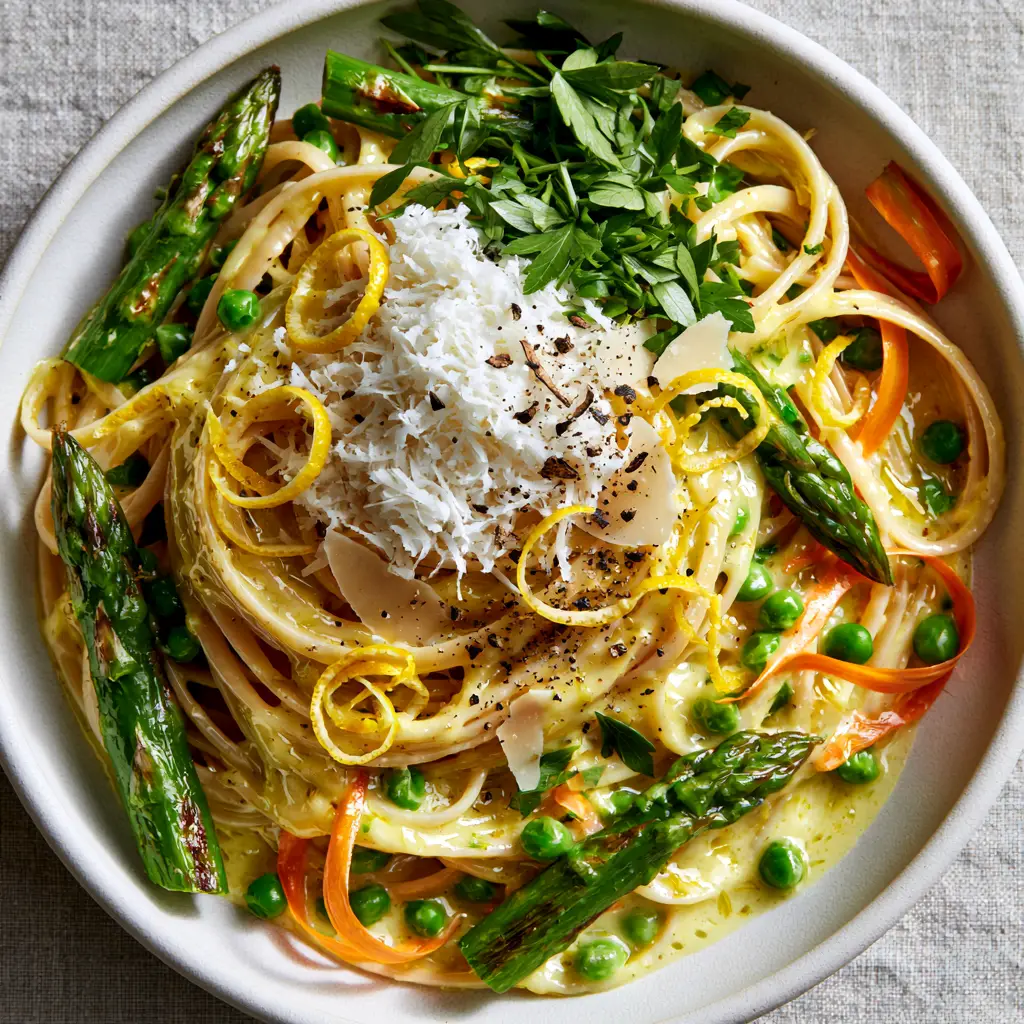
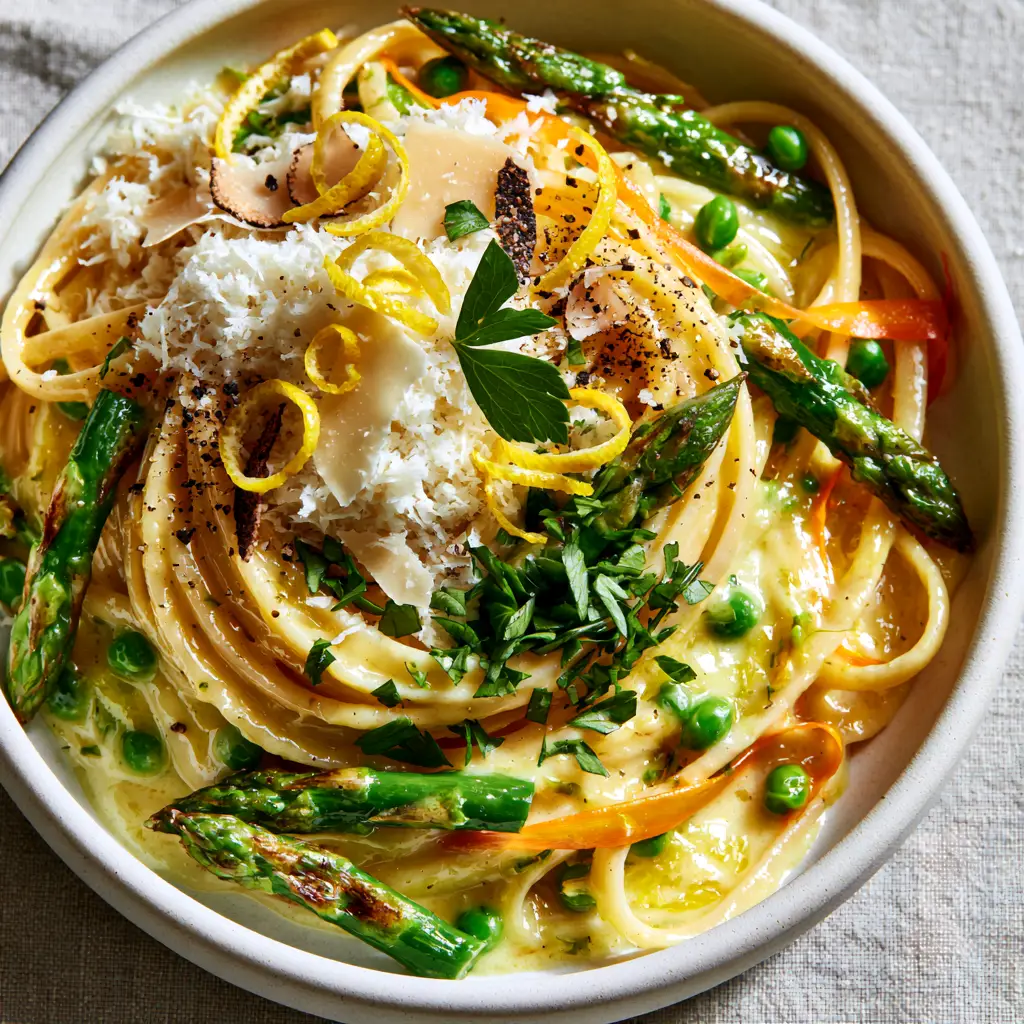
The visual appeal of this dish is undeniable, featuring a swirl of pasta interspersed with vibrant green asparagus tips boasting light sear marks and thin, translucent ribbons of blanched carrots. It is a dish designed for the eyes as much as the palate, finished with a fluffy mound of finely grated parmesan and the aromatic punch of fresh lemon zest curls. Whether you are looking for a show-stopping weekend meal or an elevated weeknight staple, this recipe delivers a professional-grade experience in your own kitchen.
By following this forensic approach to vegetable preparation and sauce emulsification, you will create a dish that mirrors the high-end aesthetic of a fine-dining bistro. We are moving beyond basic boiling and entering the realm of culinary precision, where every ingredient is treated with respect to its unique cooking time and structural integrity.
The Sensory Architecture of the Perfect Pasta Primavera
- Al Dente Precision: The linguine provides a firm, toothsome foundation that stands up to the rich, velvety lemon garlic cream sauce.
- Textural Contrast: Experience the snap of crisp-tender asparagus tips against the soft, delicate mouthfeel of blanched carrot ribbons.
- Glossy Emulsification: A sauce that behaves like silk, coating the pasta with a pale-yellow sheen that glows under natural light.
- Aromatic Brightness: Curls of fresh lemon zest and cracked black pepper flakes provide high-note counterpoints to the savory parmesan and garlic.
- Vibrant Color Palette: A striking combination of deep forest greens, bright orange ribbons, and the pure white of fluffy, finely grated cheese.
The Essential Components for a Vibrant Spring Pasta
Linguine Pasta: 1 lb (454g). We choose linguine for its flat surface area, which is scientifically ideal for “grabbing” onto cream-based sauces compared to round spaghetti.
Fresh Asparagus Tips: 1 bunch (approx. 450g). We use only the top 2-3 inches to ensure every bite is tender, providing those iconic sear marks during the quick sauté phase.
Carrot Ribbons: 2 large (200g) carrots. Peeling the carrots into long, thin ribbons allows them to blanch instantly, creating a beautiful visual “nesting” effect within the pasta.
Sweet Green Peas: 1 cup (150g). These provide small bursts of sweetness and a pop of bright green color that complements the deeper tones of the asparagus.
Heavy Cream: 1 cup (240ml). This forms the fat-soluble base of our glossy sauce, providing the “velvety” texture described in our visual blueprint.
Unsalted Butter: 4 tbsp (56g). Butter acts as the primary emulsifier, helping the cream and lemon juice bond into a cohesive, glossy coating.
Fresh Garlic: 4 cloves, minced. Sautéed gently, garlic provides the aromatic depth that prevents the lemon and cream from becoming one-dimensional.
Lemon Zest and Juice: 1 large lemon. The juice provides the acid needed to cut through the fat, while the zest curls provide essential oils and visual flair.
Finely Grated Parmesan: 1 cup (90g). Use a microplane to achieve a “fluffy” texture that melts into the sauce and creates a generous mound on top.
Flat-Leaf Parsley: 1/4 cup (10g), finely chopped. This adds a “bright green” herbaceous finish that lifts the entire flavor profile of the pasta primavera.
Foundational Seasonings: Sea salt for the pasta water and large-flake cracked black pepper for the final garnish. Never underestimate the power of high-quality salt in bringing out the sweetness of spring vegetables.
Professional Tools for Culinary Execution
To achieve the “macro shot” quality of this dish, you will need a few specific tools. A Y-shaped vegetable peeler is essential for creating those consistent, translucent carrot ribbons that look like orange silk among the noodles.
A wide, heavy-bottomed skillet or stainless steel sauté pan is required to give the asparagus enough room to develop sear marks without steaming. Finally, a microplane grater is the only way to achieve the “fluffy white parmesan” mound that sits atop the final swirl of pasta.
The Step-by-Step Blueprint to Perfection
1. Mastering the Vegetable Prep and Blanch
Begin by bringing a large pot of heavily salted water to a boil. Use a vegetable peeler to shave the carrots into long ribbons, stopping when you reach the woody core. Once the water is boiling, drop the carrot ribbons and peas into the water for exactly 45 seconds.
Immediately remove them with a slotted spoon and plunge them into an ice bath. This “shocks” the vegetables, locking in the bright orange and green colors while maintaining a crisp-tender texture that is essential for a high-quality pasta primavera.
2. Achieving the Perfect Al Dente Linguine
In the same pot of boiling salted water, add your 1 lb (454g) of linguine. Cook the pasta for 1-2 minutes less than the package directions indicate.
We are looking for a true al dente—a firm center that will finish cooking inside the sauce. Before draining, reserve 1 cup (240ml) of the starchy pasta water; this is the “liquid gold” that ensures your sauce becomes glossy rather than greasy.
3. Searing the Asparagus Tips
While the pasta cooks, heat 1 tbsp (15ml) of olive oil in your large skillet over medium-high heat. Add the asparagus tips in a single layer, seasoned with a pinch of salt.
Let them sit undisturbed for 2 minutes to develop those characteristic light sear marks. Toss them once and cook for another minute until they are crisp-tender, then remove them from the pan and set aside to preserve their vibrant color.
4. Building the Glossy Lemon Garlic Cream Sauce
Lower the skillet heat to medium and add the 4 tbsp (56g) of butter. Once foaming, add the minced garlic and sauté for 60 seconds until fragrant but not browned.
Pour in the 1 cup (240ml) of heavy cream and bring to a gentle simmer. Whisk in the lemon juice and half of the grated parmesan, stirring constantly until the sauce thickens slightly into a velvety, pale-yellow consistency.
5. The Final Assembly and Emulsification
Add the cooked linguine, blanched carrot ribbons, peas, and seared asparagus tips into the skillet with the sauce. Toss vigorously using tongs, adding small splashes of the reserved pasta water as needed.
The starch in the water will marry the fat in the cream and butter, creating that signature glossy coating that clings to every strand. Continue tossing until the pasta is perfectly coated and the sauce has reached a velvety sheen.
Expert Tips for Culinary Success
- The Water Secret: Always over-salt your pasta water. It should taste like the sea, as this is your only chance to season the linguine from the inside out.
- Zest Before Juicing: Always remove your lemon zest curls before cutting the lemon for juice. It is nearly impossible to get clean curls from a spent lemon half.
- Carry-Over Cooking: Remember that the vegetables will continue to soften slightly when tossed with the hot pasta. Keep your initial blanching and searing brief.
- Cheese Quality: Use a block of Parmigiano-Reggiano and grate it fresh. Pre-shredded cheeses are coated in potato starch, which will prevent your sauce from becoming perfectly glossy.
What to Serve With This Vibrant Pasta
This pasta primavera is a complete meal on its own, but it pairs beautifully with high-quality proteins. For a truly elegant dinner, consider serving it alongside perfectly baked salmon with asparagus to lean into the seasonal green theme.
If you prefer a lighter start to your meal, a fresh Mediterranean-inspired salad is an excellent choice. You can find inspiration in our list of quick healthy dinner ideas that focus on fresh, whole ingredients.
For those who love a bit of citrus variety, pairing this with a zesty lemon chicken pasta side or protein addition can double down on the bright, acidic notes that make this dish so refreshing. If you are hosting a larger gathering, consider adding some vibrant vegan summer recipes to your spread to ensure all guests are catered to.
Storage, Reheating, and Freezing
Storage: Store any leftover pasta primavera in an airtight container in the refrigerator for up to 3 days. Note that the cream sauce will thicken significantly as it cools.
Reheating: To restore the glossy texture, reheat the pasta in a skillet over low heat. Add a splash of milk or water (1-2 tbsp) and toss gently to re-emulsify the sauce. Avoid the microwave if possible, as it can cause the fats in the cream to separate.
Freezing: We do not recommend freezing this dish. The delicate textures of the carrot ribbons and the emulsion of the cream sauce do not survive the freezing and thawing process well.
Frequently Asked Questions
Yes, you can use frozen peas, but for the best texture and visual appeal, fresh asparagus and carrots are highly recommended to achieve the crisp-tender snap and vibrant ribbons.
Use a wide skillet and high heat. Place the asparagus in a single layer and do not move them for at least 2 minutes. This direct contact with the hot pan creates the caramelization known as sear marks.
To prevent curdling, ensure your heat is on medium or low when adding the lemon juice to the cream. The fat in the heavy cream helps stabilize the sauce, but boiling it too vigorously with acid can cause separation.
While linguine is ideal for its surface area, you can substitute with fettuccine or tagliatelle. Avoid thin pastas like angel hair, as they can become overly clumpy in a thick cream sauce.
The secret is emulsification using starchy pasta water. By tossing the pasta and sauce vigorously with a splash of the reserved water, the starch binds the fats (butter and cream) together, creating a silky, glossy coating.
The Ultimate Pasta Primavera Recipe Card
Pasta Primavera with Glossy Lemon Garlic Cream Sauce and Crisp Spring Vegetables
Ingredients
Equipment
Method
- Blanch carrot ribbons and peas in boiling salted water for 45 seconds, then shock in an ice bath.
- Boil linguine in the same water until 2 minutes shy of al dente. Reserve 1 cup of pasta water.
- Sauté asparagus tips in a hot skillet for 3 minutes until light sear marks appear. Remove and set aside.
- Melt butter, sauté garlic, add cream and lemon juice. Simmer until velvety.
- Toss pasta and vegetables into the sauce with reserved pasta water until glossy and coated.
Notes
Reserve more pasta water than you think you need to adjust the sauce consistency.
Closing & Call to Action
Mastering the pasta primavera is a rite of passage for any home cook who values fresh, seasonal ingredients. By focusing on the “Visual Recipe Blueprint”—the glossy sauce, the seared asparagus, and the delicate carrot ribbons—you have created a dish that transcends the ordinary. We invite you to share your culinary creations with us! If you enjoyed this recipe, please leave a comment below and share your photos to Pinterest. Your feedback helps our community of enthusiastic home cooks grow and thrive.