There is a specific kind of magic that happens in a bright kitchen during the morning hours, where the natural light hits a weathered sheet pan just right. This baked salmon with asparagus isn’t just a recipe; it is a sensory experience designed to bring restaurant-quality elegance to your weeknight routine without the fuss of multiple pots and pans.
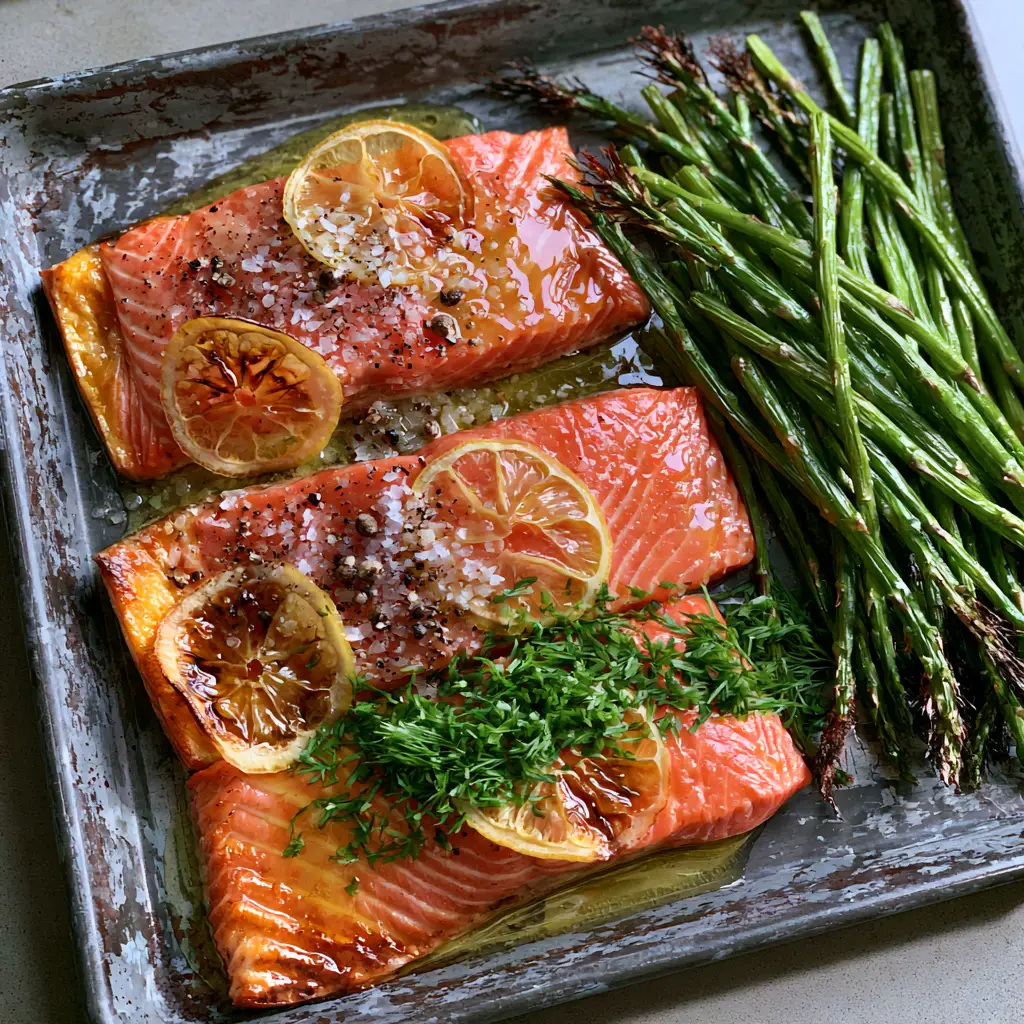
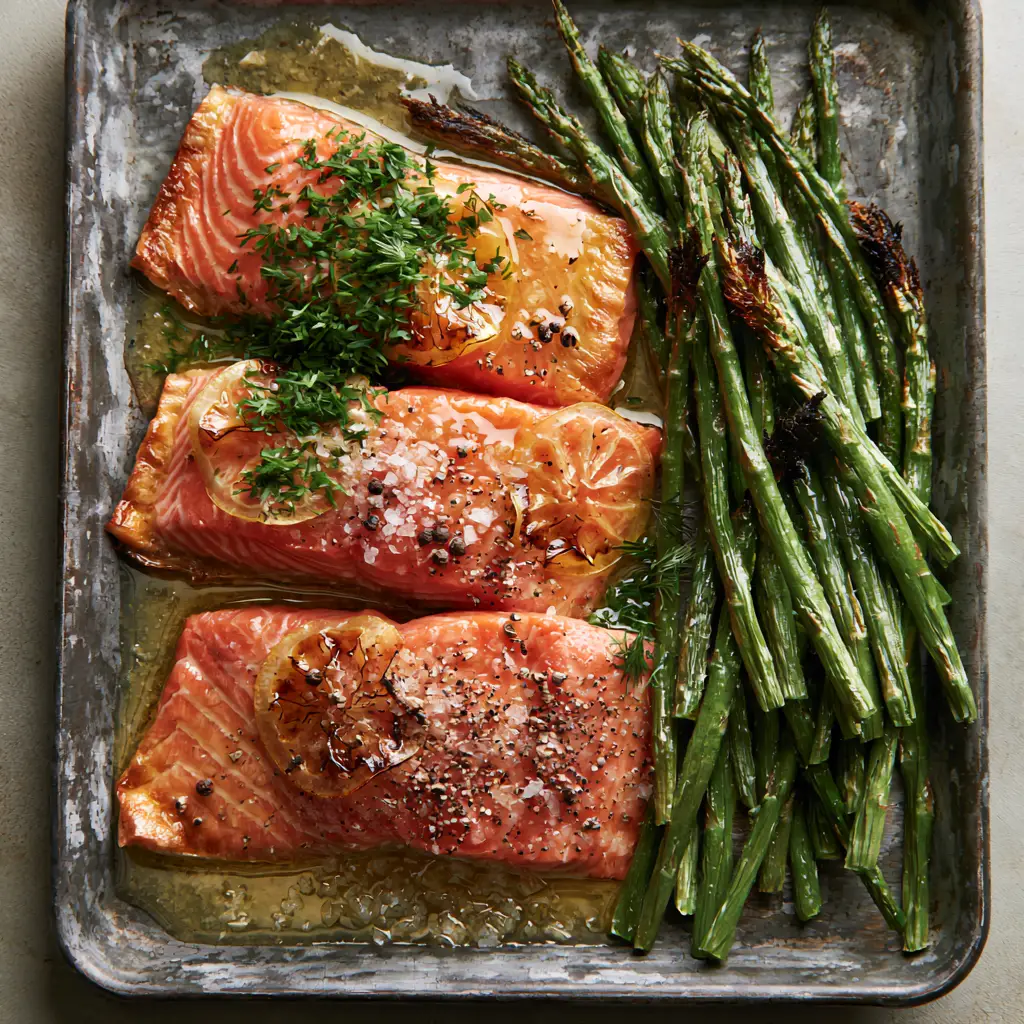
Imagine pulling a dark grey metal tray from the oven, revealing three vibrant coral-pink Atlantic salmon fillets glistening under a translucent golden garlic butter sauce. The edges are perfectly caramelized, and the surrounding slender asparagus spears have achieved that elusive balance of tender-crisp texture and charred, smoky tips.
Whether you are looking for a quick post-workout fuel or a sophisticated dinner for two, this baked salmon with asparagus delivers on every promise of flavor, nutrition, and visual appeal. Let’s dive into how to master this one-pan wonder using professional techniques that ensure flaky fish and vibrant greens every single time.
Why This Baked Salmon with Asparagus is a Total Game Changer
- Perfectly Flaky Texture: By roasting center-cut fillets at a precise temperature, we achieve distinct, glistening layers that pull apart with the slightest pressure of a fork.
- Charred Asparagus Excellence: We utilize high-heat roasting to ensure the slender spears get those crispy, charred tips while maintaining a bright green, snappy interior.
- The Golden Garlic Butter Bridge: A homemade emulsion of melted butter and minced garlic acts as the flavor conductor, tying the richness of the fish to the earthiness of the vegetables.
- Caramelized Citrus Notes: Placing paper-thin lemon rounds directly onto the salmon allows the sugars to brown, providing a sweet-and-tangy counterpoint to the coarse sea salt.
- Visual Garnish Strategy: A final shower of finely minced fresh dill and cracked black pepper adds both a pop of color and a cooling herbal finish that lifts the entire dish.
The Essential Components for Restaurant-Quality Salmon
To recreate the exact visual and flavor profile of our master blueprint, you will need high-quality ingredients. Each element plays a structural or chemical role in the final result.
3 Center-Cut Atlantic Salmon Fillets (approx. 6oz/170g each): Center-cut fillets are uniform in thickness, which is the secret to even cooking. Their vibrant coral hue and high fat content provide the “flaky layer” aesthetic we are aiming for.
1 lb (450g) Slender Asparagus Spears: Choose thin spears over thick ones for this recipe. Slender stalks char quickly at the tips in the time it takes the salmon to roast, preventing them from becoming mushy.
3 tbsp (45g) Unsalted Butter: This forms the base of our golden sauce. It provides the “glossy, translucent” finish seen in our professional photography.
4 Cloves Fresh Garlic, Minced: Avoid the jarred stuff; fresh garlic creates that pungent, aromatic punch that mellows into sweetness when roasted.
1 Large Lemon: Half will be sliced into paper-thin rounds for caramelizing, and the other half will be squeezed for fresh juice to brighten the butter sauce.
1 tbsp (15ml) Extra Virgin Olive Oil: This “invisible” ingredient is crucial for the asparagus. It has a higher smoke point than butter, allowing for that deep char without burning.
Fresh Dill, Coarse Sea Salt, and Cracked Black Pepper: These are your finishing touches. The coarse salt crystals provide a crunch that fine table salt simply cannot match.
Tools Required for One-Pan Success
Achieving the look of a professional food blog requires the right heat conductors. You don’t need much, but quality matters here.
Weathered Dark Grey Metal Sheet Pan: Darker pans absorb more heat, which is essential for getting those caramelized edges on the salmon and the charred tips on the asparagus. If you only have light aluminum, you may need to increase the cook time by 2 minutes.
Parchment Paper or Silicone Mat: While not strictly necessary for flavor, it prevents the delicate salmon skin from sticking, ensuring your fillets stay whole and beautiful for serving.
Small Saucepan or Microwave-Safe Bowl: For melting the butter and infusing it with garlic before it hits the tray.
Achieving the Perfect Char: Your Step-by-Step Roadmap
Follow these steps precisely to ensure your baked salmon with asparagus looks exactly like the high-angle smartphone shot described in our visual guide.
Step 1: The Thermal Foundation
Preheat your oven to 400°F (200°C). Position your oven rack in the upper-middle position. This proximity to the top heating element is what creates the “glistening” highlights and “caramelized” edges on the fish.
Step 2: Preparing the Green Cluster
Wash your asparagus and snap off the woody bottom inch of the stems. Place the spears in a dense cluster on one side of the sheet pan. Drizzle with olive oil and a pinch of salt, tossing them directly on the pan to ensure every tip is coated—this is the key to the charred, crispy texture.
Step 3: The Garlic Butter Infusion
In a small bowl, combine the melted butter, minced garlic, and a squeeze of lemon juice. Stir until the garlic is evenly distributed. You should see a beautiful, translucent yellow liquid that smells intensely of citrus and aromatics.
Step 4: Seating the Salmon
Pat the salmon fillets dry with a paper towel; moisture is the enemy of caramelization. Place the three fillets in the center of the tray. Brush each fillet generously with the garlic butter sauce, letting it pool slightly in the natural “flakes” of the raw meat.
Step 5: The Lemon and Seasoning Layers
Top each fillet with 2-3 paper-thin lemon rounds. Sprinkle the entire tray—both fish and greens—with a generous amount of coarse sea salt and cracked black pepper. This creates the “glistening” crystal effect seen in the visual prompt.
Step 6: The Roast and Finish
Slide the pan into the oven for 12-15 minutes. You are looking for the salmon flesh to change from translucent to an opaque coral pink. Once out, immediately shower the tray with the finely minced dill. The residual heat will wake up the oils in the dill, releasing a fresh, garden-like aroma.
Expert Tips for the Flakiest Salmon Ever
- The “Doneness” Poke: Don’t use a knife to check the fish. Gently press the top of the fillet with your finger; if the layers begin to separate (flake) easily, it is done.
- Room Temp is Best: Take your salmon out of the fridge 15 minutes before cooking. This ensures the center isn’t cold while the outside overcooks.
- Watch the Tips: If your asparagus is very thin, check them at the 10-minute mark. You want “charred,” not “burnt to ash.”
- Skin-On Benefits: Even if you don’t eat the skin, cooking with it on protects the delicate flesh from the direct heat of the metal pan.
Sustainable Storage and Smart Reheating
Leftover baked salmon with asparagus is a goldmine for meal prep. Store in an airtight glass container in the refrigerator for up to 3 days.
To reheat without drying out the fish, avoid the microwave if possible. Place the salmon back on a sheet pan, cover loosely with foil, and warm in a 275°F (135°C) oven for 8-10 minutes. This preserves the “glossy” butter sauce and keeps the asparagus from getting rubbery.
What to Serve with Your Baked Salmon with Asparagus
While this is a complete meal on its own, you can expand the spread by pairing it with other vibrant dishes. If you are looking for more one-pan salmon recipes, this technique works with many flavor profiles.
For a hearty addition, consider serving this alongside a lemon-infused pasta or a light pasta primavera. If you want to keep things low-carb and fresh, a grilled shrimp salad makes a great appetizer for a seafood-themed dinner party.
If you enjoy the brightness of the lemon and dill, you’ll also love our Mediterranean-style salmon which uses similar aromatics but adds feta and olives for a salty kick.
Frequently Asked Questions
Yes, but ensure it is completely thawed and patted very dry with paper towels before seasoning to prevent the fish from steaming instead of roasting.
The salmon is done when it reaches an internal temperature of 145°F (63°C), or when the flesh changes from translucent to opaque and flakes easily with a fork.
You likely used thick spears or overcooked them. For this high-heat method, use slender asparagus and ensure they are coated in oil to encourage charring rather than steaming.
Yes, leaving the skin on helps keep the fillet moist and prevents it from falling apart on the sheet pan. You can easily slide it off before serving if preferred.
If you aren’t a fan of dill, fresh parsley or chives work beautifully to provide a similar herbal brightness to the finished dish.
The Ultimate Sheet Pan Salmon Recipe
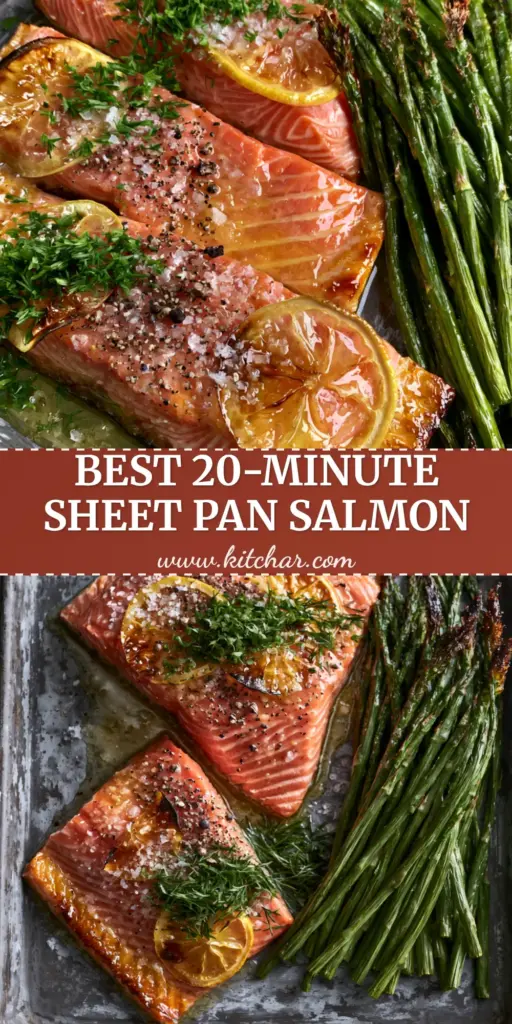
Baked Salmon with Asparagus: The Ultimate 20-Minute Sheet Pan Meal
Ingredients
Equipment
Method
- Preheat your oven to 400°F (200°C) and line a sheet pan with parchment paper.
- Place trimmed asparagus on one side of the pan. Drizzle with olive oil and a pinch of salt; toss to coat.
- Mix melted butter, minced garlic, and lemon juice in a small bowl until translucent and golden.
- Place salmon fillets in the center of the pan. Brush generously with garlic butter. Top with lemon slices, sea salt, and cracked pepper.
- Bake for 12-15 minutes until salmon is flaky and asparagus tips are charred and crispy.
- Remove from oven and immediately sprinkle with finely minced fresh dill while still hot.
Notes
Pat the salmon dry before seasoning to ensure the butter sauce sticks properly.
Final Thoughts on This Vibrant Dinner
This baked salmon with asparagus is proof that healthy eating doesn’t have to look or taste like a compromise. With its vibrant coral hues, glistening garlic butter, and perfectly charred greens, it is a dish that satisfies the eyes as much as the palate. It’s a staple in our rotation of healthy dinner ideas for a reason!
If you made this recipe and loved the “visual cue” tips, please leave a comment below and let us know! Don’t forget to snap a photo and tag us, and be sure to save this to your favorite boards on Pinterest for your next grocery run.