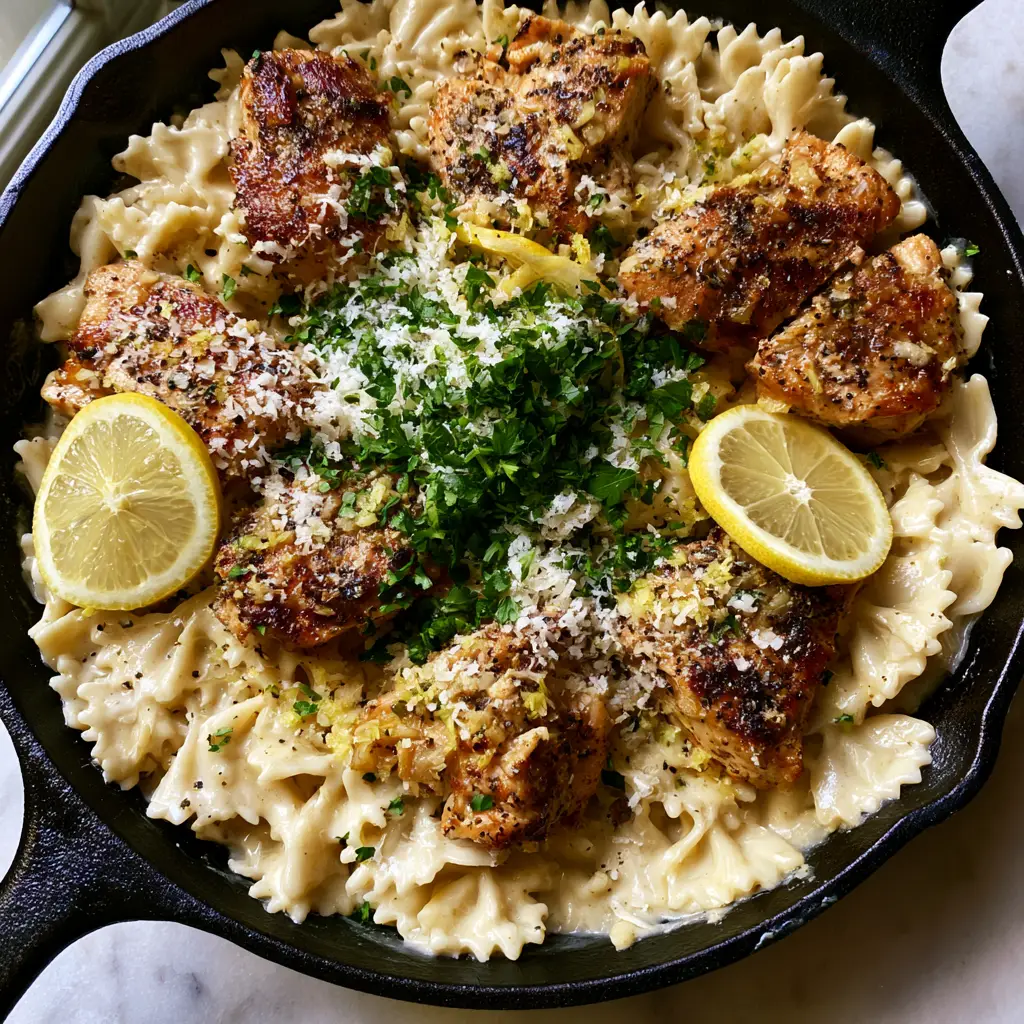
There is a specific kind of culinary magic that happens when high-heat searing meets the bright, acidic punch of citrus. This Lemon Chicken Pasta isn’t just another weeknight dinner; it is a masterclass in texture and balance, designed to look as stunning in your skillet as it does on a restaurant plate. Imagine golden-brown, herb-crusted chicken nestled into a bed of al dente farfalle, all swimming in a thick, pale-ivory garlic cream sauce that clings to every ridge of the pasta.
The secret to this dish lies in the forensic details of the preparation—the shimmering olive oil in a rustic cast iron skillet, the visible flecks of cracked black pepper, and the way fresh lemon wheels soften into the sauce. Whether you are cooking for a special occasion or simply elevating your Tuesday night, this recipe delivers a sensory experience that begins with the sizzle of the pan and ends with a perfectly balanced bite of savory, creamy, and zesty notes.
The Visual Anatomy of a Gourmet Skillet Meal
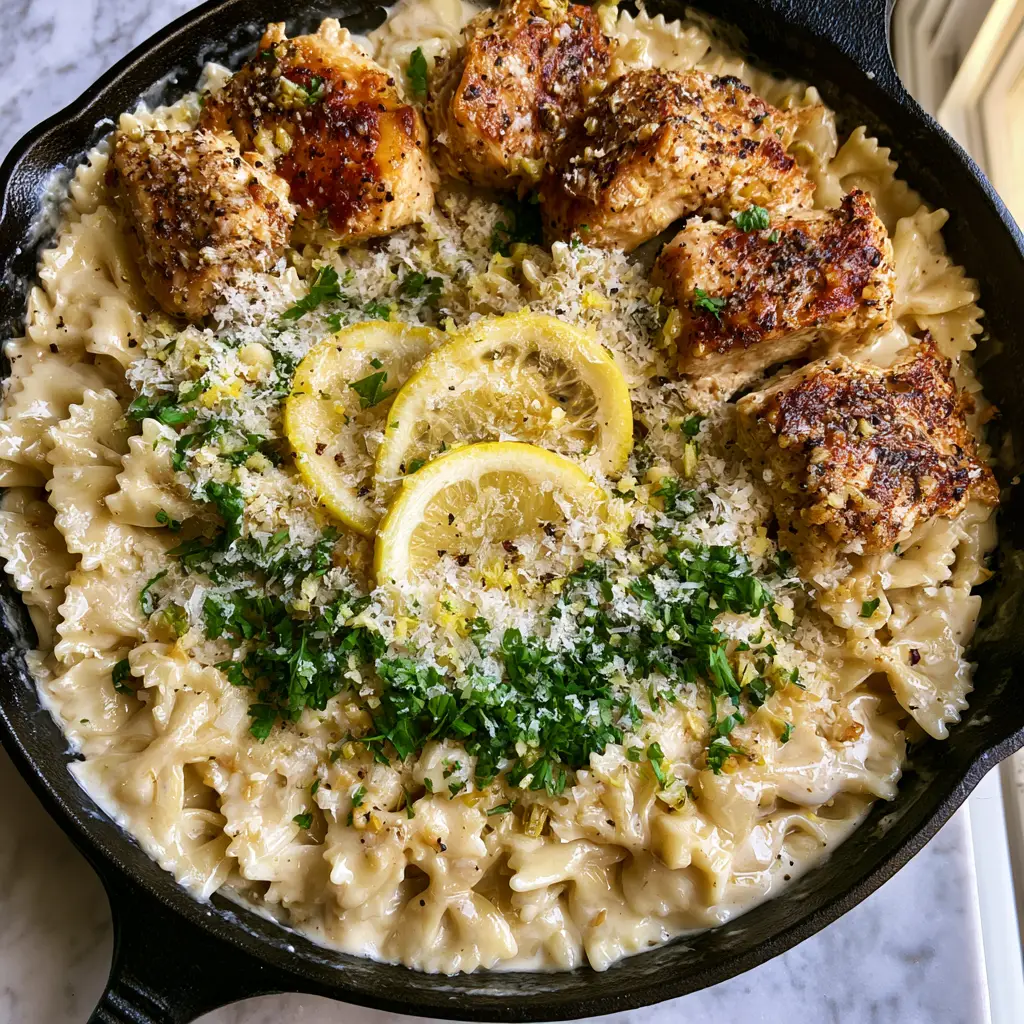
To achieve the result seen in professional food photography, we focus on layers of color and texture. We start with a foundation of farfalle pasta, chosen specifically because its “bowtie” shape creates the perfect “sauce-trap” in the central pinch. This ensures that the thick garlic butter sauce doesn’t just pool at the bottom of the pan but coats every single piece of pasta for a glossy, high-end finish.
The chicken provides the visual and textural anchor. Instead of pale, poached meat, we aim for deeply seared chunks with a visible crust. By using a matte black cast iron skillet, we maximize heat retention, allowing for that essential golden-brown “shimmer” that signals a perfectly Maillard-reacted protein. Finally, the “flurry” of finely grated parmesan and vibrant flat-leaf parsley adds the necessary contrast against the ivory-colored sauce.
- Searing Excellence: Achieve a deep golden crust on the chicken breast for maximum flavor and visual appeal.
- Sauce Adhesion: A thick, emulsified garlic butter cream sauce that creates a glossy, non-runny coating.
- Textural Contrast: Soft al dente pasta paired with tender chicken and the slight crunch of sautéed minced garlic.
- Fresh Finishes: Thin lemon wheels and a heavy garnish of herbs and parmesan for a “pop” of brightness.
Foundational Ingredients for the Glossiest Garlic Butter Sauce
Every ingredient in this Lemon Chicken Pasta serves a specific structural or flavor purpose. To reach that professional-grade consistency, we use high-fat dairy and fresh aromatics that create a complex flavor profile without the need for artificial thickeners.
Boneless Skinless Chicken Breast (1.5 lbs / 680g): Cut into uniform chunks to ensure even searing. The high protein content allows for a beautiful crust when introduced to a hot, oiled skillet.
Farfalle Pasta (12 oz / 340g): This specific shape provides a sturdy base. Its ridges are essential for “grabbing” the cream sauce, ensuring the dish looks lush rather than oily.
Heavy Cream (1 cup / 240ml): The backbone of our pale-ivory sauce. Using heavy cream (36% fat) is non-negotiable for achieving a thick, glossy texture that won’t break when the lemon juice is added.
Unsalted Butter (4 tbsp / 56g): Butter provides the “gloss” and a rich mouthfeel. We sauté the garlic in it to infuse the entire base of the dish with aromatics.
Fresh Garlic (5 cloves / 25g): Minced finely, these tiny bits become translucent and sweet in the butter, providing the “sautéed garlic” visual described in our blueprint.
Parmesan Cheese (1/2 cup / 45g): Finely grated so it melts instantly into the sauce. It acts as both a seasoning and a natural emulsifier to thicken the liquid.
Fresh Lemons (2 large): One lemon is juiced for the sauce’s acidity, while the other is sliced into thin wheels to be nestled into the pasta for a bright, professional aesthetic.
Extra Virgin Olive Oil (2 tbsp / 30ml): Used for the initial sear. It has a higher smoke point than butter, allowing us to get that deep golden-brown color on the chicken without burning.
Fresh Flat-Leaf Parsley (1/4 cup / 10g): Chopped finely to provide a “spray” of vibrant green. This adds the necessary color contrast to the pale sauce and yellow lemons.
Essential Kitchen Tools for Skillet Mastery
To replicate the rustic look and perfect sear of this dish, you will need a few specific tools. While any large pan can work, the material of your cookware significantly impacts the final “glow” of the sauce and the crust of the meat.
A 12-inch (30cm) cast iron skillet is the preferred vessel. The matte black surface provides a beautiful backdrop for the yellow lemons and green parsley, but more importantly, it offers superior heat distribution for the chicken. You will also need a microplane for “flurrying” the parmesan and a sharp chef’s knife to achieve those paper-thin lemon wheels.
Step-by-Step Evolution of a One-Pan Masterpiece
Step 1: Achieving the Golden-Brown Chicken Sear
Pat your chicken chunks completely dry with paper towels—moisture is the enemy of a good sear. Season generously with kosher salt and a heavy dose of cracked black pepper. Heat the olive oil in your skillet over medium-high heat until you see a faint shimmer.
Add the chicken in a single layer, ensuring you don’t overcrowd the pan. Let it sit undisturbed for 3-4 minutes until a deep golden-brown crust forms. Flip and cook for another 2 minutes until just cooked through. Remove the chicken from the pan and set it aside; this preserves the texture and prevents the meat from becoming rubbery in the sauce.
Step 2: Building the Garlic Butter Foundation
Reduce the heat to medium and add the butter to the same skillet, scraping up the browned bits (the “fond”) from the chicken. Once the butter is foaming, add the minced garlic. Sauté for only 60 seconds—you are looking for the garlic to become fragrant and translucent, not brown or bitter.
Whisk in the heavy cream and chicken broth (if using for volume). Bring the mixture to a gentle simmer. This is where the sauce transforms into that thick, pale-ivory liquid that characterizes a high-end Lemon Chicken Pasta. Let it reduce for 3-5 minutes until it coats the back of a spoon.
Step 3: The Emulsion and Pasta Integration
While the sauce simmers, boil your farfalle in salted water until just *before* al dente. It should still have a firm bite, as it will finish cooking in the sauce. Reserve a half-cup of pasta water before draining.
Slowly whisk the finely grated parmesan into the cream sauce until smooth. Add the fresh lemon juice and the lemon wheels. The acidity will slightly thicken the cream further. Toss the pasta into the skillet, stirring gently to ensure every bowtie is fully coated in the glossy garlic butter.
Step 4: The Final Presentation Layer
Return the seared chicken chunks to the pan, nestling them on top of the pasta. Garnish with a heavy flurry of extra parmesan, the chopped fresh parsley, and an additional sprinkle of cracked black pepper. The residual heat will soften the lemon wheels, releasing their oils into the sauce for a final aromatic boost.
Expert Tips for Success
- Temper Your Cream: Pull your heavy cream out of the fridge 15 minutes before using. Adding ice-cold cream to a hot pan can occasionally cause the sauce to separate.
- The “Starch” Secret: If your sauce feels too thick, add a tablespoon of the reserved pasta water. The starch helps maintain the emulsion while adjusting the consistency.
- Don’t Overcook the Lemon: Add the lemon juice at the very end. Cooking lemon juice for too long can turn it bitter; you want that bright, fresh “zing” to remain intact.
- Cast Iron Care: If using cast iron, ensure it is well-seasoned. The acidity of the lemon is brief enough that it won’t damage the seasoning, but a well-maintained pan ensures the chicken doesn’t stick.
The Ideal Pairings for Creamy Lemon Pasta
This dish is remarkably rich, so it pairs best with sides that offer a crisp, refreshing contrast. A simple arugula salad with a light vinaigrette works wonders. If you are looking for more vegetable-forward inspiration, you might enjoy our seasonal pasta primavera which utilizes similar garlic-butter techniques with fresh greens.
For those who love a high-protein dinner rotation, consider alternating this meal with our zesty cilantro lime chicken or a tangy balsamic glazed chicken for a different flavor profile. If you have leftover chicken, it works beautifully in a chilled chicken macaroni salad the next day. For a lighter evening, a grilled shrimp salad provides that same citrusy satisfaction without the heavy cream base.
Frequently Asked Questions
You can substitute heavy cream with full-fat canned coconut milk and use a plant-based butter, though the flavor profile will shift slightly toward a tropical note.
Absolutely. Chicken thighs are more forgiving and stay juicy. Ensure you sear them until the skin or surface is crispy to maintain the visual appeal of the dish.
Always sear the chicken first, then remove it from the pan. Sauté the garlic in the residual oil and butter afterward. Garlic burns quickly, while chicken needs sustained high heat.
Farfalle (bowtie) or Penne Rigate are best because their ridges and folds capture the thick sauce. Long noodles like fettuccine also work but may not hold the garlic bits as well.
Cream sauce usually curdles if the heat is too high or if the lemon juice is added to cold, low-fat dairy. Use heavy cream and whisk it into the sauce over medium-low heat after the cream has already thickened.
The Complete Lemon Chicken Pasta Recipe
Lemon Chicken Pasta: The Ultimate One-Pan Creamy Garlic Butter Farfalle
Ingredients
Equipment
Method
- Heat olive oil in a skillet. Season chicken with salt and pepper and sear until golden-brown chunks form (about 5-6 minutes). Remove from pan.
- In the same pan, melt butter and sauté minced garlic for 1 minute until fragrant.
- Stir in heavy cream. Simmer for 3-5 minutes until the sauce thickens into a pale-ivory gloss.
- Add cooked farfalle, parmesan, lemon juice, and lemon wheels to the sauce. Toss to coat.
- Return chicken to the pan. Top with fresh parsley, extra parmesan, and cracked black pepper.
Notes
Sear chicken in batches if necessary to avoid crowding the pan.
Closing & Call to Action
Mastering this Lemon Chicken Pasta is a milestone for any home cook. It combines professional searing techniques with the art of sauce emulsification to create a dish that is visually stunning and deeply satisfying. The balance of heavy cream and bright lemon makes it a versatile favorite for any season.
If you made this dish, I would love to hear how your sear turned out! Leave a comment below or share your skillet photos with me. Don’t forget to follow kit_char on Pinterest for more visual recipe blueprints and kitchen inspiration. Sign up for our newsletter to get weekly recipes delivered straight to your inbox!