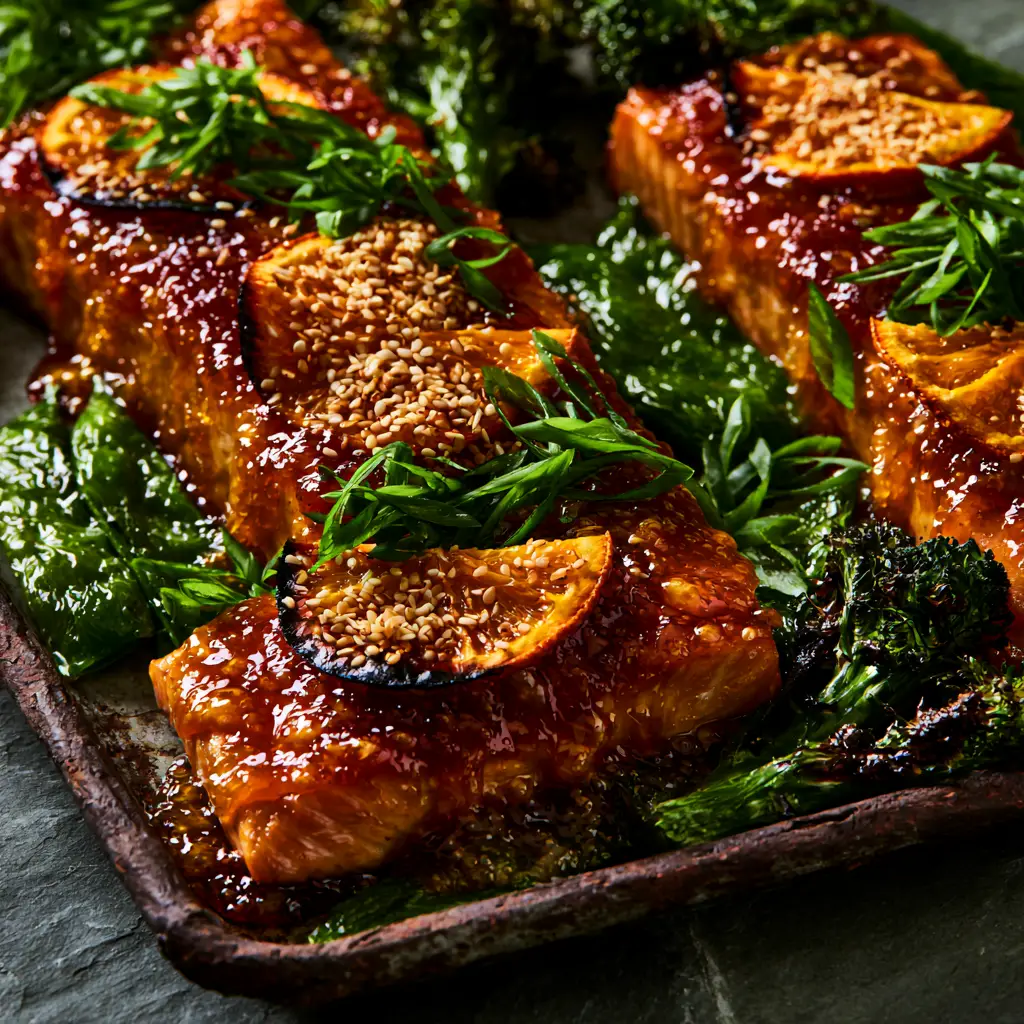
Imagine a dinner that looks like it stepped off the pages of a high-end culinary magazine but comes together on a single rustic sheet pan. This Orange Teriyaki Baked Salmon is the ultimate marriage of vibrant citrus brightness and deep, savory umami, creating a meal that satisfies every sensory craving.
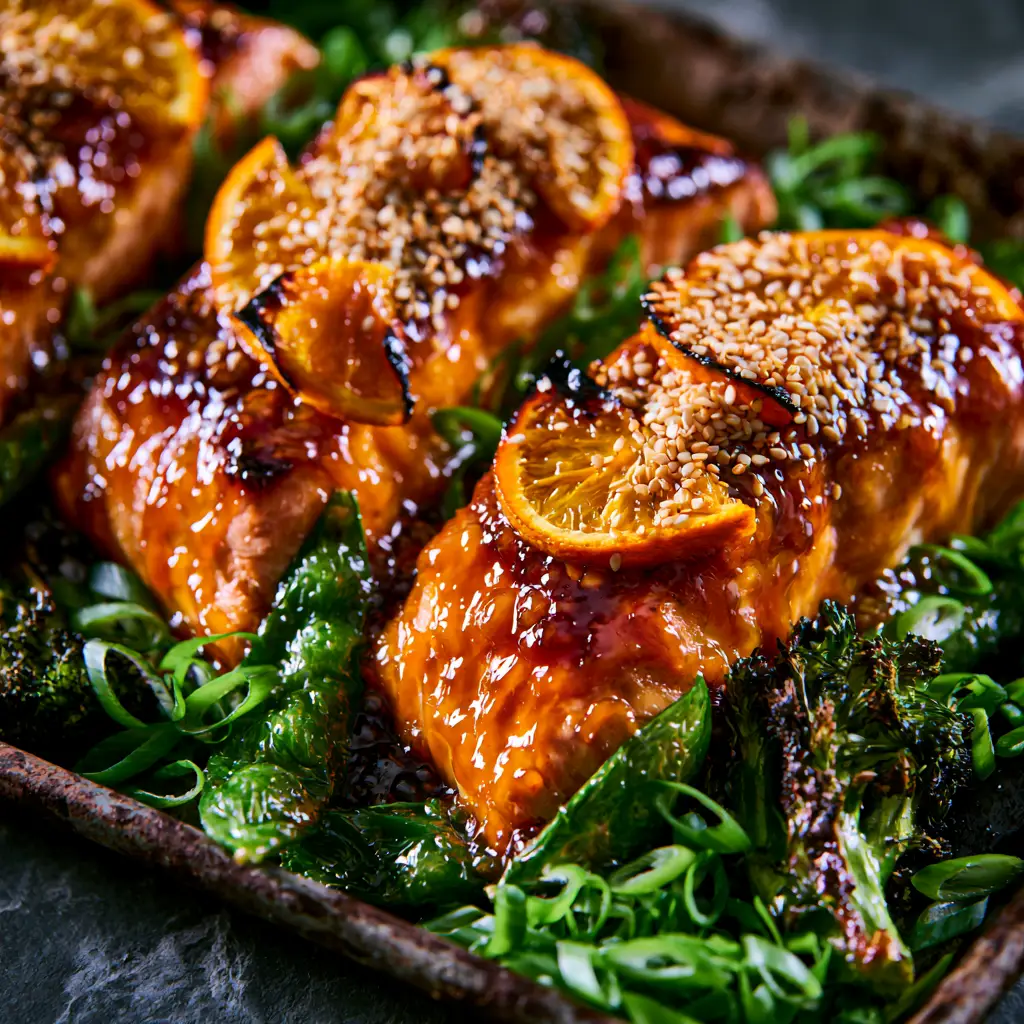
The star of the show is the thick, viscous, glistening orange-amber teriyaki glaze that clings to three thick salmon fillets. As the heat of the oven works its magic, the edges of the sauce begin to bubble and caramelize against the dark slate-like surface of the pan, intensifying the flavor profile.
We aren’t just baking fish; we are layering textures with vibrant, blistered green snap peas, charred broccoli florets, and thin half-moon orange slices that become jammy and sweet under the broiler. A heavy dusting of toasted white sesame seeds and finely sliced bright green scallions provides the final professional touch to this masterpiece.
Why This Sheet Pan Salmon Recipe Works Every Time
- The Perfect Glaze Viscosity: Unlike thin, store-bought sauces, our homemade reduction creates a thick, glossy coating that stays on the fish rather than running off onto the pan.
- Multi-Dimensional Citrus: We use both the zest and the juice of the orange, plus charred slices, to ensure the citrus notes are bright, cooked, and aromatic.
- Visual Texture Contrast: The combination of flaky, moist pink salmon against the charred dark green of the broccoli and the snap of the peas creates a restaurant-quality presentation.
- Optimal Nutrient Density: This dish delivers high-quality omega-3 fatty acids alongside a massive serving of fiber-rich cruciferous and snap vegetables.
Sourcing the Ultimate Ingredients for Citrus Teriyaki
To achieve the result seen in our visual blueprint, each ingredient must be selected with intention. Starting with high-quality fish is non-negotiable for that buttery, flaky texture.
Thick Salmon Fillets: Choose three 6-ounce (170g) center-cut fillets. Center-cut pieces have a uniform thickness which ensures even cooking, preventing the tail end from drying out before the center is done. If you are looking for more inspiration, check out our guide on perfectly baked salmon.
Fresh Oranges: You will need two large navel oranges. One is for zesting and juicing into the glaze, while the other is sliced into thin half-moons to be charred directly on the sheet pan.
Low-Sodium Soy Sauce: 1/2 cup (120ml) serves as the savory backbone. Using low-sodium allows us to control the saltiness while we reduce the sauce to a thick, honey-like consistency.
Honey or Brown Sugar: 1/4 cup (60ml) is essential for that “bubbling and caramelized” effect. The sugars react with the heat to create those dark, delicious edges on the salmon.
Aromatic Base: 1 tablespoon (15g) of freshly grated ginger and 3 cloves of minced garlic provide the signature “teriyaki” punch. Always use fresh ginger over powdered for a sharper, cleaner heat.
The Green Component: 2 cups (150g) of fresh broccoli florets and 1 cup (100g) of sugar snap peas. These vegetables are hardy enough to withstand the high heat required to blister the skins without turning to mush.
The Finishing Touches: 2 tablespoons (18g) of toasted white sesame seeds and 3 stalks of scallions (green parts only). These add the “macro-photo” detail that brings the dish to life. This approach to flavor is similar to our homemade teriyaki sauce basics.
Essential Kitchen Tools for Professional Results
You don’t need a professional kitchen, but a few specific tools will help you achieve the “rustic dark sheet pan” look and the perfect glaze consistency.
A heavy-duty rimmed baking sheet is a must. The rim prevents the caramelized sauce drippings from escaping, while the heavy gauge ensures even heat distribution so the broccoli chars instead of steams.
A small saucepan is required to pre-reduce the orange teriyaki glaze. This is the “secret” to getting that thick, viscous coating that won’t just slide off the fish in the oven.
A microplane or fine zester is needed to pull the aromatic oils from the orange skin and the ginger. Finally, use a sharp chef’s knife for those paper-thin scallion slices that garnish the top.
Mastering the Orange Teriyaki Baked Salmon Technique
Crafting the Liquid Gold Glaze
In a small saucepan, combine the soy sauce, fresh orange juice, orange zest, honey, grated ginger, and minced garlic. Bring the mixture to a gentle simmer over medium heat.
Whisk a small cornstarch slurry (1 tsp cornstarch mixed with 1 tsp water) into the sauce. Simmer for 5-7 minutes until the sauce coats the back of a spoon with a deep orange-amber glow. Set aside half of the sauce for drizzling later.
Prepping the Sheet Pan for Success
Preheat your oven to 425°F (220°C). Toss the broccoli florets and snap peas with 1 tablespoon (15ml) of neutral oil and a pinch of salt. Spread them out on the sheet pan, leaving three clear spaces for the salmon.
Place the salmon fillets in the designated spots. Use a pastry brush to apply a thick layer of the reduced glaze. Nestle the thin half-moon orange slices around and on top of the fillets.
The Roasting and Blistering Phase
Slide the pan into the oven. Roast for 10-12 minutes. You are looking for the salmon to reach an internal temperature of 125°F (52°C) for medium-rare, or 135°F (57°C) for medium.
For the final 2 minutes, turn the oven to ‘Broil.’ Watch closely as the glaze begins to bubble and turn dark at the edges. This is when the orange slices char and the snap peas develop those characteristic blister marks.
The Final Garnish Flourish
Remove the pan from the oven and immediately brush with the remaining reserved glaze. This adds a fresh layer of shine for that “glistening” smartphone-photo look.
Generously dust the fillets with the toasted sesame seeds. Scatter the bright green scallions over everything, letting some fall into the caramelized drippings on the pan for an extra burst of freshness. If you enjoy this style of cooking, you might also love our sheet pan seafood recipes.
Expert Tips for the Flakiest Salmon Fillets
- Pat the Fish Dry: Use paper towels to remove all surface moisture from the salmon before glazing. This allows the sauce to “grip” the protein better.
- Don’t Overcrowd: Airflow is the key to charring. If the vegetables are piled on top of each other, they will steam rather than blister. Use a large pan or two smaller ones.
- Room Temperature: Take the salmon out of the fridge 15 minutes before cooking. This ensures the center warms up at the same rate as the exterior.
- The Side-Lit Glow: If you are taking photos, place your pan near a window. The natural daylight will catch the “sticky sauce texture” just like the professional prompts suggest.
Storing and Reheating Your Citrus Salmon
This Orange Teriyaki Baked Salmon is best enjoyed fresh from the oven to preserve the “snap” of the peas. However, leftovers make an incredible lunch for healthy dinner ideas later in the week.
Store in an airtight container for up to 3 days. To reheat, use a toaster oven or a 300°F (150°C) oven covered loosely with foil. This prevents the glaze from burning while gently warming the fish to keep it tender and moist.
What to Pair with This Vibrant Sheet Pan Dinner
While this is a complete meal on its own, you can expand the menu by serving it over a bed of fluffy jasmine rice or quinoa to soak up those caramelized sauce drippings.
For a lighter option, a simple cucumber salad with rice vinegar provides a cool contrast to the warm, umami-rich salmon. If you’re hosting a larger gathering, consider adding a side of shrimp fried rice to create a full Asian-inspired feast.
Frequently Asked Questions
Yes, but ensure it is completely thawed and patted extremely dry with paper towels to prevent excess moisture from thinning out the glaze.
The secret is pre-reducing the sauce in a saucepan with a cornstarch slurry before brushing it onto the salmon. This ensures it stays on the fish rather than running off.
Look for the fish to turn opaque and flake easily with a fork. For precision, use a meat thermometer to hit 135°F (57°C) for a moist, tender result.
To make it gluten-free, simply swap the soy sauce for tamari or coconut aminos. The rest of the ingredients are naturally gluten-free.
Ensure the oven is fully preheated to 425°F and avoid overcrowding the pan. Space between the broccoli and peas allows the hot air to circulate and create that charred texture.
The Complete Orange Teriyaki Baked Salmon Recipe
Orange Teriyaki Baked Salmon with Charred Citrus and Blistered Greens
Ingredients
Equipment
Method
- Simmer soy sauce, orange juice, zest, honey, ginger, and garlic in a saucepan. Whisk in cornstarch slurry and simmer until thick and amber-colored (about 5-7 mins).
- Preheat oven to 425°F (220°C). Toss broccoli and snap peas with oil and salt on the pan. Place salmon fillets in the center.
- Brush salmon generously with glaze. Arrange orange half-moons on and around the salmon fillets.
- Bake for 10-12 minutes. Switch to broil for the last 2 minutes until the glaze bubbles and edges caramelize.
- Garnish with toasted sesame seeds and fresh scallions while the pan is hot.
Notes
Use a dark baking sheet to encourage better charring of the snap peas and broccoli.
Bringing the Restaurant Experience Home
There is nothing quite as satisfying as pulling a pan of bubbling, fragrant Orange Teriyaki Baked Salmon out of your own oven. This recipe proves that you don’t need a sink full of dishes to create a meal that looks and tastes like professional fine dining.
The combination of the sticky, citrus-infused glaze and the charred vegetables creates a balance of flavors that will have your family asking for this on repeat. We invite you to share your results and tag us in your beautiful sheet pan photos!
Love this recipe? Be sure to follow us on Pinterest and save this pin for your next weeknight dinner win. Leave a comment below with your favorite way to serve salmon!