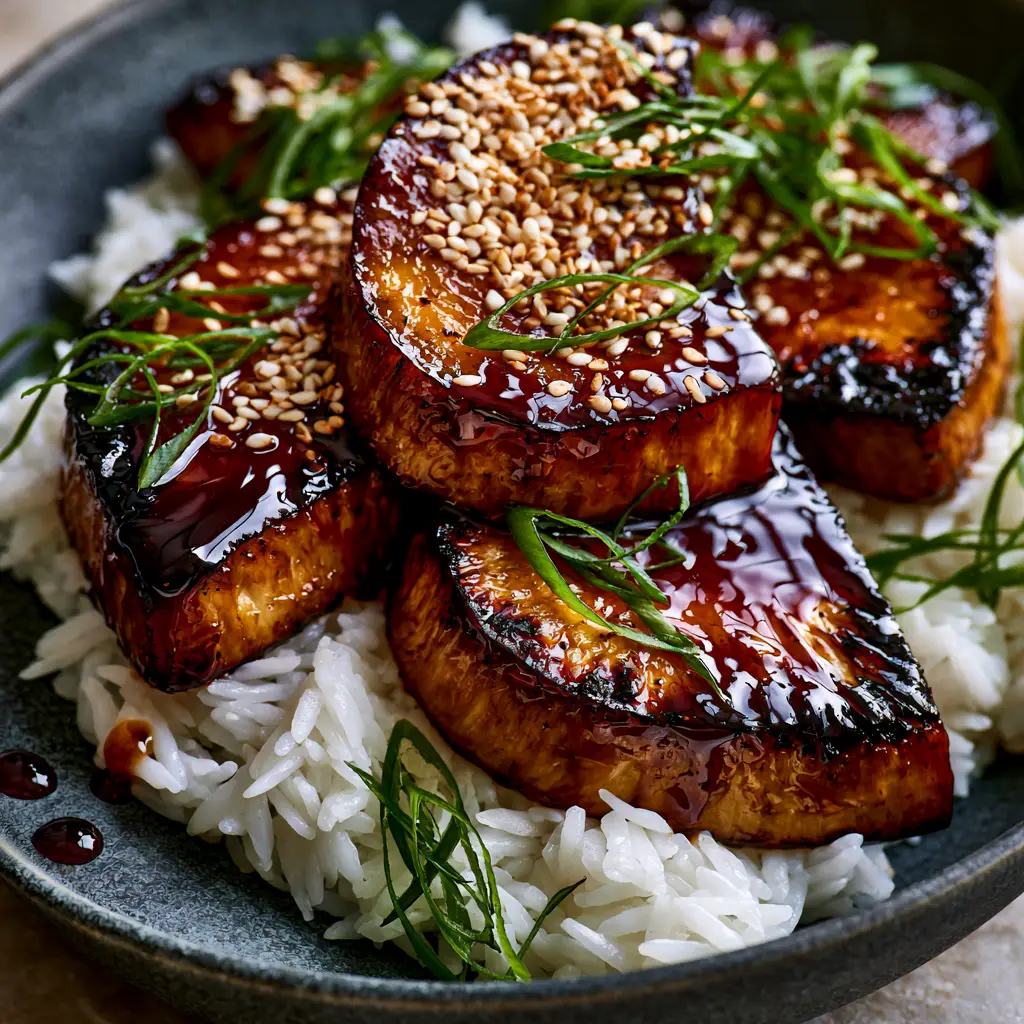
Teriyaki Mushrooms are the ultimate plant-based answer to those seeking a savory, “meaty” umami bomb that rivals any steakhouse side or main. By utilizing thick-cut King Oyster mushroom medallions, we transform humble fungi into glistening, golden-brown treasures coated in a dark mahogany sauce.
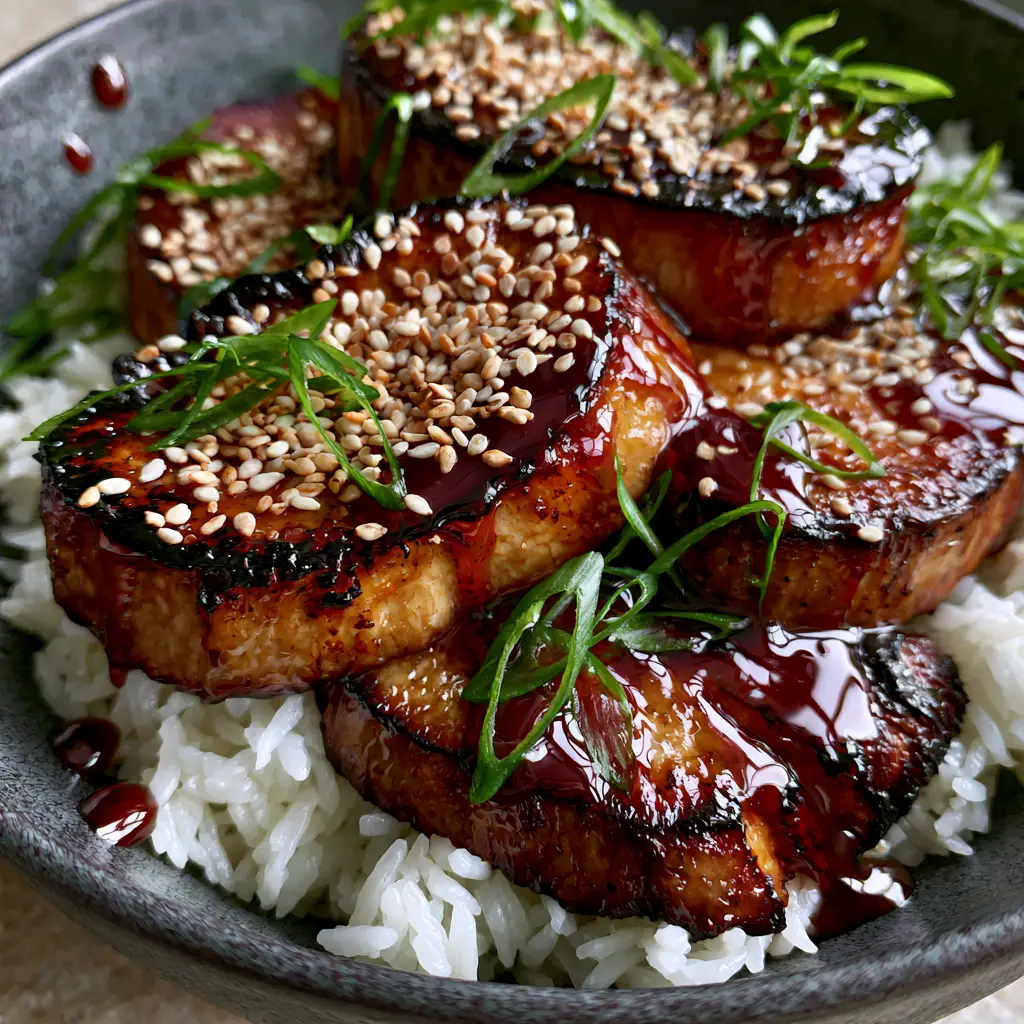
This recipe focuses on achieving that perfect high-contrast visual: deeply charred, caramelized edges against a translucent, reflective glaze. Served over a bed of pristine white jasmine rice in a matte charcoal bowl, it is a masterclass in texture and taste.
Whether you are a long-term vegan or simply looking for high protein dinners that don’t rely on meat, these mushrooms offer a satisfying bite that is both chewy and tender. The addition of toasted sesame seeds and vibrant scallions provides the final crunch and freshness needed to balance the rich sauce.
The Visual Allure of Gourmet Pan-Seared Fungi
- Succulent Texture: King Oyster mushrooms provide a dense, scallop-like consistency that holds up perfectly under high heat.
- Deep Caramelization: Professional searing techniques ensure every medallion has visible char marks and a golden-brown crust.
- Reflective Mahogany Glaze: A thick, reduced teriyaki sauce that clings to the mushrooms with a sticky, glass-like finish.
- Vibrant Garnishes: The contrast of stark white sesame seeds and bright green scallions makes the dish pop against the dark ceramic.
- Aromatic Foundation: Fragrant jasmine rice serves as the neutral canvas, soaking up every drop of the extra-sticky sauce.
Essential Ingredients for the Ultimate Mushroom Glaze
King Oyster Mushrooms: These are the stars of the show; their thick, meaty stems are sliced into 1-inch (2.5cm) medallions to mimic the appearance of sea scallops. Look for firm, white stems with small brown caps for the best structural integrity during searing.
Neutral High-Smoke Point Oil: You will need 2 tbsp (30ml) of avocado or grapeseed oil to achieve that intense sear without the oil breaking down or smoking out your kitchen. This is critical for achieving the “charred edges” described in our visual blueprint.
Low-Sodium Soy Sauce: Use 1/4 cup (60ml) as the base of your mahogany glaze to provide deep color and salt without being overwhelming. If you use standard soy sauce, the reduction may become too salty as the water evaporates.
Mirin and Sake: These Japanese staples (2 tbsp (30ml) each) add the necessary sugar and acidity to create a translucent, reflective sheen on the glaze. They are the secret to that “glassy” look seen in professional food photography.
Dark Brown Sugar: 1 tbsp (12g) provides the molasses notes required for a truly dark mahogany color. It also aids in the “sticky” factor, ensuring the sauce coats the mushrooms rather than running off them.
Fresh Aromatics: Grated ginger and garlic add a punch of heat and fragrance that cuts through the sweetness of the teriyaki. Ensure they are finely grated so they become part of the smooth sauce rather than leaving chunky bits.
Cornstarch Slurry: A small amount (1 tsp (5g) mixed with 1 tsp water) ensures the sauce reaches that “thick and translucent” consistency. This is what allows the sauce to sit in “tiny droplets” on the side of the bowl as seen in the visual prompt.
Must-Have Tools for Professional Searing
Heavy-Bottomed Cast Iron or Carbon Steel Skillet: To get those caramelized char marks, you need a pan that retains high heat. A thin non-stick pan often steams the mushrooms rather than searing them, resulting in a rubbery texture.
Sharp Chef’s Knife: Essential for slicing the mushrooms into perfectly even 1-inch medallions and for “very thinly slicing” the vibrant green scallions. Even thickness ensures all medallions finish cooking at the exact same time.
Matte Charcoal Ceramic Bowls: Presentation is key for this dish. The dark, matte finish of the bowl provides a high-contrast background that makes the mahogany-glazed mushrooms and white rice visually striking.
How to Achieve the Perfect Teriyaki Mushroom Sear
Preparing the King Oyster Medallions
Begin by cleaning 1 lb (450g) of King Oyster mushrooms with a damp paper towel; never soak them, as they act like sponges and won’t sear properly. Slice the stems into 1-inch (2.5cm) thick medallions.
Using the tip of your knife, lightly score a cross-hatch pattern into the flat sides of each medallion. This “culinary forensics” trick allows the glaze to penetrate deep into the mushroom and creates more surface area for charring.
Executing the High-Heat Sear
Heat your 2 tbsp (30ml) of oil in the skillet over medium-high heat until it begins to shimmer. Place the medallions in a single layer, ensuring they aren’t crowded, which would cause them to steam.
Press down lightly with a spatula to ensure full contact with the hot metal. Sear for 3-4 minutes per side until a deep golden-brown crust forms with visible charred edges. Remove the mushrooms from the pan and set aside briefly.
Reducing the Mahogany Glaze
In the same pan, turn the heat down to medium and whisk in your soy sauce, mirin, sake, brown sugar, ginger, and garlic. Let the mixture bubble and reduce by half until it begins to thicken naturally.
Whisk in the cornstarch slurry and continue to cook for 1 minute. The sauce should transform from a thin liquid into a thick, mahogany-colored, reflective glaze that coats the back of a spoon.
The Final Glaze and Assembly
Add the seared medallions back into the pan and toss vigorously. Every mushroom should be heavily coated in the sticky sauce, appearing highly reflective and glistening under your kitchen lights.
Scoop a base of fluffy white jasmine rice into your charcoal bowls. Artfully arrange the mushrooms over the rice, drizzling any remaining sauce from the pan over the top so you see movement in the glaze.
Expert Tips for “Meaty” Mushroom Success
- Dry is Best: If your mushrooms are even slightly wet, they will steam. Pat them dry multiple times before they hit the oil.
- The “Sizzle” Test: Never add mushrooms to a cold pan. If you don’t hear a loud sizzle immediately, the pan isn’t hot enough to create char marks.
- Don’t Over-Stir: Once the mushrooms hit the pan, leave them alone. Moving them frequently prevents the caramelization that gives this dish its “steak-like” appeal.
- Slurry Control: Add your cornstarch slurry slowly. You want “thick and translucent,” not “gloopy and opaque.”
Storage and Reheating Advice
Teriyaki Mushrooms are best enjoyed immediately to appreciate the contrast between the hot, sticky glaze and the fluffy rice. However, leftovers can be stored in an airtight container for up to 3 days.
To reheat, avoid the microwave if possible, as it can make the mushrooms rubbery. Instead, flash-fry them in a pan with a teaspoon of water to loosen the glaze and restore that glistening mahogany finish.
What to Serve With Sticky Teriyaki Mushrooms
While this dish is a complete meal on its own, it pairs beautifully with other umami-forward recipes. If you love the earthy notes of fungi, try serving this alongside our sautéed mushrooms for a multi-textured feast.
For a rounder meal, consider adding a side of garlic mushrooms or exploring our collection of easy mushroom recipes to build a full vegetarian spread. If you are looking for a spicy kick, a side of gochujang mushrooms provides a fermented heat that complements the sweet teriyaki glaze perfectly.
Frequently Asked Questions
This recipe can be made gluten-free by substituting the soy sauce with Tamari or coconut aminos. Ensure your mirin is also certified gluten-free.
While King Oysters are best for the ‘medallion’ look, you can use Shiitake or Cremini mushrooms. Note that smaller mushrooms will cook faster and won’t have the same scallop-like texture.
The secret is the combination of mirin and a small cornstarch slurry. The sugars in the mirin provide the sheen, while the cornstarch ensures the sauce is thick enough to catch the light.
Yes, King Oyster and King Trumpet are two names for the same mushroom (Pleurotus eryngii). They are prized for their thick, edible stems.
Rubbery mushrooms usually result from steaming rather than searing. Make sure your pan is very hot and do not crowd the medallions; they need space for moisture to evaporate.
The Ultimate Teriyaki Mushrooms Recipe
Teriyaki Mushrooms: Pan-Seared King Oyster Medallions with Mahogany Glaze
Ingredients
Equipment
Method
- Clean mushrooms and slice into 1-inch medallions. Score a cross-hatch pattern into the flat sides.
- Heat oil in a skillet over medium-high heat. Sear medallions for 3-4 minutes per side until deep golden-brown with charred edges.
- Whisk soy sauce, mirin, sake, brown sugar, ginger, and garlic in the pan. Simmer until reduced by half, then whisk in cornstarch slurry.
- Toss mushrooms back in the thickened glaze. Serve over jasmine rice and garnish with sesame seeds and sliced scallions.
Notes
Use low-sodium soy sauce to prevent the glaze from becoming overly salty during reduction.
Join the Kit Char Culinary Community
These Teriyaki Mushrooms prove that you don’t need meat to have a decadent, filling, and visually stunning dinner. The combination of the mahogany glaze and the tender King Oyster medallions is a recipe you’ll return to week after week.
If you made this dish, please leave a comment below and let us know how your sear turned out! Don’t forget to snap a photo and share it with us on Pinterest. For more inspiration, check out our January mushroom recipes or our guide to maitake mushroom recipes.