There is a profound culinary magic that happens when the earthiness of root vegetables meets the silky decadence of a classic Italian bechamel. This Sweet Potato Butternut Squash Carrot Lasagna isn’t just a meal; it is a structural masterpiece of vibrant orange hues and creamy textures. Inspired by the warmth of a rustic kitchen, every forkful delivers a calculated balance of sweetness, salt, and crunch.
Most vegetable lasagnas suffer from being “watery” or “mushy,” but we have engineered this recipe to be architecturally sound. By roasting the sweet potato rounds and ribbons of carrot before layering, we remove excess moisture and intensify their natural sugars. The result is a thick, defined cross-section that stands tall on your plate, just like a professional restaurant preparation.
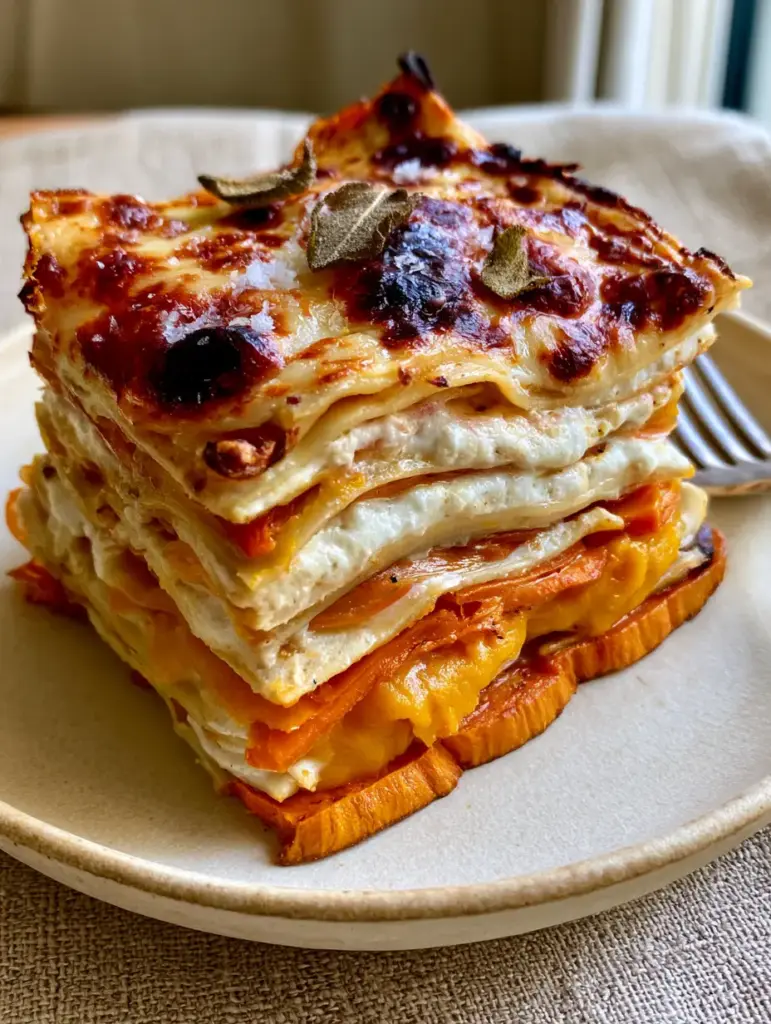
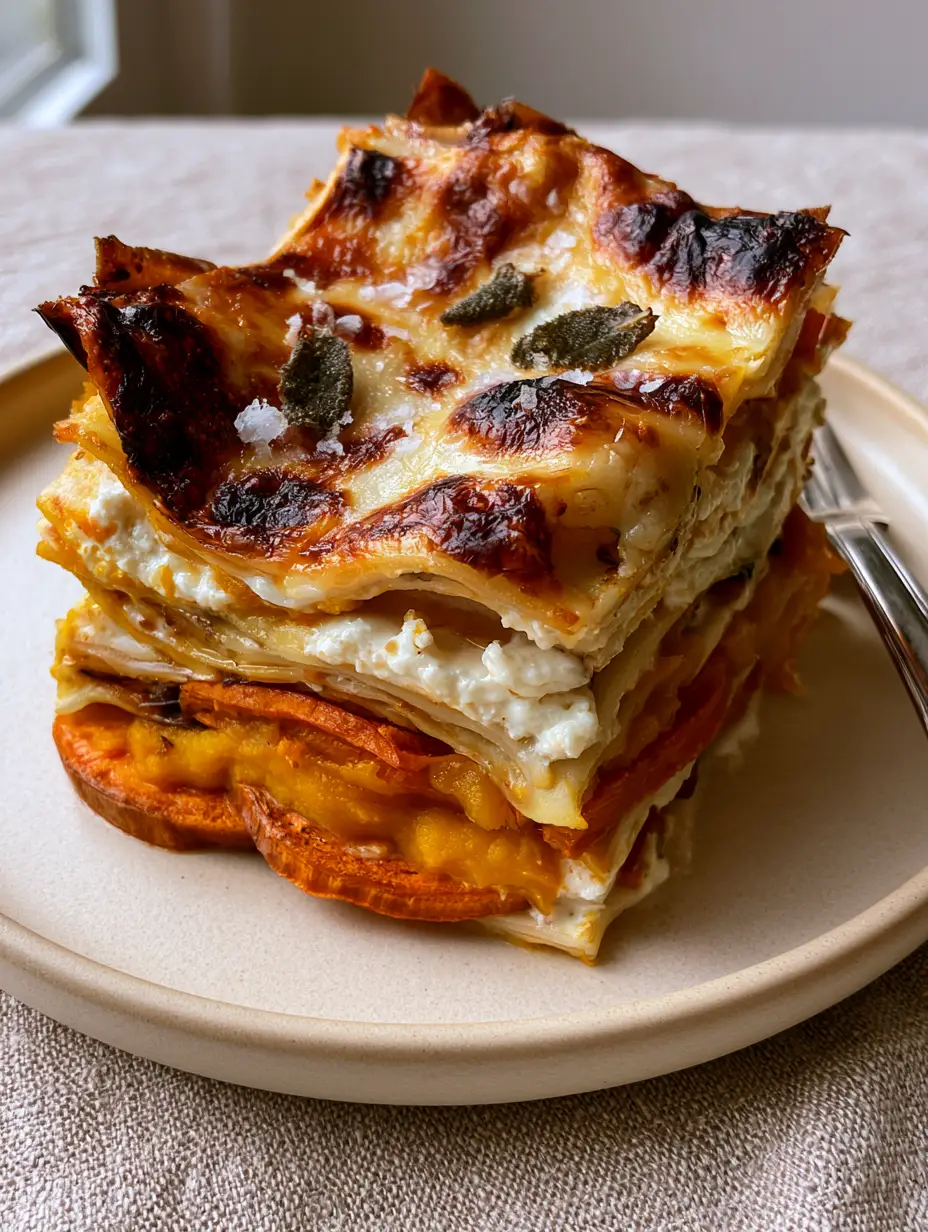
Imagine a heavy blanket of bubbly, melted mozzarella with deep golden-brown charred spots and crispy edges crowning your plate. As you cut through the top, you hit a layer of aromatic fried sage leaves and cracked black pepper that cuts through the richness of the ricotta. This Sweet Potato Butternut Squash Carrot Lasagna is the ultimate comfort food for those who demand both visual beauty and culinary depth.
The Architecture of Flavor: Why This Root Vegetable Lasagna Works
- Structural Integrity: Using roasted sweet potato rounds as a foundational layer ensures each slice maintains its shape without collapsing into a mess.
- Triple-Orange Harmony: The combination of caramelized carrots, silky butternut mash, and roasted sweet potatoes creates a complex flavor profile that standard vegetable bakes lack.
- The Bechamel Bridge: A thick, opaque white sauce acts as the “glue,” providing a velvety mouthfeel that complements the “al dente” bite of the pasta sheets.
- The Sensory Finish: Freshly fried sage leaves provide a delicate, translucent crunch and an herbal aroma that elevates the dish from “home-cooked” to “gourmet.”
The Master Grocery List for This Savory Harvest Bake
To achieve the specific visual results of our Sweet Potato Butternut Squash Carrot Lasagna, you need high-quality fats and fresh produce. Don’t skip the step of frying the sage; it provides a necessary textural contrast to the soft layers below.
2 large (900g) Sweet Potatoes: These should be peeled and sliced into uniform rounds about 1/4 inch (6mm) thick. Roasting these first provides a sturdy, starchy base for our bottom layer.
1 medium (700g) Butternut Squash: You will roast and mash this into a vibrant, smooth puree. This provides the middle “vibrant” layer mentioned in our visual blueprint.
3 large (300g) Carrots: Use a Y-peeler to create thin carrot ribbons. These roast quickly and add a delicate, ruffled texture to the internal layers.
15 oz (425g) Whole Milk Ricotta: A thick, high-quality ricotta is essential for those defined white layers. Avoid “part-skim” as it tends to release too much water during the baking process.
2 cups (225g) Shredded Low-Moisture Mozzarella: This is the secret to the golden-brown charred spots. Fresh mozzarella is too wet; low-moisture creates that iconic bubbly crust.
9 to 12 Lasagna Sheets: Look for high-quality durum wheat pasta. Whether you use “no-boil” or traditional, ensure they are cooked to a firm al dente to support the heavy vegetable layers.
The Bechamel Essentials: You will need 4 tbsp (60g) unsalted butter, 1/4 cup (30g) all-purpose flour, and 2.5 cups (600ml) whole milk. This creates the thick, opaque white sauce that distinguishes a premium lasagna.
Fresh Sage Leaves: About 10-12 leaves are needed for frying. When fried in a little oil, they become crispy gems that shatter beautifully upon impact.
Foundational Seasonings: Have 1 tsp (5g) sea salt, 1/2 tsp (2g) cracked black pepper, and a pinch of ground nutmeg ready. Nutmeg is the traditional secret ingredient that makes the bechamel and squash sing.
Essential Tools for Precision Layering
A sharp mandoline or a steady hand with a chef’s knife is vital for the sweet potato rounds. You want them uniform so they cook at the same rate and stack perfectly in the dish.
A large, rimmed baking sheet is required for roasting the vegetables before they ever touch the lasagna pan. This is the only way to avoid a “soggy” vegetable lasagna.
Finally, a 9×13 inch (23x33cm) ceramic or glass baking dish is the standard. If you want that deep-dish, thick-slice look, choose a dish with at least 2.5 inches (6cm) of depth.
Step-By-Step: Crafting Your Sweet Potato Butternut Squash Carrot Lasagna
Preparing the Vegetable Foundations
Preheat your oven to 400°F (200°C). Toss your sweet potato slices and carrot ribbons in 2 tbsp (30ml) of olive oil and a pinch of salt. Roast the sweet potatoes for 20 minutes until tender but not falling apart, and the carrots for 10 minutes until wilted and slightly caramelized.
For the butternut squash, roast cubes until soft, then mash them with a splash of cream or butter until perfectly smooth. This vibrant orange puree will be your middle layer, providing a sweet and savory contrast to the ricotta.

Whisking the Silk: The Perfect Bechamel
In a medium saucepan, melt the butter over medium heat. Whisk in the flour and cook for 2 minutes—this removes the raw flour taste but keep it pale; we aren’t making a dark roux here.
Slowly stream in the milk while whisking constantly. Continue cooking until the sauce is thick enough to coat the back of a spoon, then season with salt, pepper, and that crucial pinch of nutmeg.
The Art of the Layer
Start with a thin layer of bechamel at the bottom of the dish to prevent sticking. Place your first layer of pasta sheets, followed by the roasted sweet potato rounds in a tight, overlapping pattern.
Spread half of the ricotta over the potatoes, then add another layer of pasta. Now, spread your vibrant mashed butternut squash and layer the roasted carrot ribbons on top, followed by more bechamel and ricotta.
The Final Blanket and The Char
Finish with a final layer of pasta, the remaining bechamel, and a heavy blanket of mozzarella cheese. Bake at 375°F (190°C) for 35-40 minutes. For the visual “charred spots,” turn the broiler on for the last 2-3 minutes, watching closely until you see deep golden-brown edges.
While the lasagna rests, heat a small amount of oil in a pan and flash-fry the sage leaves for 30 seconds until they turn translucent. Scatter these over the bubbling cheese along with a final flourish of cracked black pepper and sea salt.
Pro Tips for a Flawless Cross-Section
- The Resting Rule: You must let the lasagna rest for at least 15-20 minutes before slicing. This allows the bechamel and cheese to set, ensuring those “perfectly defined” layers seen in the photos.
- Dry Your Veggies: If the roasted carrots seem oily, pat them with a paper towel. Excess oil will cause the layers to slide apart when you cut into them.
- No-Boil Sheets Hack: If using no-boil sheets, ensure the bechamel is slightly thinner so the pasta has enough moisture to hydrate without becoming gummy.
- The Herb Infusion: For extra depth, infuse the milk for your bechamel with a few sage leaves before whisking it into the roux.
The Best Side Dishes for Root Vegetable Lasagna
Since this Sweet Potato Butternut Squash Carrot Lasagna is quite rich and starchy, you want to pair it with something bright or acidic. A crisp salad or a lighter vegetable dish provides the perfect balance to the thick layers of cheese and pasta.
Consider serving this alongside a refreshing cucumber salad to cut through the richness of the bechamel. If you are hosting a larger feast, these savory potato side dishes can complement a vegetarian spread, though this lasagna is certainly hearty enough to stand alone.
For those who love the texture of layered vegetables, you might also enjoy our classic zucchini lasagna or the fun twist of zucchini lasagna roll ups. If you have leftover carrots from the ribbons, they are perfect for making moist carrot and apple muffins the next morning.
How to Store and Reheat Your Lasagna
This dish actually tastes better the next day as the flavors of the sage and squash meld. Store leftovers in an airtight container in the refrigerator for up to 4 days.
To reheat, cover a slice with foil and bake at 350°F (175°C) until the center is hot. Using a microwave is faster, but the oven method preserves that “golden-brown charred cheese” texture on top. You can freeze individual slices for up to 3 months; just thaw in the fridge overnight before reheating.
Frequently Asked Questions
Absolutely! Simply swap the lasagna sheets for gluten-free noodles and use a gluten-free all-purpose flour blend for the bechamel roux.
Yes, but ensure your bechamel sauce is slightly thinner than usual so the noodles have enough moisture to cook through properly in the oven.
The secret is roasting the sweet potatoes and carrots first to evaporate excess moisture. Also, using a thick bechamel instead of a watery marinara helps keep the layers structural.
While optional, frying the sage transforms the flavor from ‘earthy’ to ‘nutty and crisp,’ providing a vital textural contrast to the soft vegetable layers.
Use low-moisture mozzarella and finish the lasagna under the broiler for 2-3 minutes at the very end of the baking process, watching it carefully to avoid burning.
The Ultimate Sweet Potato Butternut Squash Carrot Lasagna Recipe
Sweet Potato Butternut Squash Carrot Lasagna with Crispy Fried Sage
Ingredients
Equipment
Method
- Toss sweet potato rounds and carrot ribbons with oil and salt. Roast sweet potatoes at 400°F (200°C) for 20 minutes and carrots for 10 minutes until tender.
- Roast butternut squash until soft, then mash until smooth and vibrant. Season with salt and a pinch of nutmeg.
- Melt butter, whisk in flour for 2 minutes, then slowly add milk. Cook until thick and opaque. Season with nutmeg.
- Layer in order: Bechamel, pasta, sweet potatoes, ricotta, pasta, squash mash, carrot ribbons, bechamel, ricotta, and finally pasta topped with mozzarella.
- Bake at 375°F (190°C) for 35 minutes. Broil for 2-3 minutes until the cheese has deep golden-brown charred spots.
- Flash-fry sage leaves in oil until crispy. Scatter over the lasagna with cracked black pepper before serving.
Notes
Pat the roasted carrot ribbons dry to prevent excess moisture in the layers.

Closing & Call to Action
This Sweet Potato Butternut Squash Carrot Lasagna is a testament to how beautiful vegetarian cooking can be. With its structural layers of roasted orange vegetables and its crowning glory of charred mozzarella and fried sage, it is guaranteed to be the star of your dinner table. The contrast between the creamy bechamel and the al dente pasta makes every bite a culinary experience.
If you enjoyed this recipe, please leave a comment below and tell us how your layers turned out! Don’t forget to share your creations on Pinterest and tag us. For more seasonal inspiration, sign up for our newsletter to get elite recipes delivered straight to your inbox.