Transport your kitchen to the shores of O’ahu with this Huli Huli Chicken, a dish that defines the spirit of Hawaiian roadside rotisseries. The secret to this recipe lies in the “huli” (the turn), where chicken is continuously basted to create a thick, mahogany-colored lacquer that is as visually stunning as it is delicious. By translating this tradition to a dark, weathered baking sheet, we achieve that authentic charred skin and sticky glaze right in your home oven.
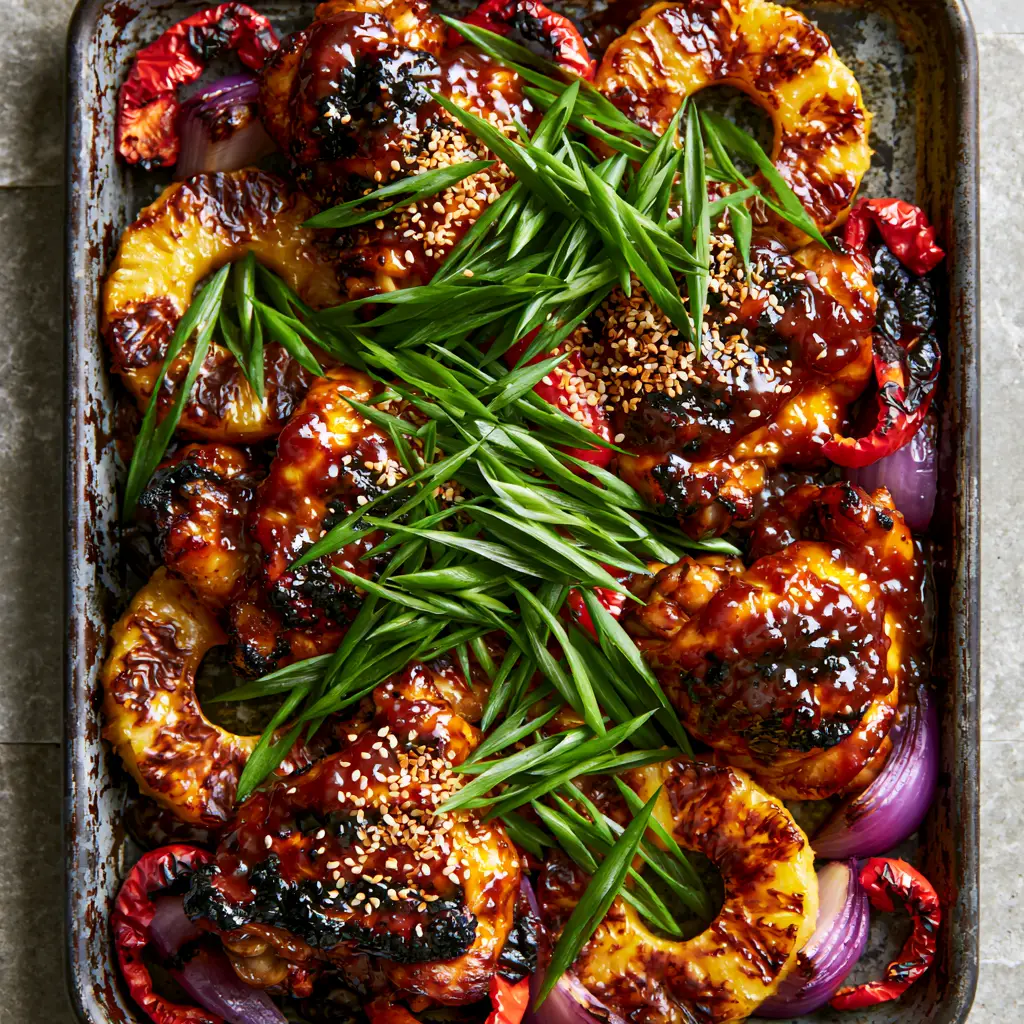
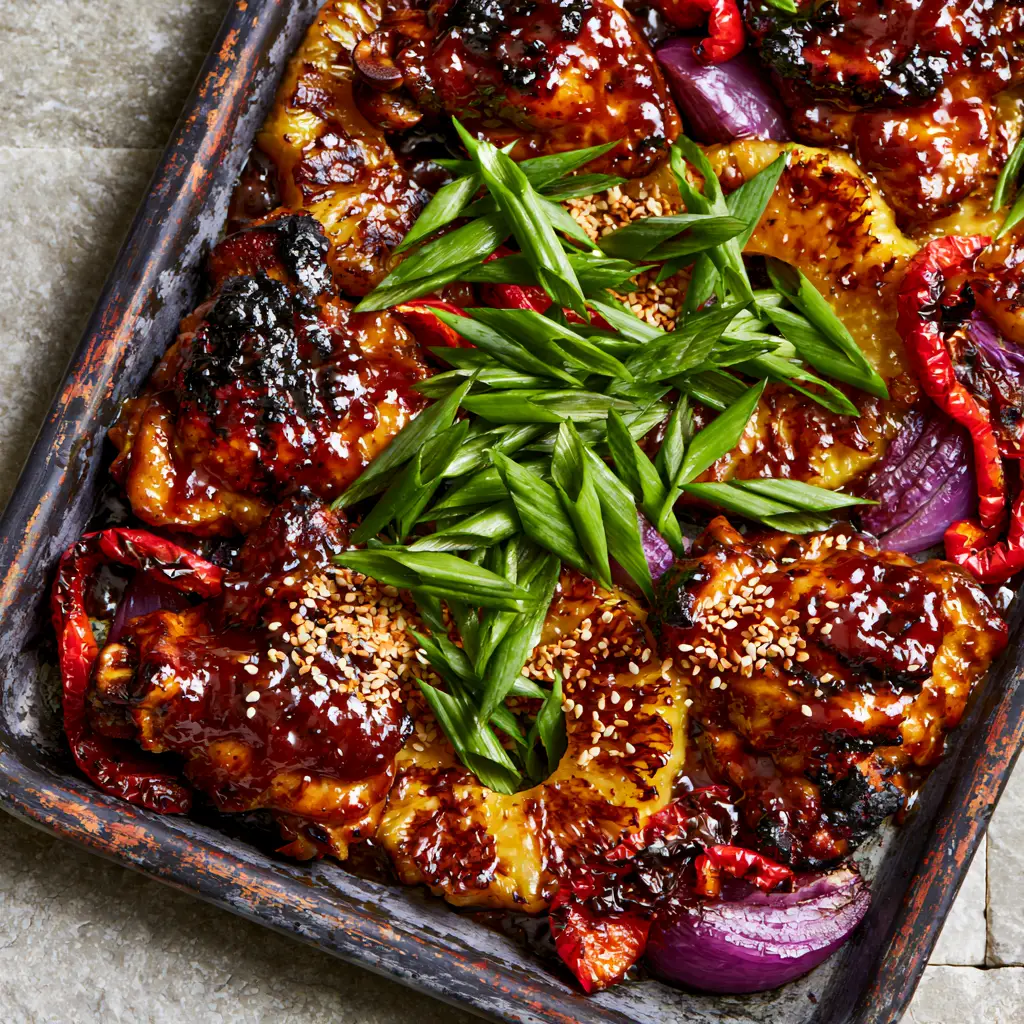
Every bite of this Huli Huli Chicken offers a masterclass in flavor balancing—the salty depth of soy sauce meets the tropical brightness of pineapple juice and the sharp bite of fresh ginger. As the chicken roasts, the sugars in the glaze undergo a beautiful Maillard reaction, resulting in visible charred edges and deep grill marks that contrast perfectly against the bright, blistered red bell peppers and softened purple onion wedges. This isn’t just a meal; it is a sensory experience of heat, smoke, and sweetness.
Why This Huli Huli Chicken Recipe Reigns Supreme
- The Mahogany Glaze: We use a high-sugar-to-acid ratio to ensure a thick, glossy, mahogany-colored finish that clings to every crevice of the bone-in skin-on chicken thighs.
- Visual Contrast: The combination of blistered red bell pepper strips, caramelized red onion petals, and golden pineapple rings creates a vibrant palette that looks professional yet authentic.
- Perfect Texture: By using bone-in thighs, we ensure the meat stays incredibly juicy while the high-heat roasting creates that signature charred skin.
- One-Pan Simplicity: This recipe delivers the complexity of a slow-roasted rotisserie dinner with the cleanup convenience of a baked Huli Huli chicken sheet pan meal.
The Anatomy of an Authentic Hawaiian Glaze
To achieve the specific visual results described in our blueprint, every ingredient serves a dual purpose: flavor and physics. The sauce must be thick enough to glaze but thin enough to caramelize without burning instantly. If you enjoy this flavor profile, you might also love our slow cooker sticky honey chicken for a different take on sweet-savory poultry.
The Poultry and Produce
2 lbs (907g) Bone-In, Skin-On Chicken Thighs: The skin is essential for holding the glaze and achieving those charred edges. Bone-in meat provides the thermal mass needed to withstand high heat without drying out.
1 Fresh Pineapple: We use thick rings (about 1/2 inch or 1.25cm thick) to ensure they hold their shape. The natural sugars in fresh pineapple create those beautiful caramelized brown sear marks when roasted.
2 Large Red Bell Peppers: Sliced into thick strips, these provide a pop of color and a smoky, blistered skin texture after their time under the broiler.
1 Large Red Onion: Cutting these into wedges or “petals” allows them to soften and caramelize, adding a savory depth to the sweet fruit components.
The Foundation of the Huli Huli Sauce
1 cup (240ml) Unsweetened Pineapple Juice: This provides the base acidity and tropical flavor. It contains bromelain, which helps tenderize the chicken skin during the marinating process.
1/2 cup (120ml) Soy Sauce: Use a high-quality naturally brewed soy sauce. This is responsible for the deep mahogany hue and the essential saltiness of the Huli Huli Chicken.
1/2 cup (100g) Light Brown Sugar: This is the primary caramelizing agent. It provides the “stickiness” that allows the sauce to become a thick glaze rather than a thin wash.
1/4 cup (60ml) Ketchup: While it seems simple, ketchup adds tomato solids and vinegar, which thickens the sauce and adds a subtle tang that balances the soy.
2 tbsp (30g) Freshly Grated Ginger: Essential for that authentic Hawaiian zing. Ginger also aids in the aromatic profile as it roasts.
3 cloves (15g) Garlic, Minced: The garlic bits will brown into the glaze, creating tiny pockets of intense savory flavor.
1 tsp (5ml) Sesame Oil: Just a touch provides the fat needed to carry the aromatic flavors and adds a glossy sheen to the final presentation.
Essential Equipment for a Pro-Level Char
To replicate the weathered, top-down aesthetic of our visual prompt, you need the right tools. A dark metal baking sheet is superior to a light aluminum one here, as the dark surface absorbs more heat, facilitating better browning on the bottom of the chicken and vegetables.
You will also need a high-quality pastry brush for the “huli” (turning/basting) process. A silicone brush is easiest to clean, but a natural bristle brush holds more glaze for a thicker coating. Lastly, a meat thermometer is non-negotiable to ensure your bone-in thighs reach exactly 175°F (79°C) for optimal texture.
Step-by-Step Instructions to Mastering Huli Huli Chicken
Preparing the Signature Mahogany Glaze
In a medium saucepan, combine the pineapple juice, soy sauce, brown sugar, ketchup, ginger, garlic, and sesame oil. Bring the mixture to a gentle simmer over medium heat. Whisk constantly for about 8–10 minutes until the liquid reduces by one-third.
The glaze should be thick enough to coat the back of a spoon. Reserve half of this sauce in a separate bowl for basting during the roasting process; this prevents cross-contamination with raw chicken juices.
Marinating for Maximum Flavor Depth
Place the chicken thighs in a large bowl or zip-top bag. Pour the non-reserved half of the glaze over the chicken, ensuring every thigh is well-coated under the skin. Let this marinate in the refrigerator for at least 2 hours, though 6 hours is ideal for the flavors to penetrate the bone.
The Art of the Sheet Pan Arrangement
Preheat your oven to 400°F (200°C). Lightly grease a dark, weathered baking sheet with a high-smoke-point oil like avocado oil. Place the chicken thighs skin-side up on the pan, leaving space between each piece.
Tuck the thick pineapple rings, red bell pepper strips, and red onion petals into the spaces between the chicken. This crowded (but not overlapping) arrangement allows the juices from the chicken to season the vegetables as they roast.
Roasting and the Vital “Huli” Process
Slide the pan into the center of the oven and roast for 20 minutes. At this point, the chicken will be opaque but not yet charred. Remove the pan and perform the first “huli”—brush the chicken and the pineapple rings generously with the reserved glaze.
Return to the oven for another 15 minutes. The smell should be intensely sweet and savory. For the final visual touch, turn your oven to the broiler setting (High) for 3–5 minutes. Watch closely! You are looking for the skin to bubble and develop those specific charred edges and mahogany sear marks on the pineapple.
The Final Flourish and Garnish
Remove the pan from the oven and let it rest for 5 minutes. This resting period allows the glaze to set into a sticky lacquer. Just before serving, take your diagonal-cut bright green scallions and scatter them heavily across the pan. Finish with a light dusting of toasted white sesame seeds for that professional, high-contrast look.
Expert Tips for Success
- Pat the Skin Dry: Before marinating, pat the chicken skin with paper towels. Even with a liquid marinade, starting with dry skin helps the fats render more effectively for a better char.
- Don’t Skip the Broiler: The dark, weathered look of authentic Huli Huli Chicken is hard to achieve with standard roasting alone. The broiler is your best friend for those glossy highlights.
- Use Fresh Pineapple: Canned pineapple is often too soft and will disintegrate. Fresh rings provide the structural integrity needed to hold those beautiful sear marks.
- Temperature Control: Chicken thighs are best at 175°F (79°C), unlike breasts which are done at 165°F. The extra 10 degrees allows the connective tissue to break down, resulting in a “fall-off-the-bone” experience.
Perfect Pairings: What to Serve with Huli Huli Chicken
To balance the sweetness of the glaze, serve this dish alongside a bright, acidic salad. A spinach mandarin salad provides a citrusy pop that mirrors the pineapple notes. If you want a more substantial side, these smashed potatoes are excellent for soaking up any extra mahogany sauce left on the sheet pan.
For those following a specific diet, this recipe is easily adapted. Serve it with a simple spinach salad for a lighter, low-carb lunch, or check out our quick paleo dinner recipes for more inspiration on clean, tropical eating.
Storage and Reheating Guidance
Refrigeration: Store leftovers in an airtight container for up to 3 days. The glaze will actually thicken further in the fridge, making the chicken even tastier the next day.
Reheating: To maintain the charred skin, avoid the microwave. Instead, place the chicken and vegetables back on a baking sheet and heat in a 350°F (175°C) oven for 10 minutes until the glaze begins to bubble again.
Freezing: You can freeze the marinated raw chicken in the glaze for up to 3 months. Thaw completely in the refrigerator before roasting as directed.
Frequently Asked Questions
You can, but breasts dry out faster and lack the skin needed for that signature char. If using breasts, reduce the cooking time and monitor the internal temperature closely to hit exactly 165°F (74°C).
The mahogany color comes from the reduction of soy sauce and brown sugar. If it looks light, simmer the sauce longer on the stovetop until it thickens, and ensure you use the broiler for the final few minutes of cooking.
They are similar but distinct. Huli Huli sauce specifically uses pineapple juice and often ketchup, giving it a more tropical, acidic, and complex profile than a standard ginger-soy teriyaki.
‘Huli’ means ‘turn’ in Hawaiian. Historically, the chicken was cooked on a spit and turned constantly while being basted with sauce, which is why we mimic the process by basting frequently in the oven.
The Complete Huli Huli Chicken Recipe
Huli Huli Chicken: The Ultimate Mahogany-Glazed Hawaiian Sheet Pan Dinner
Ingredients
Equipment
Method
- Simmer pineapple juice, soy sauce, brown sugar, ketchup, ginger, garlic, and sesame oil in a saucepan for 8-10 minutes until reduced by one-third. Reserve half.
- Marinate the chicken in the remaining sauce for at least 2 hours in the refrigerator.
- Preheat oven to 400°F (200°C). Place chicken, pineapple, peppers, and onions on a dark baking sheet.
- Roast for 20 minutes, then remove and brush generously with the reserved mahogany glaze.
- Roast for another 15 minutes. Switch to broiler for 3-5 minutes until skin is charred and pineapple has brown sear marks.
- Scatter diagonal-cut green onions and toasted sesame seeds over the hot chicken and vegetables before serving.
Notes
Always use fresh ginger for the most aromatic glaze results.
Take the Tropical Vibes to Your Table
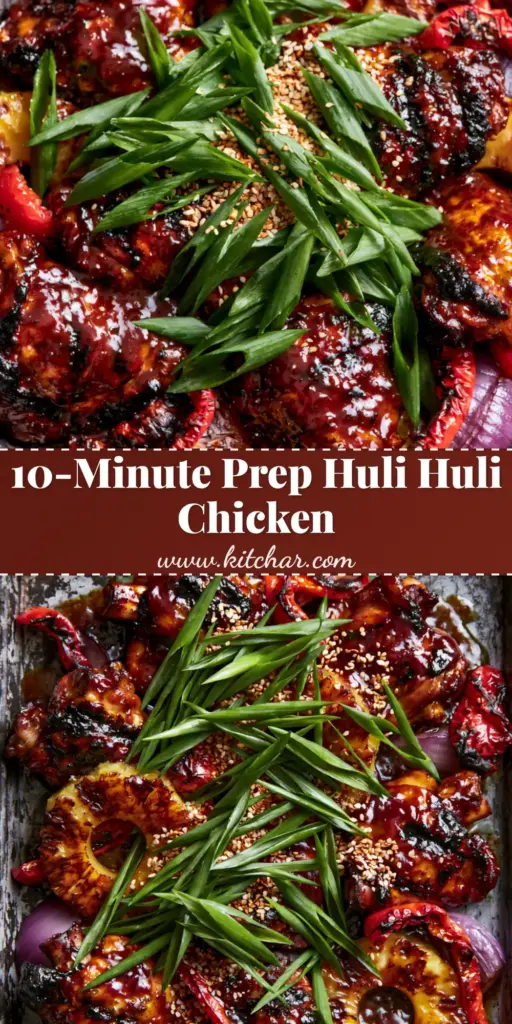
This Huli Huli Chicken is more than just a recipe; it’s a centerpiece that brings the warmth of the islands to your dinner table. The combination of the mahogany-colored glaze and the charred, blistered vegetables makes it a visual masterpiece that tastes even better than it looks. Whether you’re hosting a summer gathering or looking for a way to brighten a weeknight, this sheet pan wonder is a guaranteed success.
If you made this recipe, we’d love to see your results! Leave a comment below and tell us how your glaze turned out. Don’t forget to share your photos and follow us on Pinterest for more culinary inspiration.