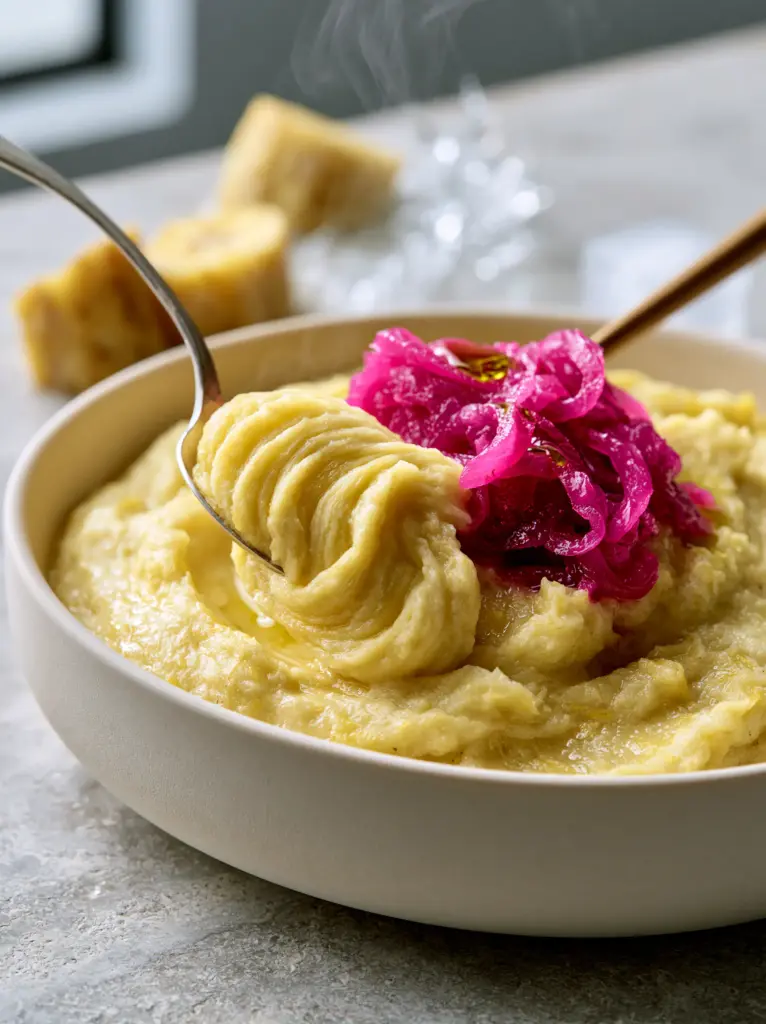
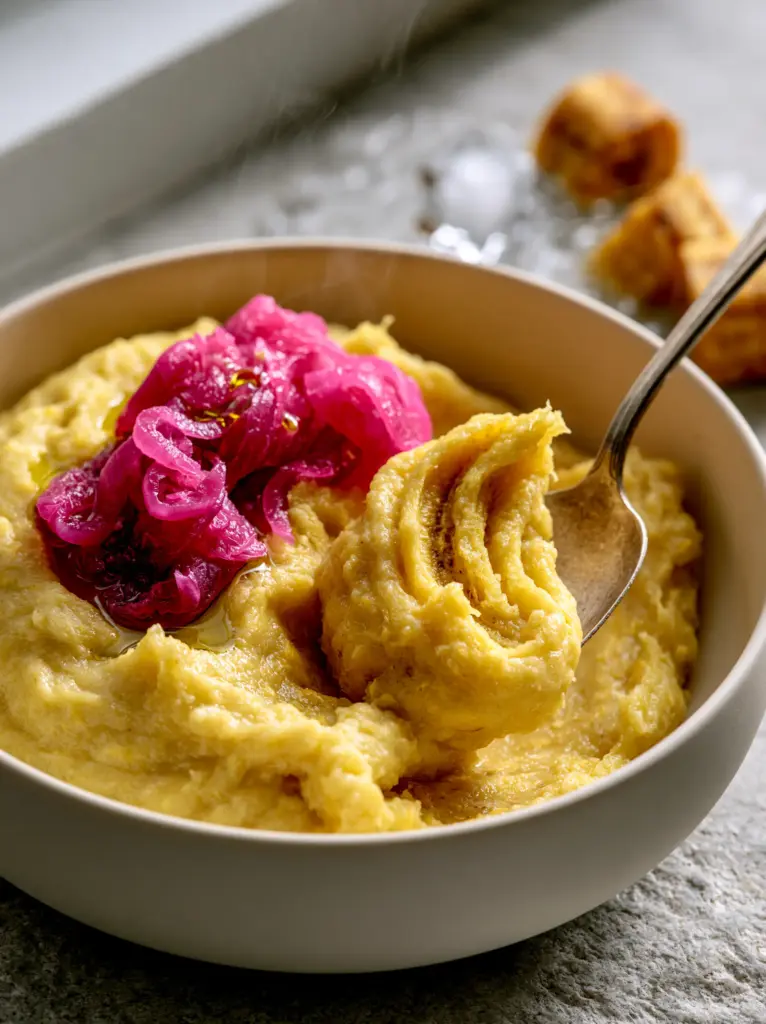
There is a specific, soul-warming magic that happens when you master the art of Boiled Green Plantains. In the heart of the Caribbean, this dish transcends being a mere side; it is a cultural cornerstone known as Mangú. Imagine a bowl where the mash is so velvety it holds the deep ridges of a silver spoon, glowing a soft, pale yellow under the morning sun.
Achieving that hyper-realistic, high-end food photography look isn’t just about the lighting. It’s about the culinary science of starch. When you prepare Boiled Green Plantains correctly, you transform a rigid, starchy fruit into a creamy masterpiece that rivals the finest pomme purée.
In this guide, we are diving deep into the “cold water splash” technique. This pro-secret ensures your mash remains supple and glistening rather than turning into a dry, heavy block. Whether you are looking for quick recipes to brighten your morning or a traditional breakfast, this is the definitive method.
The Anatomy of a Perfect Plantain Mash
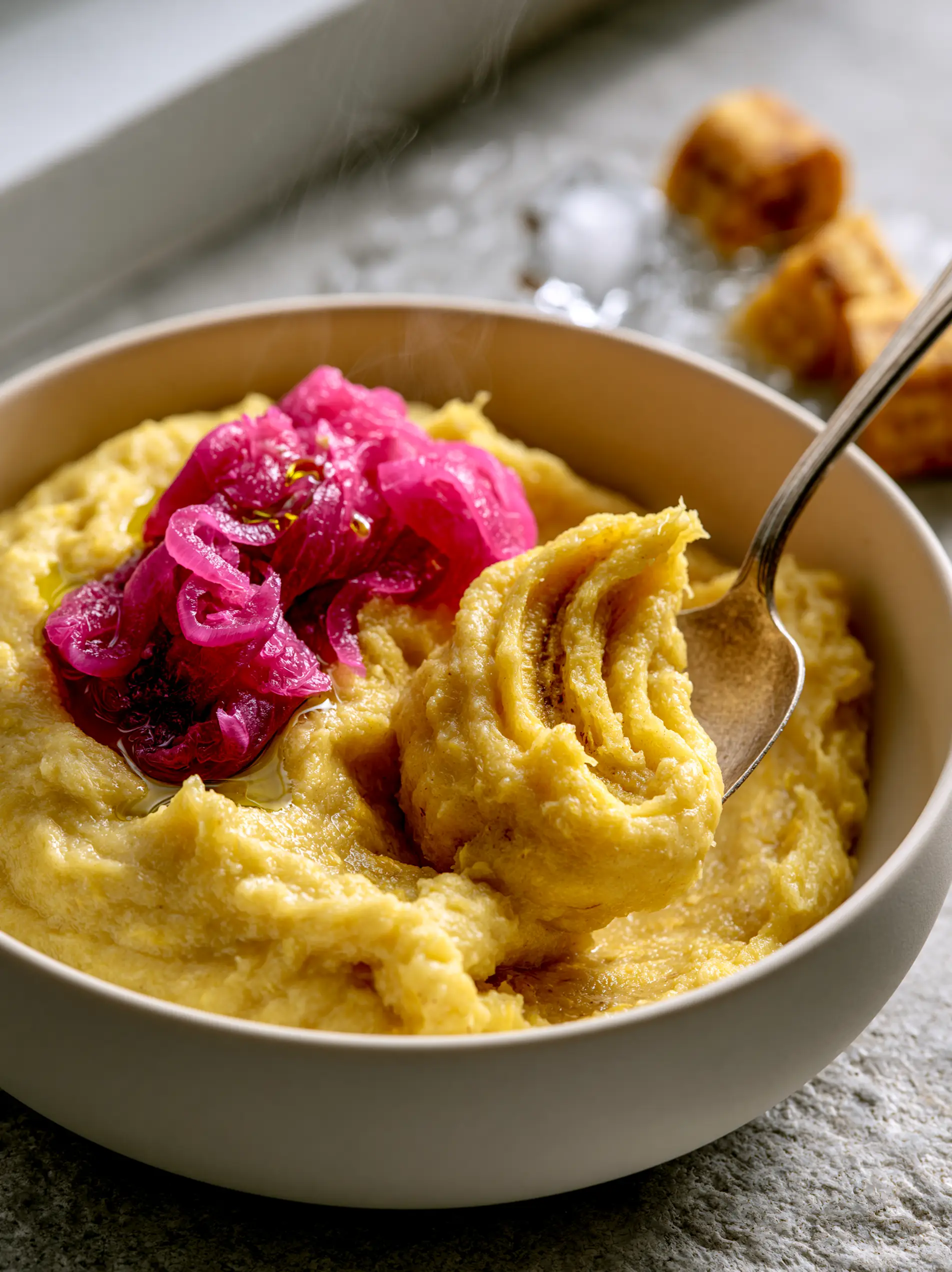
- Velvety Texture: The mash must be incredibly smooth, showing deep ridges when lifted by a spoon, indicating a perfect fat-to-starch ratio.
- Vibrant Contrast: A pile of translucent, fuchsia-hued pickled red onion rings provides the necessary acid to cut through the richness.
- Temperature Play: Visual steam rising from the bowl tells your palate the dish is fresh, while the olive oil drizzle adds a buttery glisten.
- The Secret Hack: Using a single ice cube and a splash of cold water during the mashing process to “shock” the starches into a creamy state.
Essential Components for Silky Boiled Green Plantains
Green Plantains: Look for plantains that are firm and entirely green. These provide the structural starch needed for a thick, satisfying mash that doesn’t lean toward sweetness.
Salted Boiling Water: This is your first opportunity to season. Ensuring the water is as salty as the sea helps the plantains absorb flavor from the inside out as they soften.
Unsalted Butter (or Margarine): 4 tbsp (60g) of high-quality butter acts as the primary emulsifier. It creates that pale yellow hue and the “buttery glisten” described in elite food styling.
Red Onion Rings: One large red onion, thinly sliced, becomes the fuchsia crown of the dish. When steeped in acid, they turn translucent and vibrant.
White Vinegar or Lime Juice: 1/2 cup (120ml) of acid is required to pickle the onions. This sharp contrast is what makes the Boiled Green Plantains truly sing.
Ice-Cold Water & One Ice Cube: 1/2 cup (120ml) of water with an ice cube is the “forensic” secret. It prevents the plantains from hardening as they cool, keeping them “velvety” for hours.
Extra Virgin Olive Oil: A finishing drizzle of 1 tbsp (15ml) adds a luxurious mouthfeel and a beautiful sheen for the final presentation.
Professional Tools for a Macro-Ready Finish
To achieve the “macro close-up” consistency, a standard fork won’t always suffice. A heavy-duty potato masher or even a food mill will ensure there are zero lumps in your Boiled Green Plantains. You will also need a wide, matte white ceramic bowl to provide a minimalist backdrop that makes the fuchsia onions pop.
A small stainless steel saucepan is ideal for tempering the onions, while a large stockpot is necessary to give the plantain chunks enough room to dance in the boiling water without bruising.
Step-by-Step Evolution to Creamy Mangú
Preparing the Plantains for the Boil
Cut the ends off 4 large green plantains. Score the skin lengthwise with a sharp knife, being careful not to cut into the flesh, and peel them under running water to prevent staining your hands. Slice them into 1-inch (2.5cm) rounds.
The Boiling Process and Sensory Cues
Submerge the slices in a pot of boiling salted water. Boil for 15-20 minutes. You are looking for a specific visual change: the plantains should transition from a bright white to a duller, translucent cream color and feel “fork-tender” with no resistance.
The Fuchsia Quick-Pickle Technique
While the plantains boil, sauté your red onion rings in a small pan with 1 tbsp (15ml) of olive oil and a pinch of salt. Once they soften, add 1/2 cup (120ml) of vinegar. Watch as they transform into a vibrant fuchsia hue—this is the “bright fuchsia” look required for an authentic Dominican aesthetic.
The Cold Water Shock and Mash
Drain the Boiled Green Plantains but keep them in the hot pot. Add your butter immediately. As you begin to mash, pour in the 1/2 cup (120ml) of ice-cold water and drop in that single ice cube. Mash vigorously until the mixture is pale yellow and shows deep ridges.
The Final Garnish and Presentation
Scoop a generous portion into a matte white bowl. Use the back of a silver spoon to create a thick swirl. Top with the translucent onion rings and a final, tiny drizzle of olive oil. The steam should be rising gently from the deep ridges of the mash.
Expert Tips for Success with Boiled Green Plantains
- Don’t Over-Sauté: The onions should be soft but still have a slight “snap.” Overcooking them will make them lose that vibrant fuchsia translucency.
- The Mash Timing: Always mash your Boiled Green Plantains while they are screaming hot. If they cool down before the butter and cold water are added, they will become grainy.
- Salt Control: Plantains are starch-heavy and soak up salt. Taste the mash before plating; it usually needs more salt than you think to achieve that savory balance.
- Consistency Check: If your mash looks too dry, add an extra splash of the hot boiling water. It should look like a “generous, thick swirl” on the spoon.
Storing and Reheating Your Tropical Mash
Boiled Green Plantains are best enjoyed immediately to maintain that “velvety consistency.” However, you can store leftovers in an airtight container for up to 3 days. To reheat, add a splash of water or milk and microwave or heat on the stovetop, stirring constantly to restore the creaminess.
You can also freeze the mash for up to a month. Thaw it overnight in the refrigerator and reheat with a little extra butter to bring back that buttery glisten.
What to Serve With This Caribbean Classic
While Mangú is traditionally served with “Los Tres Golpes” (fried cheese, salami, and eggs), it also pairs beautifully with modern proteins. Try serving it alongside steak dinner ideas for a starch alternative that is much more interesting than mashed potatoes.
For a lighter lunch, pair the creamy mash with a crisp cucumber salad recipe or a zesty lemon basil chicken salad. The acidity of the salad complements the dense, savory nature of the Boiled Green Plantains perfectly.
Common Questions About Dominican Style Plantains
Yellow plantains are sweet and soft. While you can boil them, they won’t yield the savory, thick, and ridge-holding consistency required for traditional Mangú. Stick to green plantains for this specific dish.
The vibrant pink/fuchsia color comes from the chemical reaction between the red onion’s pigments and the acid in the vinegar. Sauté them briefly first, then add the vinegar to ‘bloom’ the color.
No. While both use green plantains, Mangú is made from boiled plantains and is creamy/smooth. Mofongo is made from fried plantains mashed with garlic and chicharrón, resulting in a much firmer, textured dish.
It involves adding a small amount of ice-cold water or even an ice cube during the mashing process. This shocks the starch molecules and prevents them from binding into a rubbery mass, ensuring a velvety texture.
Plantains are high in starch which sets quickly as it cools. The secret to keeping them soft is mashing them while hot and adding a splash of very cold water and butter to emulsify the starches.
The Ultimate Boiled Green Plantains Recipe
Boiled Green Plantains: The Secret to Ultra-Creamy Dominican Mangú
Ingredients
Equipment
Method
- Peel the plantains and cut into 1-inch rounds. Place in a large pot of salted boiling water and cook for 15-20 minutes until fork-tender and translucent cream in color.
- In a small pan, sauté red onion rings with a splash of oil. Add vinegar and simmer until onions are a vibrant, translucent fuchsia.
- Drain plantains. Add butter, the cold water, and the ice cube. Mash vigorously until smooth, velvety, and deep ridges form.
- Scoop into a bowl, swirl with a silver spoon, top with pickled onions, and drizzle with olive oil.
Notes
Always mash while the plantains are piping hot to ensure a creamy texture.
Embrace the Creamy Comfort of Mangú
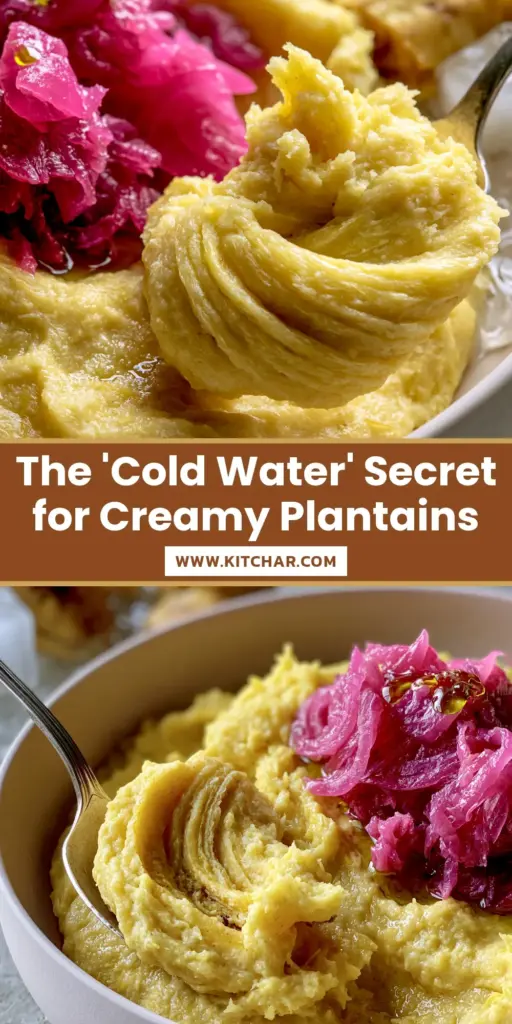
Mastering Boiled Green Plantains is a gateway to understanding Caribbean comfort food. This dish proves that with the right technique—like our cold water hack—simple ingredients can become a five-star meal. The contrast of the pale yellow mash against the fuchsia onions is a visual and culinary delight that will impress any guest.
Did you try the ice cube trick? Let us know in the comments how your mash turned out! If you loved this recipe, please share it and follow our journey on Pinterest for more visually stunning culinary inspiration.