When you think of comfort food, a glossy, peppery bowl of carbonara is likely at the top of your list. But what if you could capture that exact same decadent essence—the smoky bacon, the velvety golden sauce, and the sharp bite of aged cheese—without the heavy weight of traditional pasta? Enter cabbage carbonara, a dish that transforms the humble garden vegetable into elegant, tender ribbons that rival any linguine.
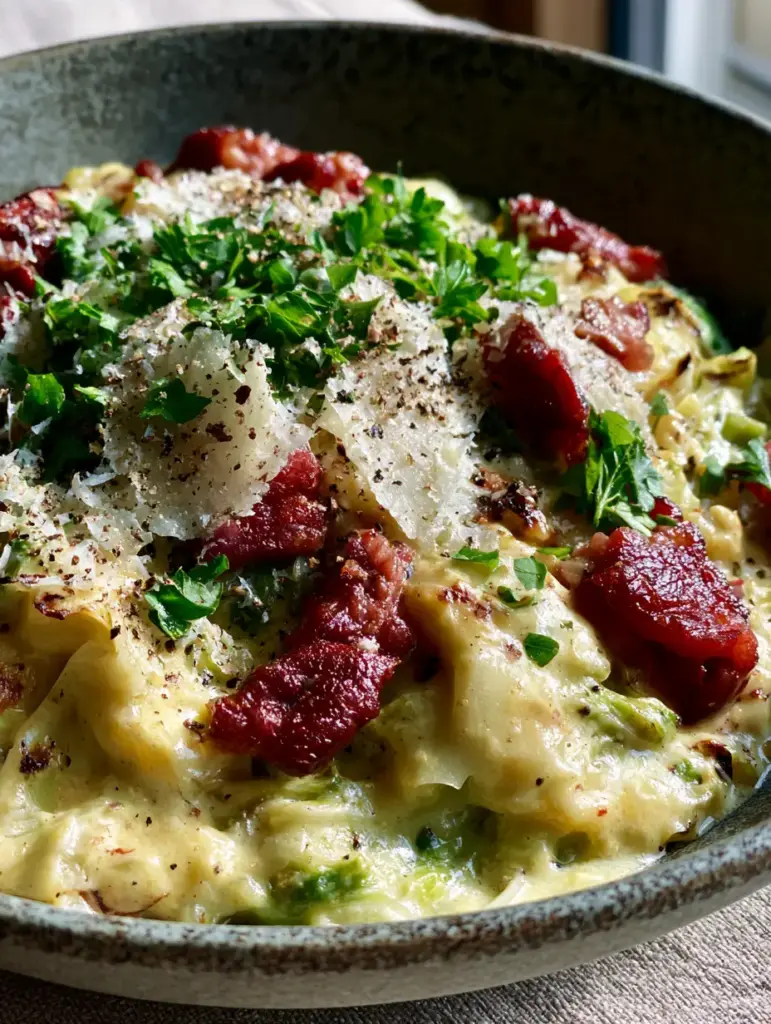
This isn’t just a “healthy substitute”; it is a culinary revelation in its own right. By leveraging the natural sweetness of savoy cabbage and searing it until slightly charred, we create a complex flavor profile that perfectly balances the rich, salty lardons and the thick, emulsified egg yolk sauce. The result is a vibrant, macro-friendly meal that looks as stunning as it tastes, finished with a snowy layer of Pecorino and a heavy hand of cracked black pepper.
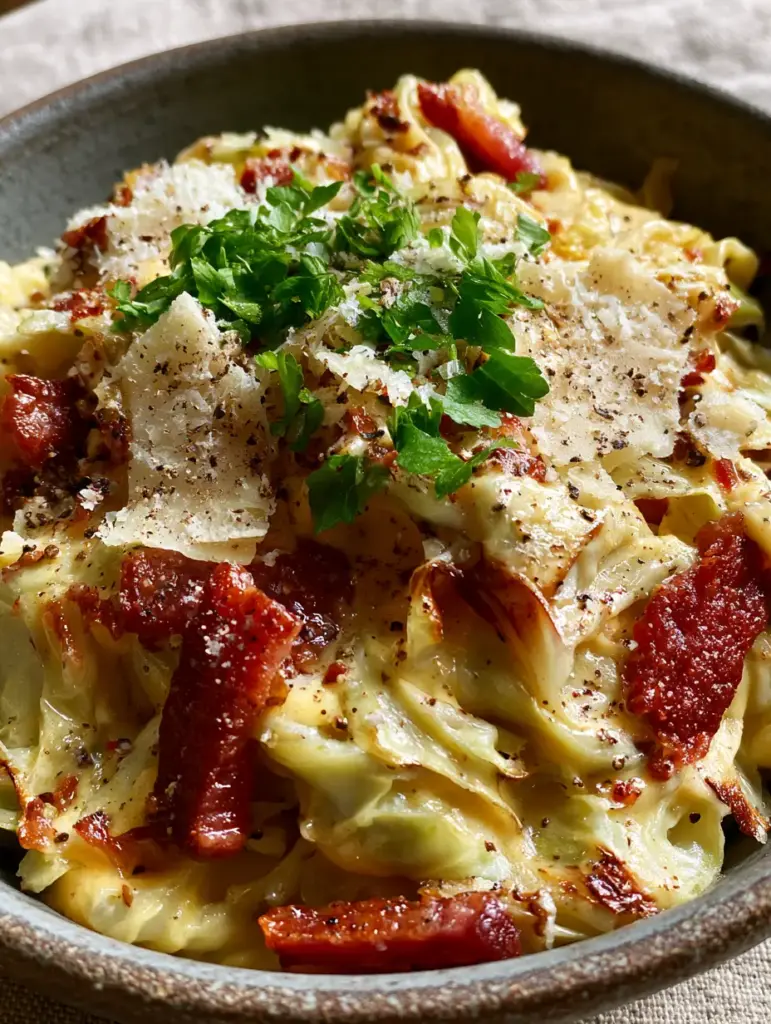
The Visual Alchemy of This Low-Carb Masterpiece
To truly understand the appeal of cabbage carbonara, one must look at the interplay of textures. We aren’t just boiling cabbage; we are treating it with the same respect as artisanal pasta. Here is why this specific recipe is a game-changer for your weeknight rotation:
- Tender-Crisp Texture: By using a mix of green and savoy cabbage, we achieve “ribbons” that hold their shape while soaking up the glossy, pale golden sauce.
- Smoky Depth: Generous chunks of deep-red smoked bacon lardons provide a savory crunch that contrasts beautifully with the creamy base.
- Aromatic Finish: A vibrant scatter of finely chopped flat-leaf parsley and coarsely cracked pepper adds brightness and a necessary spicy bite.
- Silky Mouthfeel: The secret lies in tempered egg yolks, which create a sauce that glistens under natural light, coating every ribbon without ever becoming “eggy” or scrambled.
Essential Components for the Perfect Cabbage Carbonara
Creating a restaurant-quality cabbage carbonara requires high-quality ingredients. Because the list is short, the quality of each item will directly impact the final flavor. Here is what you need to gather for your culinary forensic kit.
Savoy and Green Cabbage: Use a combination for the best results. Savoy cabbage provides beautiful crinkled texture, while standard green cabbage offers structural integrity for those “noodle” ribbons. You will need about 1 medium head (approx. 800g) sliced into 1/2-inch (1.25cm) strips.
Smoked Bacon Lardons: Look for thick-cut, high-quality smoked bacon. You will need 8oz (225g), sliced into thick batons. These provide the foundational fat for sautéing the cabbage and the salty punch characteristic of carbonara.
Egg Yolks: The soul of the sauce. Use 4 large (approx. 72g) egg yolks at room temperature. The yolks provide the “thick, glossy, pale golden” appearance described in our visual blueprint.
Parmesan and Pecorino Romano: Use 1/2 cup (50g) of finely grated Parmesan for the sauce and an additional 1/4 cup (25g) of freshly grated Pecorino Romano for the “snowy” topping. The Pecorino adds a sharp, salty tang that balances the rich yolks.
Black Peppercorns: Do not use pre-ground pepper. You need 1 tbsp (6g) of whole peppercorns, coarsely cracked in a mortar and pestle or a spice grinder to ensure large, flavorful flakes.
Fresh Flat-Leaf Parsley: 1/4 cup (10g) finely chopped. This provides the “vibrant scatter” that cuts through the richness of the fats.
Foundational Additions: You will also need 1 tbsp (15ml) of extra-virgin olive oil for the initial sear, and a pinch of kosher salt (though be careful, as the bacon and cheese are quite salty).
Professional Equipment for Culinary Success
To achieve the specific “slightly charred” look and “glossy” finish, you need the right tools. A heavy-bottomed cast iron skillet or a large stainless steel sauté pan is essential for heat retention. You will also need a stainless steel whisk and a heat-proof glass bowl to prepare the tempered egg mixture.
For the cabbage, a sharp chef’s knife is non-negotiable to achieve those uniform ribbons. If you prefer a more meltingly tender cabbage texture, ensure your pan is large enough to prevent crowding, which leads to steaming rather than searing.
Step-by-Step Instructions to Culinary Perfection
Preparing the Cabbage “Noodles”
Start by removing the tough outer leaves of your cabbage heads. Cut the cabbage in half, remove the core, and slice into long, 1/2-inch (1.25cm) ribbons. If you are focusing on healthy lifestyle choices, this step is vital as it replaces processed flour with fiber-rich greens.
Rendering the Lardons
Place your 8oz (225g) of bacon lardons into a cold skillet and turn the heat to medium. Allow the fat to render slowly until the bacon is deep-red and crispy. Use a slotted spoon to remove the lardons, leaving the liquid gold (bacon fat) in the pan. This fat is essential for the flavor profile of the cabbage carbonara.
The High-Heat Sear
Turn the heat up to medium-high. Add the cabbage ribbons to the hot bacon fat. Sauté for 8-10 minutes, tossing frequently. You are looking for a sensory cue: the cabbage should be tender but show distinct charred, golden-brown edges. This charring adds a nutty dimension that mimics the toasted notes of pasta.
The Emulsification Process
While the cabbage cooks, whisk together your 4 egg yolks and 1/2 cup (50g) of grated Parmesan in a small bowl until a thick paste forms. Add 2 tablespoons (30ml) of warm water to the mixture to loosen it slightly. This “tempers” the eggs, preparing them for the heat of the pan.
Marrying the Sauce and Cabbage
Remove the skillet from the heat entirely. This is the most critical step to avoid scrambled eggs. Add the crispy bacon back into the pan. Pour the egg and cheese mixture over the cabbage ribbons. Toss vigorously with tongs. The residual heat from the cabbage and the pan will melt the cheese and thicken the yolks into a thick, glossy, pale golden sauce.
Expert Tips for Carbonara Success
- Control the Heat: Never add the egg mixture while the pan is still on the burner. The residual heat of the sautéed cabbage is plenty to cook the yolks into a creamy custard.
- Freshly Cracked Only: For the large flakes of black pepper seen in our macro photography, crush whole peppercorns yourself. The volatile oils in fresh pepper are far superior to the dull flavor of pre-ground varieties.
- The Water Trick: If the sauce looks too thick or “tacky,” add a teaspoon of hot water at a time while tossing until the sauce reaches a glistening, fluid consistency.
- Seasoning Caution: Between the bacon, Parmesan, and Pecorino, this dish is naturally high in sodium. Always taste before adding additional kosher salt.
Storage, Reheating, and Make-Ahead Advice
Cabbage carbonara is best served immediately to appreciate the glossy emulsion. However, if you have leftovers, they can be stored in an airtight container in the refrigerator for up to 2 days. To reheat, do not use a microwave, as it will scramble the eggs. Instead, place the cabbage in a small pan over very low heat with a splash of water, tossing constantly until just warmed through.
We do not recommend freezing this dish. The cellular structure of the cabbage breaks down when frozen, resulting in a watery mess upon thawing, and the delicate egg sauce will break and lose its creaminess.
What to Serve With Your Carbonara
While this dish is incredibly satisfying on its own, it pairs beautifully with other Mediterranean-inspired sides. If you are serving a crowd, consider a side of roasted garlic potatoes or even a light cucumber salad to provide a crisp contrast to the rich carbonara sauce. For those who still want a bit of pasta on the table, this dish serves as an excellent side to a mushroom feta pasta.
Frequently Asked Questions
Absolutely. Guanciale (cured pork jowl) is the traditional choice for Roman carbonara. It has a higher fat content and a deeper funk, which pairs exceptionally well with the sweetness of the sautéed cabbage.
It is best to grate your own Parmesan and Pecorino. Pre-grated cheeses are often coated in potato starch or cellulose, which prevents them from melting smoothly into the egg yolks, potentially resulting in a grainy sauce.
The key is to remove the skillet from the heat source entirely before adding the egg mixture. The residual heat from the sautéed cabbage is sufficient to cook the eggs into a creamy sauce without curdling them.
Yes! By replacing pasta with cabbage, this dish drastically reduces the carbohydrate count while maintaining high healthy fats from the egg yolks and bacon, making it perfect for Keto and low-carb diets.
A mix of Savoy and Green cabbage is ideal. Savoy cabbage has a beautiful crinkled texture that holds sauce well, while Green cabbage provides the sturdiness needed to mimic the ‘al dente’ feel of pasta.
The Ultimate Cabbage Carbonara Recipe
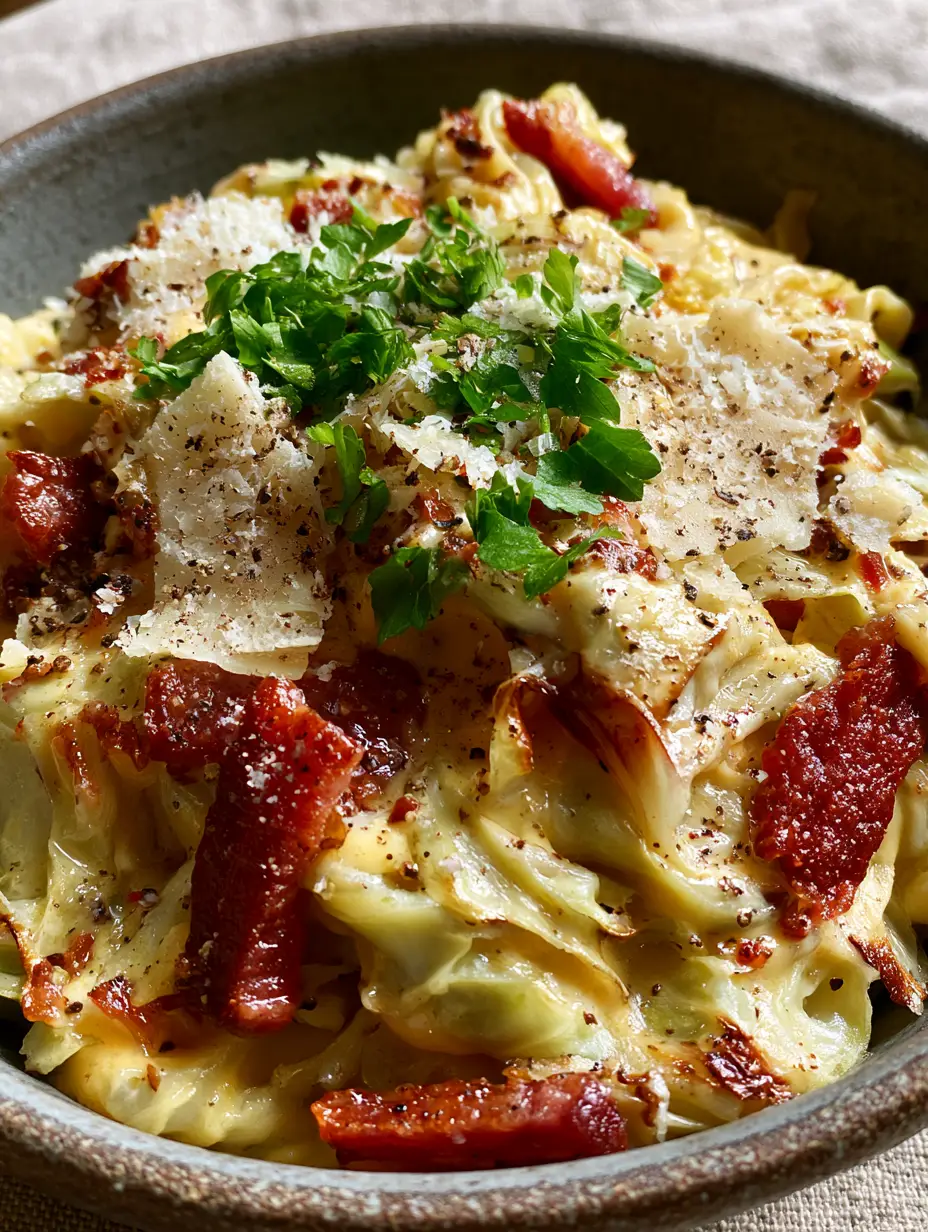
Cabbage Carbonara: A Luxurious Low-Carb Twist on a Roman Classic
Ingredients
Equipment
Method
- Slice the cabbage into 1/2-inch wide ribbons, ensuring they are long like pasta.
- In a small bowl, whisk together the 4 egg yolks and 1/2 cup (50g) of Parmesan until a thick paste forms. Add 2 tbsp (30ml) of warm water to temper.
- In a large skillet over medium heat, cook the bacon lardons until deep-red and crispy. Remove bacon but keep the fat in the pan.
- Increase heat to medium-high. Add cabbage ribbons to the skillet. Sauté for 8-10 minutes until tender with charred edges.
- Remove pan from heat. Add bacon back in. Pour in the egg mixture and toss vigorously for 1-2 minutes until a glossy, thick sauce forms.
- Top with snowy Pecorino, cracked black pepper, and fresh parsley. Serve immediately in rustic bowls.
Notes
Tip 2: Use a mix of Savoy and Green cabbage for the best texture contrast.
Bring the Flavors of Rome to Your Kitchen
This cabbage carbonara is proof that low-carb cooking doesn’t have to mean sacrificing flavor or texture. With its deep-red smoked bacon, snowy Pecorino, and that signature glossy yolk sauce, it is a dish that satisfies the soul. Whether you are a seasoned home cook or just starting your culinary journey, this recipe offers a masterclass in flavor balancing and emulsification.
If you enjoyed this twist on a classic, we would love to hear from you! Leave a comment below, and don’t forget to share your beautiful creations on Pinterest. Happy cooking!