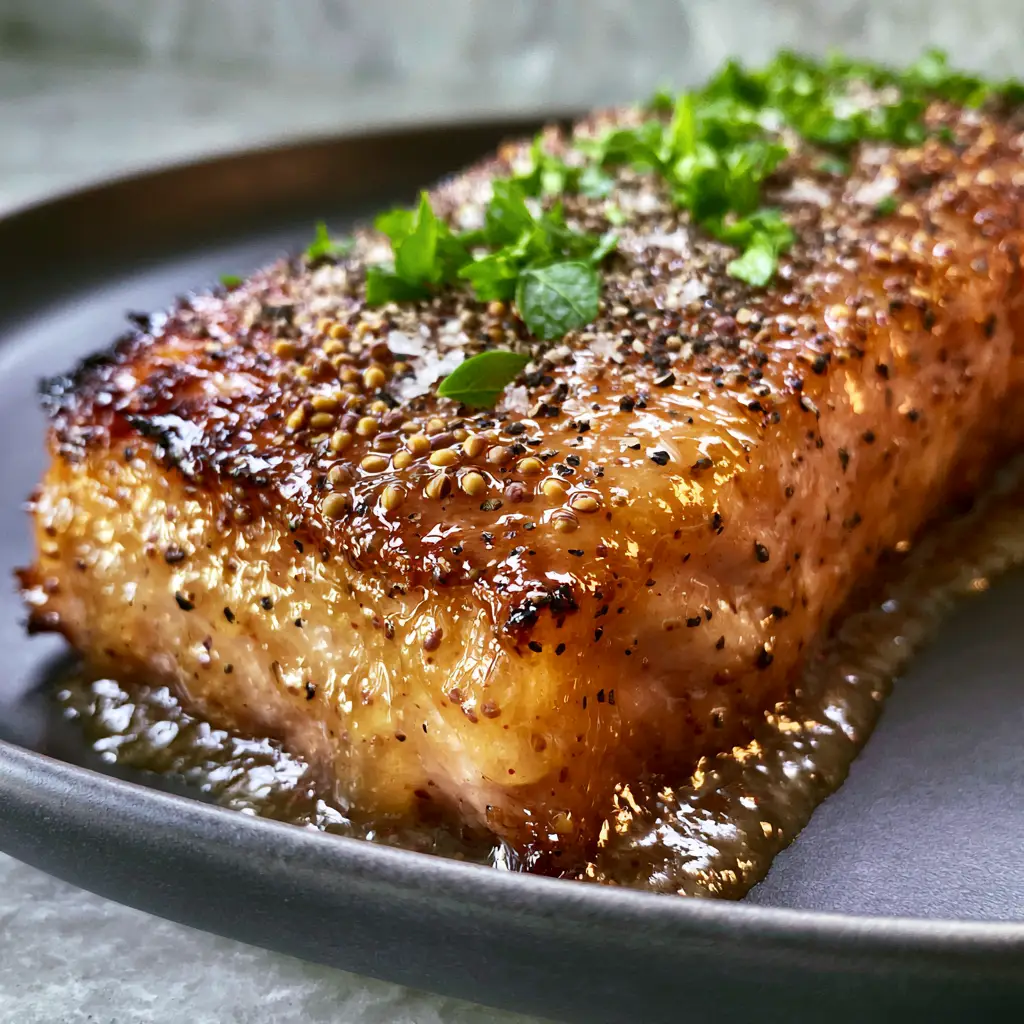
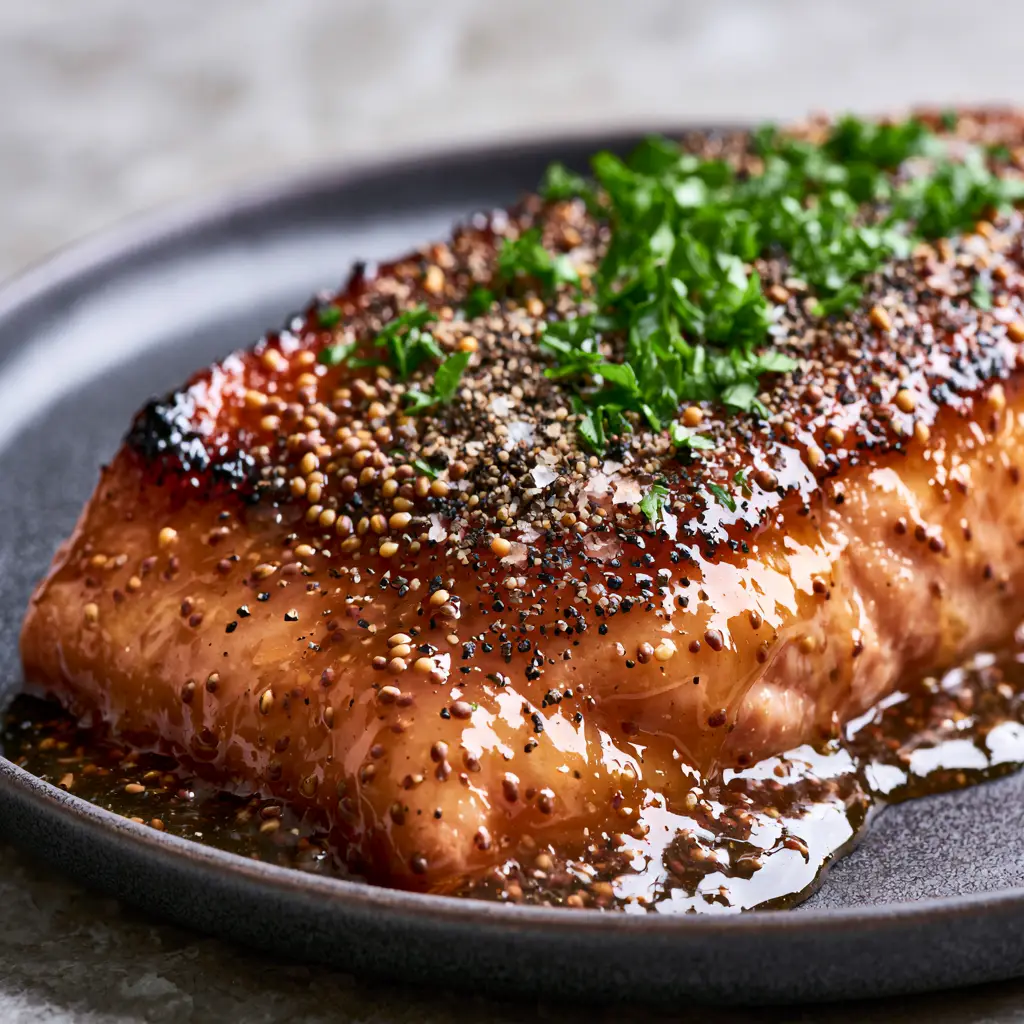
There is a specific, mouthwatering moment when the natural sugars in maple syrup meet the high heat of an oven, transforming into a thick, translucent amber coating. This Maple dijon baked salmon is the embodiment of that culinary magic, offering a restaurant-quality experience right on your matte charcoal ceramic plate.
Imagine a thick, succulent fillet where the protein is cooked just enough to reveal large, moist flakes that pull apart with the gentlest pressure of a fork. The surface is a landscape of textures: the pop of whole grain mustard seeds, the crunch of cracked black pepper, and the crystalline shimmer of flaky sea salt.
Whether you are a seasoned home cook or a weeknight warrior, this recipe delivers on the promise of an authentic, high-resolution dining experience. The bright green contrast of finely minced fresh parsley against the caramelized, slightly charred edges makes this dish as visually stunning as it is delicious.
The Irresistible Allure of This Glazed Salmon Masterpiece
- Textural Harmony: Experience the contrast between the tacky, glossy glaze and the tender, succulent interior of the fish.
- Visually Stunning: The vibrant green parsley and golden-amber glaze provide a professional “handheld smartphone photo” aesthetic.
- Sophisticated Flavor Profile: A perfect balance of Grade A maple sweetness, the sharp tang of Dijon, and the earthy pop of whole grain mustard.
- Caramelized Excellence: Specific cooking techniques ensure those sought-after charred edges that concentrate the maple flavor.
Sourcing Premium Ingredients for Maximum Flavor Depth
To achieve the “extreme close-up” perfection described in our blueprint, every ingredient must serve a structural and flavorful purpose. Here is what you will need for this Maple dijon baked salmon.
4 (6oz / 170g) Salmon Fillets: Choose thick-cut fillets, preferably center-cut, to ensure they remain moist and succulent while the glaze caramelizes. Look for vibrant pink or deep orange flesh with healthy fat marbling.
1/4 cup (60ml) Pure Maple Syrup: Use Grade A Dark Color for its robust, deep flavor that stands up to the heat of the oven. This provides the sugar base for that thick, translucent amber finish.
2 tbsp (30g) Dijon Mustard: This acts as an emulsifier, binding the syrup and oil together while providing a necessary acidic punch. It cuts through the richness of the salmon perfectly.
1 tbsp (15g) Whole Grain Mustard: Crucial for the visual blueprint, these seeds provide a rustic texture and “pops” of flavor in every bite. They remain visible even after the glaze has baked down.
1 tbsp (15ml) Extra Virgin Olive Oil: This foundational fat ensures the fish stays moist and helps the glaze spread evenly across the surface. It also aids in the searing of those caramelized edges.
2 tsp (10g) Cracked Black Pepper: Use a coarse grind to match the visual requirement of a “heavy sprinkle” of pepper. The heat of the pepper balances the sweetness of the maple.
1 tsp (5g) Flaky Sea Salt: Unlike table salt, flaky sea salt (like Maldon) provides a visible shimmer and a clean, briny crunch. It should be applied just before serving for maximum impact.
2 tbsp (8g) Fresh Flat-Leaf Parsley: Minced finely, this provides the “bright green” contrast that brings the charcoal plate presentation to life. Always use fresh; dried parsley cannot replicate this vibrancy.
Essential Equipment for a Professional Finish
Creating a dish that looks like a high-resolution food photograph requires the right tools. To get those “caramelized, slightly charred edges,” you need even heat distribution.
A heavy-rimmed baking sheet or a cast-iron skillet is ideal for this recipe. If you want to replicate the exact look of our blueprint, serving the finished product on a matte charcoal ceramic plate will make the amber glaze and green parsley pop with intensity.
You will also need a silicone pastry brush to apply the glaze. This allows you to “smother” the fillets, ensuring the glaze is “dripping down the sides” as it bakes, creating that succulent, tacky appearance.
The Science of the Perfect Maple Dijon Bake
1. Preparing the Succulent Fillets
Remove your salmon from the refrigerator 15-20 minutes before cooking. Bringing the fish to room temperature ensures even cooking, preventing a cold center and overcooked edges.
Pat the fillets bone-dry with a paper towel. This is a critical culinary step; moisture is the enemy of caramelization. A dry surface allows the glaze to adhere rather than slide off.
2. Whisking the Amber Glaze
In a small glass bowl, combine the maple syrup, Dijon mustard, whole grain mustard, and olive oil. Whisk vigorously until the mixture is fully emulsified and glossy.
The glaze should be thick enough to coat the back of a spoon. If it feels too thin, add another teaspoon of whole grain mustard to increase the viscosity and seed density.
3. The Smothering Technique
Place the fillets on your prepared baking sheet. Season first with a base layer of salt and pepper. Using your pastry brush, generously coat the top and sides of each fillet with the glaze.
Don’t be afraid to let the glaze pool slightly at the base of the fish. As the salmon bakes, this excess syrup will reduce and create those signature tacky, caramelized edges.
4. High-Heat Caramelization
Preheat your oven to 400°F (200°C). Position the rack in the upper third of the oven. This proximity to the heating element is key to bubbling the glaze without drying out the interior flakes.
Bake for 12-15 minutes, depending on the thickness of your fillets. In the last 2 minutes, switch to the broiler setting. Watch closely as the “gentle glow on the glaze” turns into a bubbling, charred masterpiece.
5. The Final Finishing Touches
Remove the salmon from the oven the moment it flakes easily with a fork but still looks moist in the center. While the glaze is still tacky and hot, apply the “heavy sprinkle” of cracked pepper and flaky sea salt.
Top with a generous dusting of the finely minced parsley. The residual heat will slightly soften the herbs, releasing their aroma without wilting their bright green color.
Expert Tips for Culinary Success
- Don’t Overcook: Salmon continues to cook for a few minutes after leaving the oven. Aim for an internal temperature of 125°F (52°C) for a perfect medium-rare that results in “large moist flakes.”
- The Skin Factor: If your salmon has skin, bake it skin-side down. The fat in the skin will render, keeping the flesh succulent while the top caramelizes.
- Quality of Maple: Avoid “pancake syrup” which is mostly corn syrup. Only 100% pure maple syrup has the complex sugars needed for a truly translucent amber glaze.
- Texture Check: If the glaze isn’t “tacky” enough, you likely need to broil for an extra 30-45 seconds. Stay at the oven door; it goes from gold to burnt very quickly.
Perfect Pairings: What to Serve with Glazed Salmon
This Maple dijon baked salmon is incredibly versatile, but it shines brightest when paired with sides that can soak up the extra glaze. For a cohesive meal, consider serving it alongside roasted asparagus or a light vegetable medley.
If you prefer a more robust dinner, this salmon pairs beautifully with a starch-based side. Try it with a scoop of savory rice or even a refreshing pasta salad for a summer-inspired feast.
For those looking for a lighter, low-carb option, these fillets look stunning atop a fresh green bowl or served with a simple side of seasonal primavera vegetables.
Storage and Reheating Guidelines
While this dish is best enjoyed fresh from the oven to maintain the “succulent” texture, leftovers can be stored in an airtight container for up to 2 days. The glaze will naturally thicken in the fridge.
To reheat, avoid the microwave, which can make the salmon rubbery. Instead, place the fillet in a 275°F (135°C) oven with a splash of water and cover with foil. This gently steams the fish back to life without ruining the caramelized glaze.
Frequently Asked Questions
Yes, honey can be substituted. However, maple syrup has a lower viscosity and unique woodsy notes that contribute more effectively to the amber translucent glaze and caramelized edges.
No marination is needed for this recipe. The thick glaze is designed to ‘smother’ the fish and provide intense flavor during the short, high-heat baking process.
The salmon is done when it is opaque throughout and flakes easily with a fork. For the moistest flakes described in our recipe, aim for an internal temperature of 125-130°F (52-54°C).
While Dijon provides the flavor base, whole grain mustard is essential for the visual texture and the ‘pops’ of acidity that balance the thick maple sweetness.
This usually happens if the salmon wasn’t patted dry or if you didn’t use the broiler. The high heat of the broiler is essential to reduce the sugars into a tacky, glossy coating.
The Ultimate Maple Dijon Baked Salmon Recipe
Ready to bring this visual masterpiece to your own kitchen? Follow the detailed steps below to create a meal that looks like it belongs on a professional food blog but tastes like home-cooked comfort.
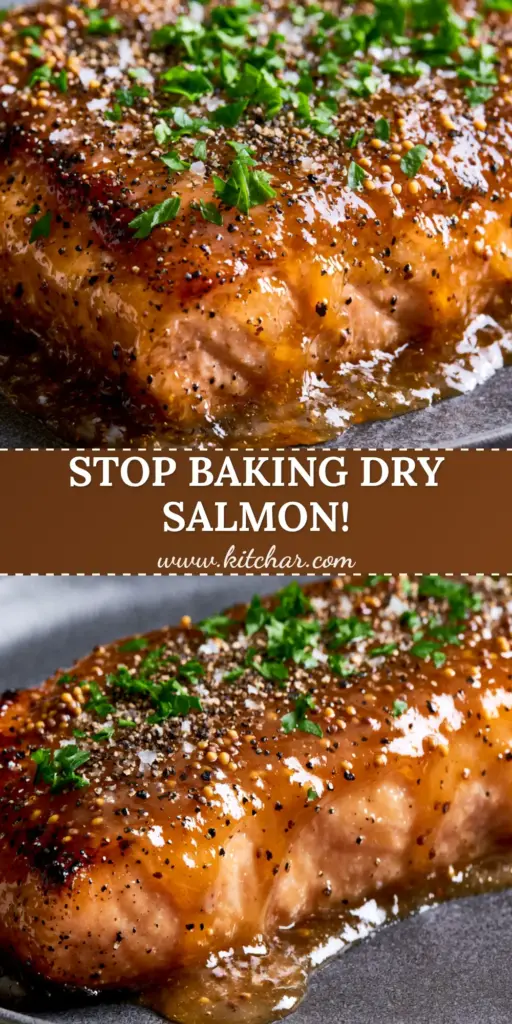
Maple Dijon Baked Salmon with Caramelized Glaze
Ingredients
Equipment
Method
- Preheat oven to 400°F (200°C). Line a baking sheet with parchment paper. Pat salmon fillets dry with paper towels.
- In a small bowl, whisk together maple syrup, both mustards, and olive oil until thick and glossy.
- Place salmon on the baking sheet. Generously brush the maple-dijon glaze over the tops and sides of each fillet.
- Bake for 12-14 minutes. Turn the broiler to high for the final 1-2 minutes until edges are caramelized and slightly charred.
- Remove from oven. Immediately top with a heavy sprinkle of black pepper, sea salt, and fresh parsley.
Notes
Use the broiler carefully; the high sugar content in maple syrup can burn quickly.
Conclusion: Your New Weeknight Favorite
Mastering the Maple dijon baked salmon is about more than just a meal; it’s about understanding the balance of texture and temperature. With its glossy amber glaze and perfectly moist flakes, this recipe is guaranteed to become a staple in your healthy dinner rotation.
We invite you to share your results! Did you get those perfect caramelized edges? Tag us in your photos and don’t forget to follow our boards on Pinterest for more culinary inspiration.