There is something inherently soul-warming about the sound of a seasoned cast iron skillet sizzling on a Saturday morning. Southern Fried Potatoes and Sausage is more than just a meal; it is a masterclass in texture and heat management. When done correctly, this dish offers a symphony of jagged, translucent golden-brown crispy edges and soft, cloud-like fluffy centers that melt on the tongue.
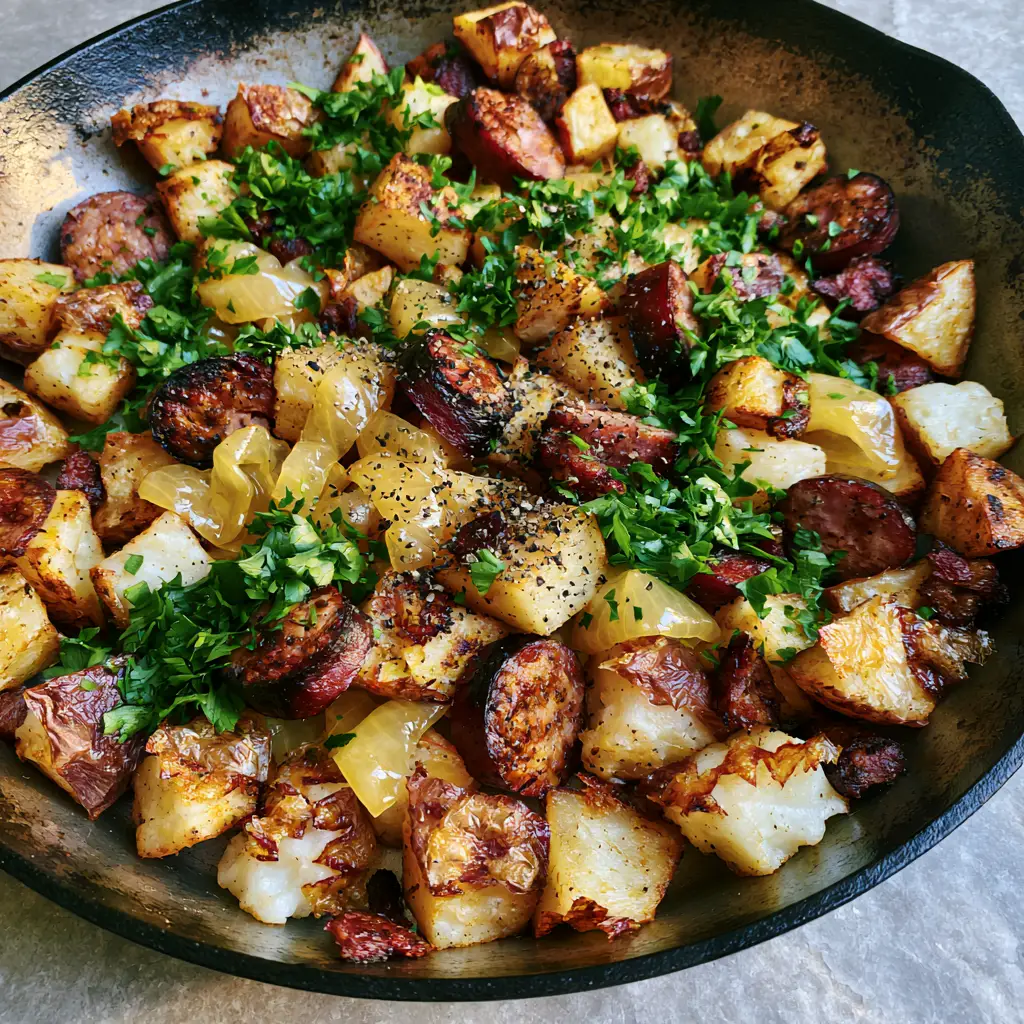
The visual appeal of this dish is undeniable, characterized by deeply seared smoked sausage rounds with dark caramelized rims and translucent yellow onions that catch the morning light. Whether you are seeking a hearty breakfast or a rustic weeknight dinner, mastering this Southern staple requires an understanding of how starch, fat, and iron interact to create the perfect bite.
In this guide, we are diving deep into the culinary forensics of the perfect fry. We will explore why specific potato varieties matter, the science behind that sought-after “shattering” crunch, and how to ensure your sausage achieves that perfect snap without drying out. Prepare your kitchen for an aroma that defines home cooking.
Why This Iron-Skillet Southern Classic Wins Every Time
- Unrivaled Texture Contrast: By utilizing high-surface-area cubing, we create maximum “crunch zones” while maintaining a steamed, tender interior.
- Caramelization Mastery: The sugars in the smoked sausage and yellow onions undergo the Maillard reaction, providing a natural sweetness that balances the savory salt.
- Visual Perfection: The contrast between the bright green freshly chopped parsley and the dark, seasoned cast iron makes this a centerpiece-worthy skillet meal.
- One-Pan Simplicity: Achieve professional-grade results with minimal cleanup, allowing the flavors to build upon each other in a single cooking vessel.
The Essential Ingredients for Deep Caramelization
To achieve the result seen in our visual blueprint, every ingredient must serve a structural and flavor-driven purpose. We do not just toss items into a pan; we layer them based on their thermal requirements.
Russet Potatoes (approx. 2 lbs / 900g): We choose Russets for their high starch content. This starch is what creates those jagged, translucent golden-brown edges that provide the signature “crunch” while the interior remains fluffy.
Smoked Sausage (14 oz / 400g): Whether you prefer Kielbasa or Andouille, the sausage provides the essential rendered fat. Look for rounds that can stand up to high heat to achieve those dark caramelized rims.
Yellow Onion (1 large / 150g): Yellow onions have a higher sugar content than white onions, making them ideal for reaching that translucent, softened state where they catch the light and add silkiness to the dish.
High-Smoke Point Oil (3 tbsp / 45ml): While the sausage renders some fat, a neutral oil like grapeseed or vegetable oil ensures the potatoes can fry at high temperatures without the fat breaking down or smoking excessively.
Kosher Salt and Cracked Black Pepper (to taste): Large flakes of Kosher salt help draw out moisture from the potatoes for better browning, while coarse black pepper adds the “speckled” visual aesthetic and a bite of heat.
Fresh Parsley (1/4 cup / 10g): This is your “visual pop.” The bright green, finely chopped parsley provides a fresh herbal finish that cuts through the richness of the fried elements.
Tools of the Trade: Why Cast Iron is Non-Negotiable
You cannot achieve authentic Southern Fried Potatoes and Sausage in a non-stick pan. The physics of heat retention and emissivity in a seasoned black cast iron skillet is what allows the potatoes to develop a crust while the centers cook through.
A 12-inch cast iron skillet provides enough surface area to prevent crowding. If you crowd the pan, the potatoes will steam rather than fry, resulting in a mushy texture rather than the crispy, jagged edges we are aiming for. If you enjoy this cooking style, you might also love our techniques for steak bites and potatoes.
Mastering the Sear: Step-By-Step Stovetop Instructions
Phase 1: Preparing the Starch for Maximum Surface Area
Wash and peel your potatoes, then cube them into 3/4-inch pieces. Do not worry about perfect symmetry; the irregular “jagged” edges are what become the most translucent and crispy once they hit the oil.
Once cubed, pat the potatoes extremely dry with a lint-free towel. Moisture is the enemy of the crunch. Any residual water will create a steam barrier that prevents the oil from making direct contact with the potato starch.
Phase 2: Rendering the Sausage and Infusing the Oil
Place your cast iron skillet over medium-high heat. Add a teaspoon of oil and lay the smoked sausage rounds in a single layer. Sear them until you see dark caramelized edges and the fat begins to render into a golden liquid.
Remove the sausage from the pan and set it aside, leaving that flavorful fat behind. This “liquid gold” is what will flavor the potatoes from the inside out. This technique is similar to how we build flavor in our fried potatoes with onions.
Phase 3: The Initial Fry and Tossing the Onions
Add the remaining oil to the skillet. Once the oil is shimmering and near the smoke point, carefully add the potato cubes. Spread them out and leave them alone for at least 5-7 minutes. You want to hear a vigorous sizzle.
When the bottom layer is deep golden-brown, use a sturdy metal spatula to flip them. Now, scatter the sliced yellow onions over the top. As the onions soften, they will release a small amount of moisture that helps tenderize the center of the potatoes while the bottoms continue to crisp.
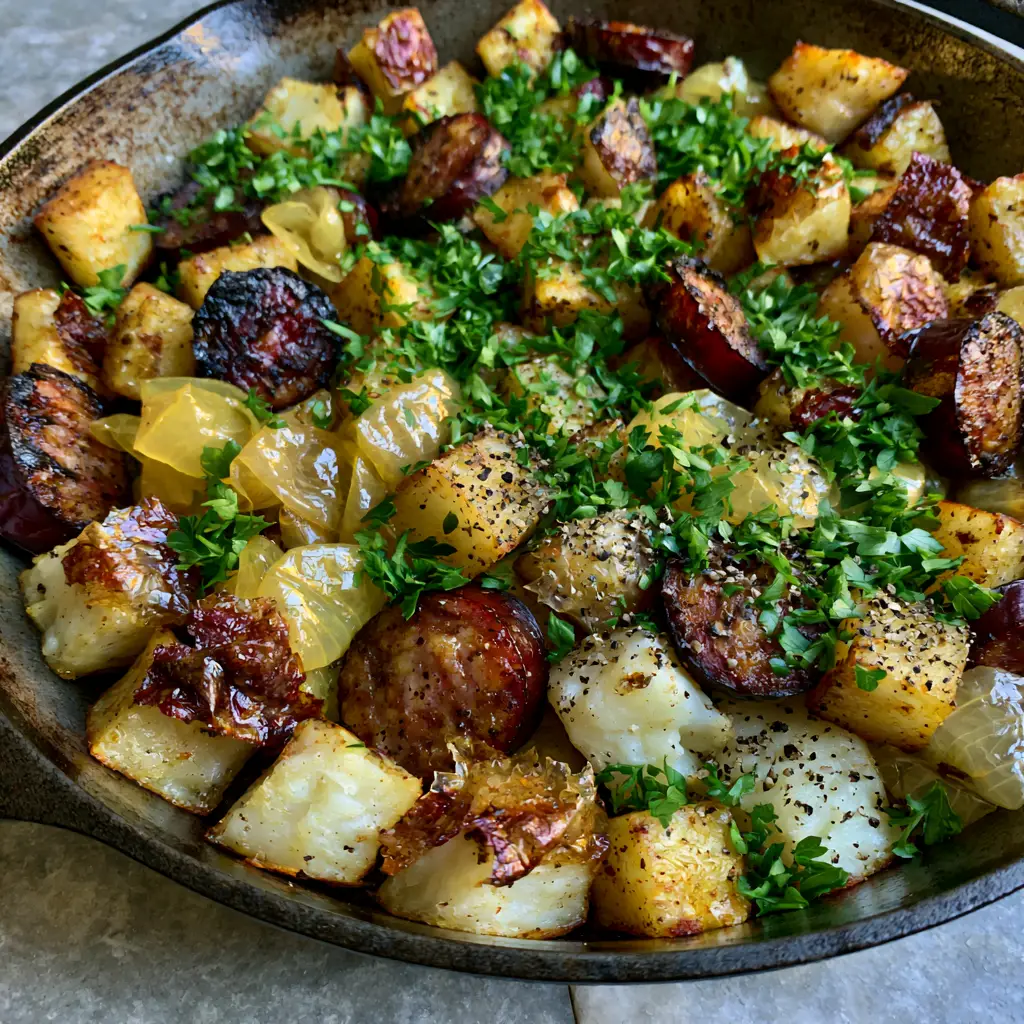
Phase 4: The Final Crisp and Garnish
Add the sausage back into the pan. Toss everything together, ensuring the potatoes are coated in the seasoned oil and onion juices. Continue to fry, turning occasionally, until the onions are translucent and catching the light.
Just before serving, hit the pan with a generous amount of cracked black pepper and a sprinkle of bright green parsley. The heat of the pan will awaken the oils in the pepper and parsley, creating an incredible aromatic finish.
Chef’s Secrets for the Ultimate Crunch
- The Soak Method: If you have time, soak the cubed potatoes in cold water for 30 minutes to remove excess surface starch, then dry thoroughly. This leads to a cleaner, more defined “shatter” on the crust.
- Temperature Control: If the potatoes are browning too fast but remain hard in the middle, turn the heat to medium and cover the pan with a lid for 3 minutes to steam the centers, then remove the lid to re-crisp.
- The Metal Spatula: Use a thin metal fish spatula. This allows you to get underneath the potato crust without tearing the crispy “skin” away from the soft center.
- Seasoning Timing: Salt the potatoes only after they have started to develop a crust. Salting too early draws out moisture and can lead to a soggy texture.
Maximizing Flavor and Texture Longevity
Southern Fried Potatoes and Sausage is best enjoyed immediately while the potatoes are at their peak crispness. However, if you have leftovers, they can be stored in an airtight container in the refrigerator for up to 3 days.
To reheat, avoid the microwave at all costs; it will turn your crispy masterpieces into rubbery fragments. Instead, toss them back into a hot, dry skillet over medium heat for 5 minutes, tossing frequently until the edges regain their crunch.
Completing the Spread: What to Serve Alongside Your Skillet
This dish is heavy and savory, so it benefits greatly from a bright, acidic side dish. A crisp spinach salad with a vinaigrette provides a necessary palate cleanser between bites of rich sausage and fried potato.
If you are serving this for dinner, consider a side of roasted greens or a light vegetable dish like beef and broccoli to round out the nutritional profile. For those who can’t get enough of this starch, our southern fried potatoes guide offers even more variations on the classic technique.
Your Questions Answered: Southern Skillet Troubleshooting
Absolutely. While smoked Kielbasa is traditional for its dark caramelized rims, you can use spicy Andouille, Chorizo, or even breakfast sausage links cut into rounds.
Ensure your skillet is well-seasoned and that the oil is shimmering hot before adding the potatoes. Most importantly, do not try to flip them too early; the potatoes will naturally release from the pan once a proper crust has formed.
While some recipes suggest par-boiling, this Southern method relies on raw frying with temperature control. Raw frying produces a more distinct ‘shattering’ crispy edge that par-boiled potatoes often lose.
Russet potatoes are the gold standard. Their high starch content is essential for creating the jagged, crispy exterior and fluffy interior described in this recipe. Yukon Golds are a secondary choice but will be creamier rather than fluffy.
Mushy potatoes are usually caused by crowding the pan or excess moisture. Fry in batches if necessary to ensure every potato cube has direct contact with the hot oil, and always pat the potatoes dry before cooking.
The Final Word on Southern Fried Potatoes and Sausage
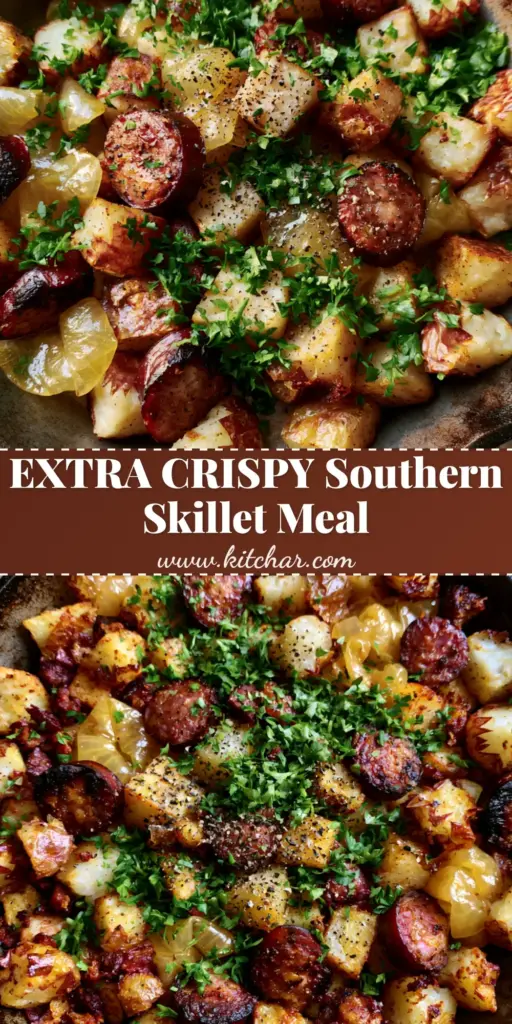
Southern Fried Potatoes and Sausage: The Ultimate Crispy Skillet Recipe
Ingredients
Equipment
Method
- Cube potatoes into irregular 3/4-inch pieces and pat extremely dry with a towel to ensure a crispy crust.
- In a 12-inch cast iron skillet over medium-high heat, sear sausage rounds until dark caramelized edges form. Remove sausage, leaving rendered fat in the pan.
- Add oil to the skillet fat. Once shimmering, add potatoes in a single layer. Fry undisturbed for 5-7 minutes until jagged edges are golden-brown and translucent.
- Flip potatoes and scatter onions on top. Continue to fry for 8-10 minutes, tossing occasionally, until onions are softened and translucent.
- Return sausage to the pan. Season with salt, cracked black pepper, and fresh parsley. Toss to combine and serve immediately from the skillet.
Notes
Do not crowd the skillet; work in batches if your pan is smaller than 12 inches.
Bring the Heat to Your Kitchen
Mastering the Southern Fried Potatoes and Sausage is a rite of passage for any home cook who values the intersection of simple ingredients and sophisticated technique. The combination of the heavy cast iron, the rendered sausage fat, and the high-starch Russets creates a meal that is visually stunning and deeply satisfying.
We invite you to share your skillet success stories in the comments below. Did you get those jagged edges just right? Don’t forget to save this recipe to your favorite boards on Pinterest so you can find it the next time you’re craving a true Southern classic!