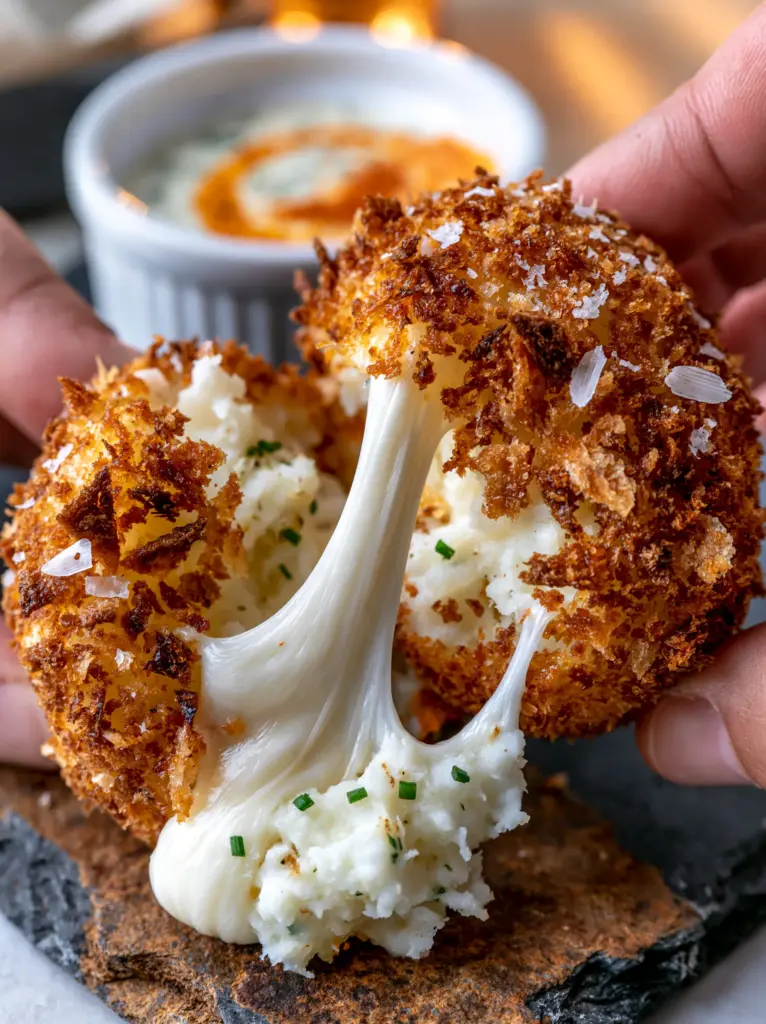
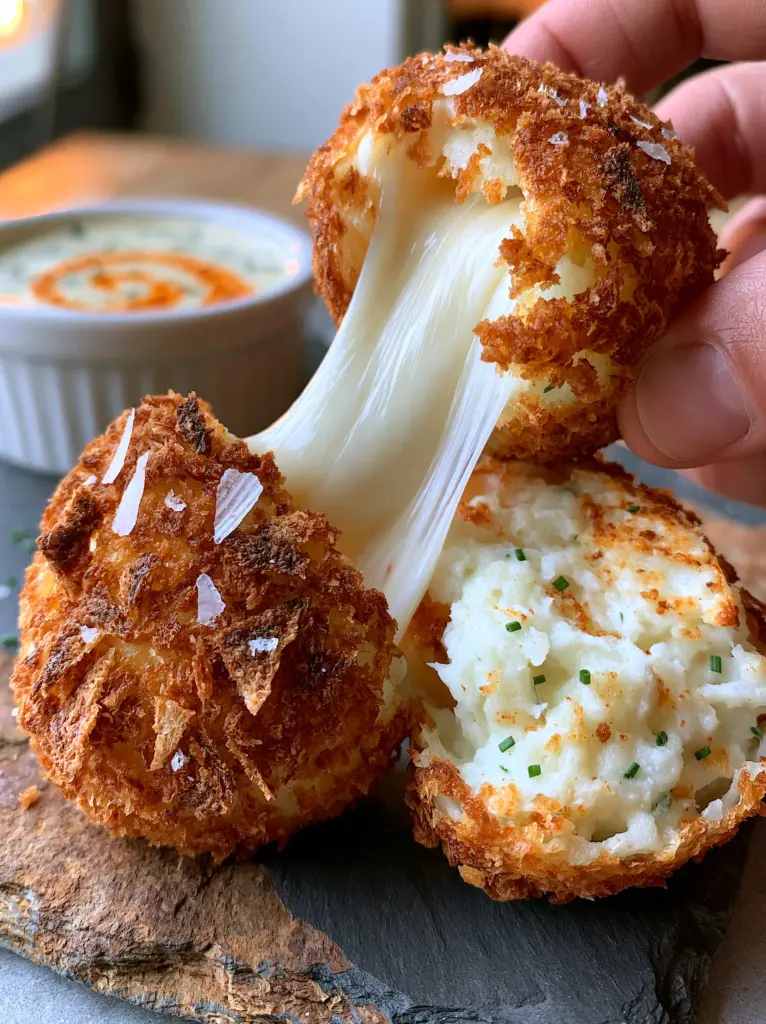
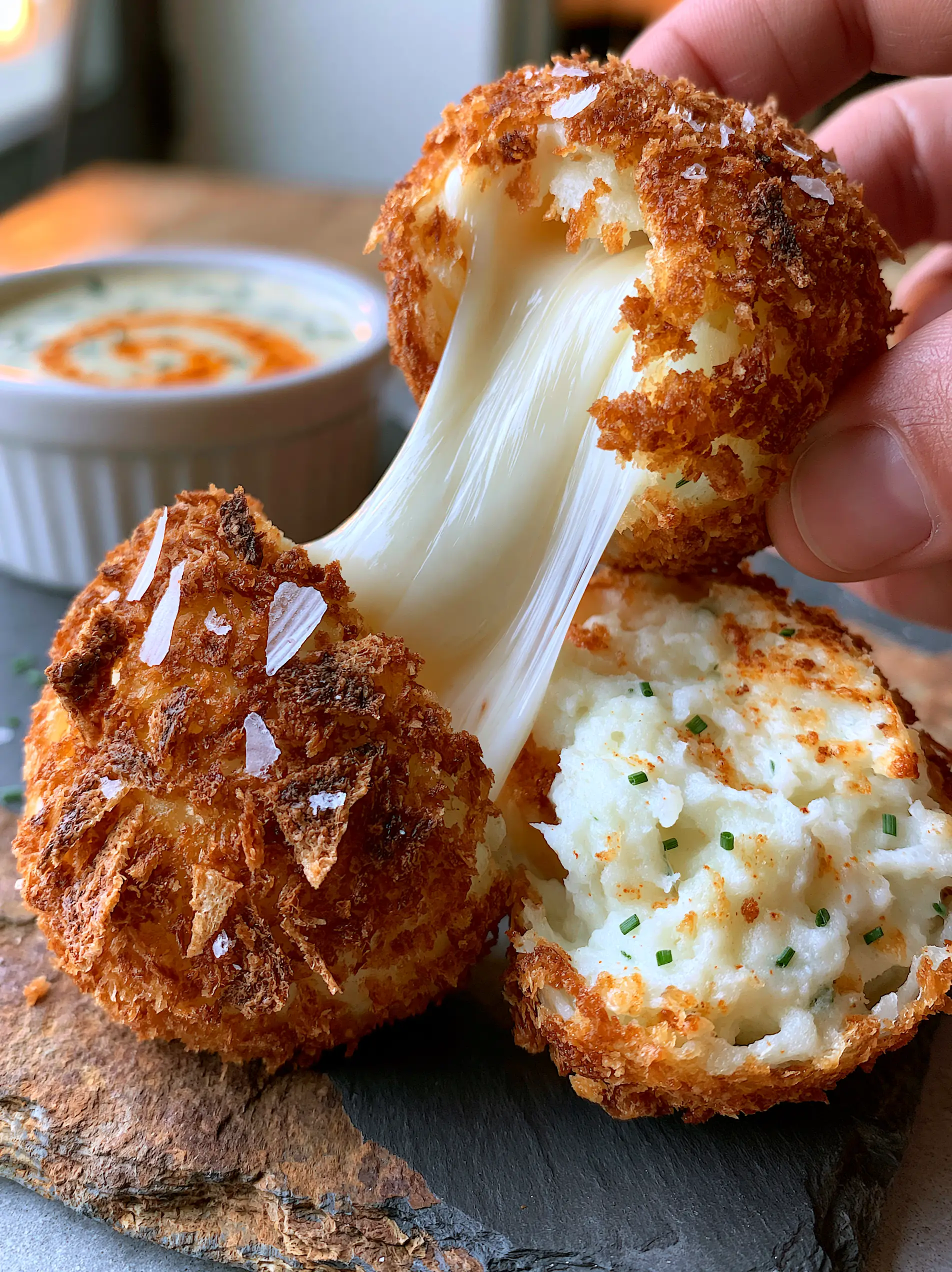
There is a specific kind of magic that happens when a shattered, golden-brown crust gives way to a cloud of creamy mashed potatoes and a dramatic, elastic cheese pull. This potato balls recipe isn’t just a side dish; it is a masterclass in texture and sensory satisfaction that looks as incredible as it tastes.
Imagine holding a warm, hand-sized sphere, feeling the jagged edges of toasted sourdough panko breadcrumbs beneath your fingertips before pulling it apart to reveal a molten mozzarella center. Each bite is a symphony of crunch, fluff, and gooey richness, seasoned perfectly with fresh chives and a hit of flaky Maldon sea salt.
Whether you are looking for the ultimate party appetizer or a decadent way to transform leftover mash, this potato balls recipe delivers a professional, high-contrast food experience. We have engineered every step to ensure your results mirror the hyper-realistic textures of a gourmet kitchen, right down to the orange swirl of smoked paprika oil in the dipping sauce.
The Structural Secrets of a Perfect Potato Balls Recipe
Creating a potato ball that doesn’t burst in the fryer requires a balance of culinary physics and high-quality ingredients. We focus on moisture control in the potato base and a reinforced “double-dredge” coating to create that signature sourdough crunch.
- The Elastic Cheese Pull: By using low-moisture mozzarella blocks instead of shredded cheese, we achieve a thick, gooey strand that stretches dramatically without dissolving into the potato.
- Jagged Sourdough Texture: Instead of fine breadcrumbs, we utilize coarse panko mixed with crushed sourdough bits to create an exceptionally crunchy, irregular exterior.
- Aromatic Balance: Freshly chopped chives are folded directly into the creamy whipped center, providing a bright, oniony counterpoint to the rich, fried crust.
- Visual Finishing: A final dusting of Maldon sea salt and cracked black pepper ensures the flavors “pop” the moment the potato ball hits your tongue.
Essential Components for Your Crispy Masterpiece
To achieve the elite results seen in professional food photography, each ingredient in this potato balls recipe has a specific functional role. From the starch content of the tuber to the smoke point of the frying oil, every detail matters for the final bite.
Russet Potatoes: These high-starch potatoes are essential for a fluffy, creamy white center that doesn’t become gummy. Use 2 lbs (900g) of potatoes, peeled and cubed into uniform pieces.
Low-Moisture Mozzarella: Cut into 1/2-inch (1.3cm) cubes, this provides the structural integrity needed for that molten, elastic center. Avoid fresh mozzarella in water, as the excess moisture will cause the balls to explode during frying.
Sourdough Panko Coating: Combine 2 cups (120g) of panko breadcrumbs with 1/2 cup (30g) of finely crushed toasted sourdough. This blend creates the jagged, toasted mahogany crust described in our visual blueprint.
Fresh Chives: Use 1/4 cup (10g) of finely chopped fresh chives to fleck the interior with green. This adds a subtle, fresh sharpness that cuts through the richness of the potato and cheese.
The Binding Agents: You will need 1/2 cup (60g) of all-purpose flour and 2 large eggs beaten with 1 tbsp (15ml) of water. These create the “glue” that keeps your panko crust anchored to the potato center.
Foundational Seasonings: 1 tsp (5g) of Maldon sea salt and 1/2 tsp (2g) of cracked black pepper are used for the exterior. Inside the mash, add 2 tbsp (30g) of unsalted butter and 1/4 cup (60ml) of heavy cream for ultimate silkiness.
Smoked Paprika Oil: Whisk 2 tbsp (30ml) of extra virgin olive oil with 1/2 tsp (2g) of smoked paprika. This creates the vibrant orange swirl for the garlic herb dipping sauce.
Tools Required for Culinary Precision
While you can make these with basic kitchen tools, a few specific items will help you achieve that hyper-realistic, professional texture. A potato ricer is highly recommended for a lump-free, fluffy interior.
You will also need a heavy-bottomed Dutch oven or a deep fryer to maintain consistent oil temperatures. A digital meat thermometer is non-negotiable for monitoring the oil; if the oil is too cool, the balls will be greasy; if too hot, the crust will burn before the cheese melts.
Engineering the Perfect Potato Ball: Step-by-Step
Preparing the Creamy Whipped Base
Place your cubed Russet potatoes in a large pot of cold, salted water. Bring to a boil and cook for 15-20 minutes until the potatoes are fork-tender and beginning to fray at the edges.
Drain the potatoes thoroughly and let them steam-dry in the hot pot for 2 minutes to remove excess moisture. Pass the potatoes through a ricer or mash vigorously with butter and heavy cream until completely smooth and white.
Fold in the finely chopped chives and a pinch of salt. It is vital to let this mixture cool completely in the refrigerator for at least 1 hour; cold potato dough is much easier to handle and holds its shape better.
Stuffing and Shaping for the Cheese Pull
Scoop about 2 tablespoons of the chilled potato mixture into your palm. Flatten it slightly and place a cube of mozzarella in the center, ensuring the cheese is completely encased in potato.
Roll the potato between your palms until you have a perfectly smooth, round sphere about the size of a golf ball. Repeat this process until all the mixture is used, keeping the balls on a parchment-lined tray.
The Triple-Dredge Sourdough Crust
Set up three shallow bowls: one with flour, one with the egg wash, and one with the panko-sourdough crumb mixture. Dredge each ball first in flour, shaking off the excess until only a fine dust remains.
Dip the ball into the egg wash, then roll it in the panko crumbs, pressing firmly so the jagged sourdough pieces adhere. For an extra-thick crust, dip the ball back into the egg wash and panko a second time.
Frying to a Deep Golden Mahogany
Heat 2 inches (5cm) of neutral frying oil in your Dutch oven to 350°F (175°C). Carefully lower 4-5 potato balls into the oil using a slotted spoon, being careful not to crowd the pot.
Fry for 3-4 minutes, turning occasionally. Watch for the sensory cue of a deep, toasted mahogany color and a sound that transitions from a loud sizzle to a quiet whisper as the exterior crisps.
Remove the balls and place them on a wire rack to drain. Immediately sprinkle with flaky Maldon sea salt and cracked black pepper while the surface is still glistening with oil.
Assembling the Garlic Herb Dipping Sauce
In a small white ceramic ramekin, combine 1/2 cup (120ml) of sour cream, 1 clove of minced garlic, and 1 tsp (5g) of dried parsley. Use a spoon to drizzle the smoked paprika oil over the top, creating a visible orange swirl.
Expert Tips for Appetizer Success
- Freeze Before Frying: If your potato balls feel soft, pop them in the freezer for 15 minutes before frying to help them keep their perfectly round shape.
- Check the Oil: Always use a thermometer. If the oil drops below 325°F (160°C), the panko will absorb oil and become soggy rather than crunchy.
- Cheese Placement: Ensure the mozzarella is dead-center. If it’s too close to the edge, it may leak out during the frying process.
- Leftover Mash Tip: If using leftover mashed potatoes, you may need to add 1-2 tbsp (10-20g) of cornstarch to the cold mix if they are too thin or buttery.
Preserving the Crunch: Storage and Reheating
While this potato balls recipe is best enjoyed immediately for the ultimate cheese pull, you can store leftovers in an airtight container in the fridge for up to 3 days. To restore the jagged sourdough crunch, avoid the microwave.
Reheat the potato balls in an air fryer at 375°F (190°C) for 5-7 minutes. This will re-crisp the panko crust and melt the mozzarella center without making the potato interior gummy.
What to Pair with Your Crispy Potato Balls
These savory spheres are rich and indulgent, making them the perfect partner for lighter, more acidic sides. A refreshing cucumber salad or a zesty tomato salad provides the perfect vinegary bite to cleanse the palate between cheesy mouthfuls.
If you are hosting a larger gathering, consider serving these alongside other handheld favorites like crispy zucchini fritters or even as a side to a hearty deconstructed burger bowl. For more potato inspiration, explore our creative loaded baked potato concepts.
Frequently Asked Questions
Yes! Spray the breaded balls generously with oil and air fry at 400°F (200°C) for 10-12 minutes, shaking the basket halfway through until they are golden-brown.
Absolutely. If the leftovers are too soft, stir in a tablespoon of cornstarch or an extra egg yolk to help the mixture firm up before shaping into balls.
Mix standard panko breadcrumbs with coarsely crushed toasted sourdough bread. The irregular sizes of the sourdough crumbs create those extra-crunchy, jagged edges.
Russet potatoes are the best choice because their high starch content results in a light, fluffy, and creamy interior that holds its shape well when fried.
This usually happens if the potato mixture contains too much moisture or if you use fresh mozzarella. Using low-moisture mozzarella cubes and chilling the potato dough beforehand prevents this.
The Ultimate Crispy Potato Balls Recipe
Potato Balls Recipe: Crispy Panko Crust with Molten Mozzarella
Ingredients
Equipment
Method
- Boil potatoes until tender, then pass through a ricer into a large bowl.
- Fold in butter, cream, and chives. Chill the mixture for 1 hour until firm.
- Flatten 2 tbsp of potato, place mozzarella cube in center, and roll into a ball.
- Coat balls in flour, then egg wash, then panko-sourdough mixture. Press crumbs firmly.
- Fry in 350°F (175°C) oil for 3-4 minutes until deep golden-brown.
- Drain on a rack and immediately season with Maldon salt and cracked pepper.
Notes
Ensure the potato mixture is cold before shaping to maintain structural integrity.

Closing & Call to Action
This potato balls recipe is more than just a snack; it is a testament to how simple ingredients like Russet potatoes and mozzarella can be transformed into a gourmet experience. With its shattered-glass panko crust and molten center, it’s guaranteed to be the star of your next meal.
If you loved this recipe, please leave a comment below and tell us how your cheese pull turned out! Don’t forget to sign up for our newsletter for more culinary deep-dives and share this post with your friends on Pinterest.