Moroccan couscous is the ultimate vibrant, plant-forward meal that brings the flavors of North Africa straight to your kitchen. If you are looking for a dish that is as visually stunning as it is delicious, this recipe delivers with fluffy golden grains, charred vegetables, and a zesty herb finish. Whether you are prepping a healthy lunch or a show-stopping side for dinner, this Moroccan couscous recipe is designed to impress every single time.
Why This Is The Best Moroccan Couscous You Will Ever Make
- Perfect Texture: We use a specific steaming method to ensure every grain of Moroccan couscous is airy, distinct, and clump-free.
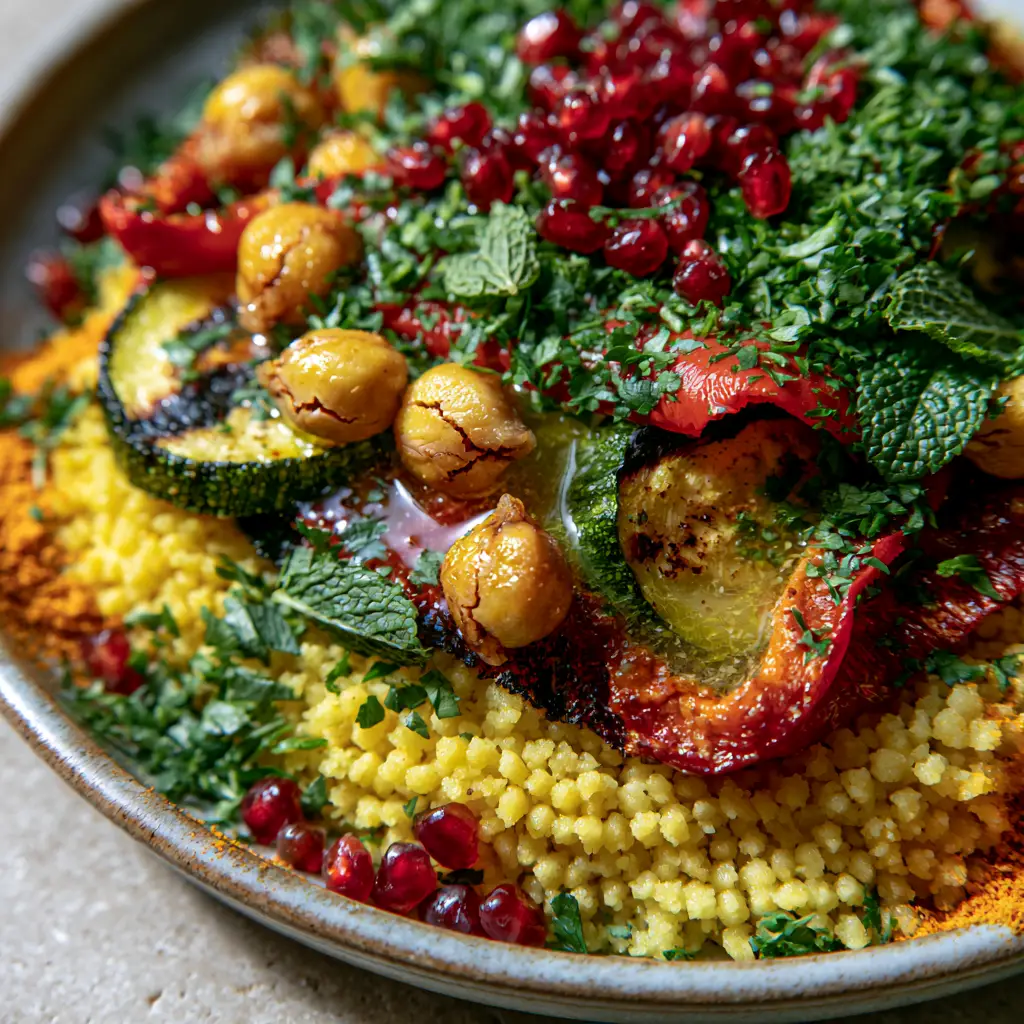
- Visual Masterpiece: The contrast between ruby red pomegranate seeds, charred green zucchini, and golden carrots creates a Pinterest-worthy artisan bowl.
- Flavor Explosion: A heavy dusting of Ras el Hanout provides a warm, complex spice profile that balances the bright lemon vinaigrette.
- Nutrient Dense: Packed with fiber-rich chickpeas, vitamins from colorful peppers, and healthy fats from toasted slivered almonds.
The Anatomy of Authentic Moroccan Couscous Ingredients
To achieve the level of detail seen in our Visual Recipe Blueprint, each ingredient serves a specific culinary purpose. Do not skip the aromatics!
The Foundation: 1.5 cups (255g) of dry Moroccan couscous. We want the small, fine semolina grains that cook quickly and absorb the Ras el Hanout spice beautifully.
The Charred Vegetables: You will need 2 medium zucchini, 2 large carrots, and 1 red bell pepper. These provide the caramelized ribbons and charred zucchini crescents that add a smoky depth to the bowl.
The Protein: 1 can (15oz / 425g) of chickpeas. We roast these until the skins are slightly cracking and they turn a beautiful golden-brown color.
The Vinaigrette: A blend of fresh lemon juice, extra virgin olive oil, and honey. This creates the translucent glint on the vegetables that keeps the dish from feeling dry.
The Garnish: This is where the magic happens. We use ruby pomegranate seeds for a burst of juice, toasted slivered almonds for crunch, and a flurry of fresh parsley and whole mint leaves for an herbaceous finish.
How to Get The Fluffiest Moroccan Couscous Every Single Time
Step 1: Roasting for Maximum Caramelization
Preheat your oven to 400°F (200°C). Slice your carrots into coins and your zucchini into crescents. Cut the red bell pepper into thin strips. If you love these flavors, you might also enjoy our Zucchini Chickpea Skillet.
Toss the vegetables and chickpeas in olive oil, salt, and a teaspoon of Ras el Hanout. Spread them on a large sheet pan. Roast for 20-25 minutes until you see those dark grill marks and tender golden skins. This step is crucial for that high-end food blog aesthetic.
Step 2: The Steaming Method
While the vegetables roast, bring 1.5 cups (355ml) of vegetable broth or water to a boil. Remove from heat and stir in the Moroccan couscous and a pinch of salt. Cover tightly with a lid.
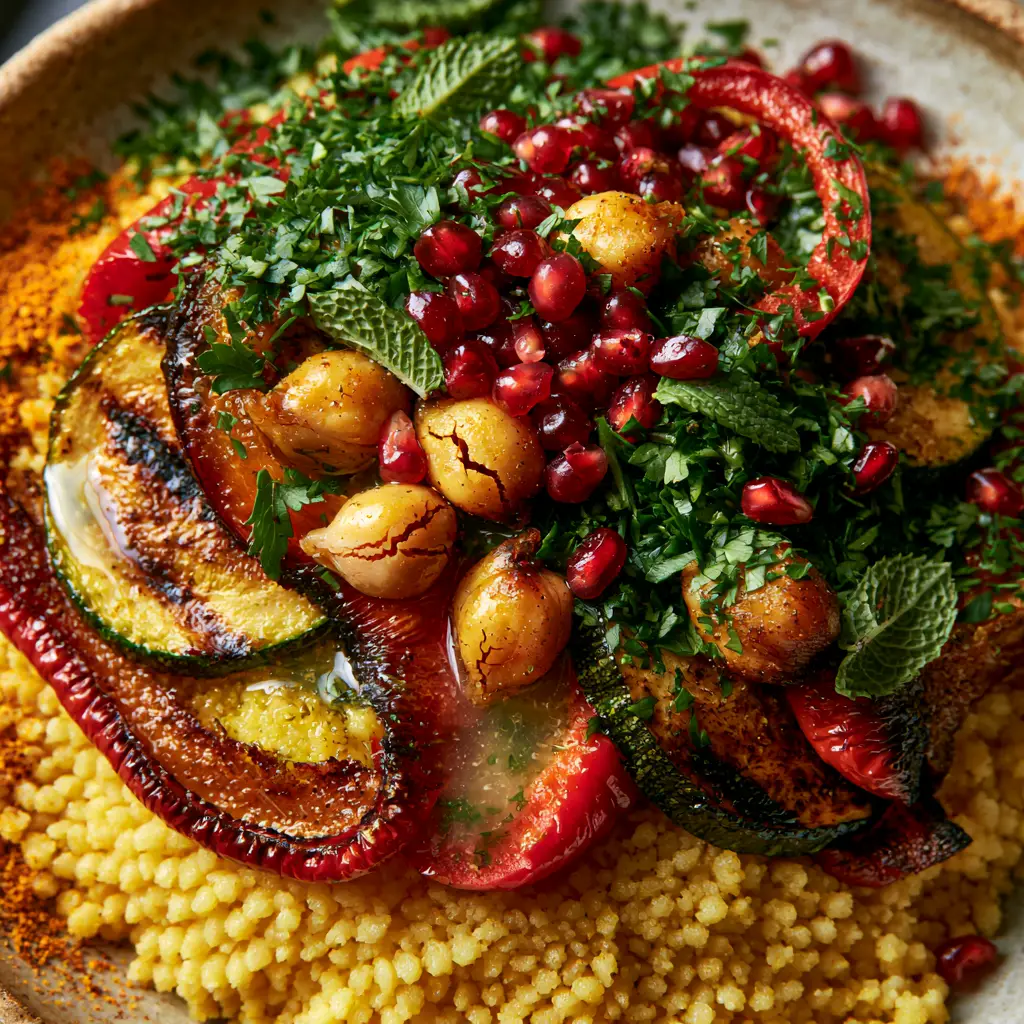
Let it sit for 5 minutes. This “steams” the grains. Use a fork to fluff the grains vigorously. They should be airy and visibly fluffy with no clumps, just like the mountain of grain in our macro photos.
Step 3: Whisking the Lemon-Herb Vinaigrette
In a small jar, combine 3 tablespoons (45ml) of olive oil, the juice of one large lemon, 1 teaspoon of honey, and a pinch of salt. Shake until the dressing is translucent and well-emulsified. This adds the final “glint” to the Moroccan couscous.
Step 4: The Art of Assembly
In a shallow artisan stoneware bowl, layer the fluffed Moroccan couscous as the base. Top with the charred zucchini rounds, caramelized peppers, and golden carrots. If you are looking for more veggie inspiration, check out our guide on perfectly sautéed vegetables.
Drizzle the vinaigrette over the top. Scatter the ruby-red pomegranate seeds and toasted slivered almonds across the surface. Finish with a heavy flurry of finely minced flat-leaf parsley and tiny vibrant mint leaves.
Expert Tips for Success
- Don’t Overwater: Too much liquid makes the Moroccan couscous mushy. Stick to the 1:1 ratio for the fluffiest results.
- Toast the Grains: For extra nuttiness, toast the dry couscous in a pan with a little butter for 2 minutes before adding the boiling liquid.
- Temperature Matters: Serve this dish warm or at room temperature. It actually tastes better after 20 minutes when the grains have absorbed the lemon dressing.
- The Spice Factor: Ras el Hanout varies by brand. Start with a light dusting and add more to achieve that orange-hued spice look on the edges of the bowl.
Storage, Reheating & Freezing
This Moroccan couscous holds up beautifully for meal prep. Store in an airtight container in the refrigerator for up to 4 days. It is one of those rare dishes that stays fresh, similar to our marinated white bean salad.
To reheat, sprinkle a teaspoon of water over the grains and microwave for 60 seconds. We do not recommend freezing this dish as the zucchini and pomegranate seeds will lose their structural integrity upon thawing.
What to Serve With This Dish
This is a complete meal on its own, but it pairs exceptionally well with grilled proteins. Try it alongside our zesty lime shrimp and avocado salad for a Mediterranean-inspired feast.
If you want a lighter side, a simple summer vegetable gratin would complement the roasted flavors of the carrots and peppers perfectly.
Frequently Asked Questions
While traditional Moroccan couscous is made from semolina (wheat), you can substitute it with quinoa or gluten-free couscous pearls using the same vegetable toppings.
The secret is using a strict 1:1 liquid-to-grain ratio and fluffing immediately with a fork after the 5-minute steaming period. Never boil the couscous like pasta.
It can be enjoyed both ways! It is traditionally served warm with roasted vegetables, but it also makes a fantastic cold salad the next day.
It is a complex North African blend typically containing cinnamon, cumin, coriander, ginger, and turmeric, which gives our Moroccan couscous its signature orange hue.
The Ultimate Moroccan Couscous Recipe Card
Moroccan Couscous with Roasted Vegetables and Lemon Vinaigrette
Ingredients
Equipment
Method
- Preheat oven to 400°F (200°C). Toss zucchini, carrots, peppers, and chickpeas with olive oil and Ras el Hanout.
- Spread on a sheet pan and roast for 25 minutes until vegetables have dark grill marks and chickpeas are golden.
- Pour boiling broth over the dry couscous in a heat-proof bowl. Cover and let sit for 5 minutes.
- Remove lid and fluff vigorously with a fork until grains are distinct and airy.
- Layer couscous in a bowl, top with roasted vegetables, drizzle with vinaigrette, and garnish with pomegranate, almonds, and herbs.
Notes
Use high-quality Ras el Hanout for the best aromatic experience.

Save This Recipe to Pinterest!
If you loved this Moroccan couscous, please pin it to your “Healthy Dinner Ideas” or “Mediterranean Recipes” board! Seeing your recreations makes our day, so share a photo in the comments or tag us. Don’t forget to leave a 5-star rating below to help other home cooks find this fluffy, flavorful dish!