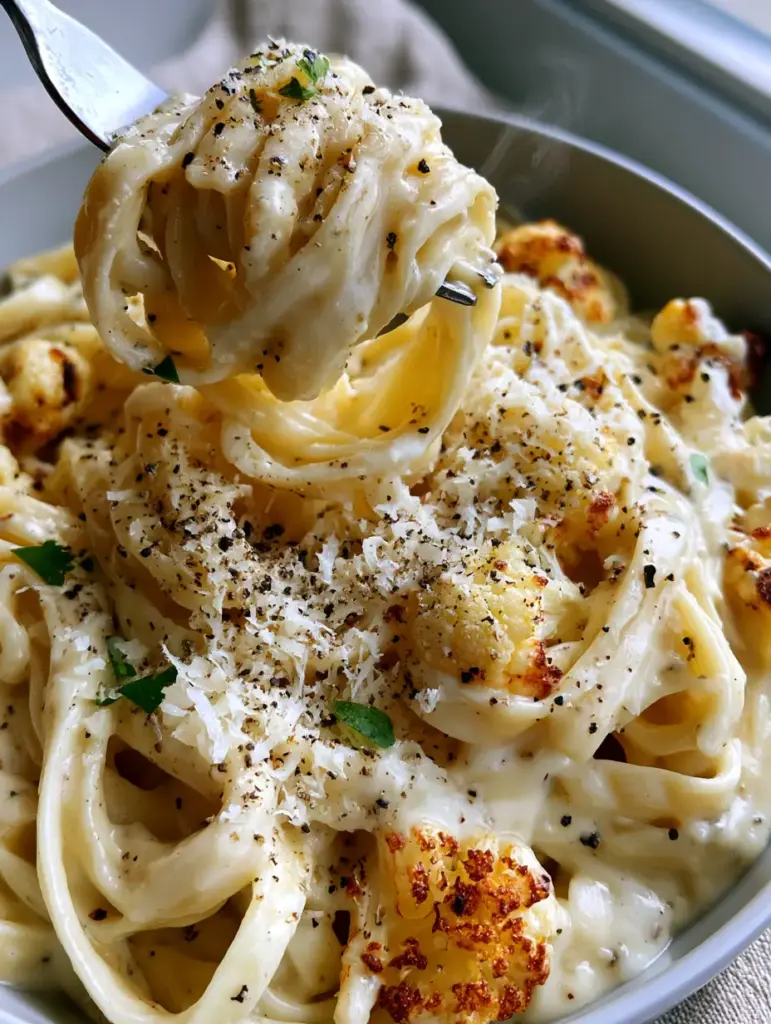
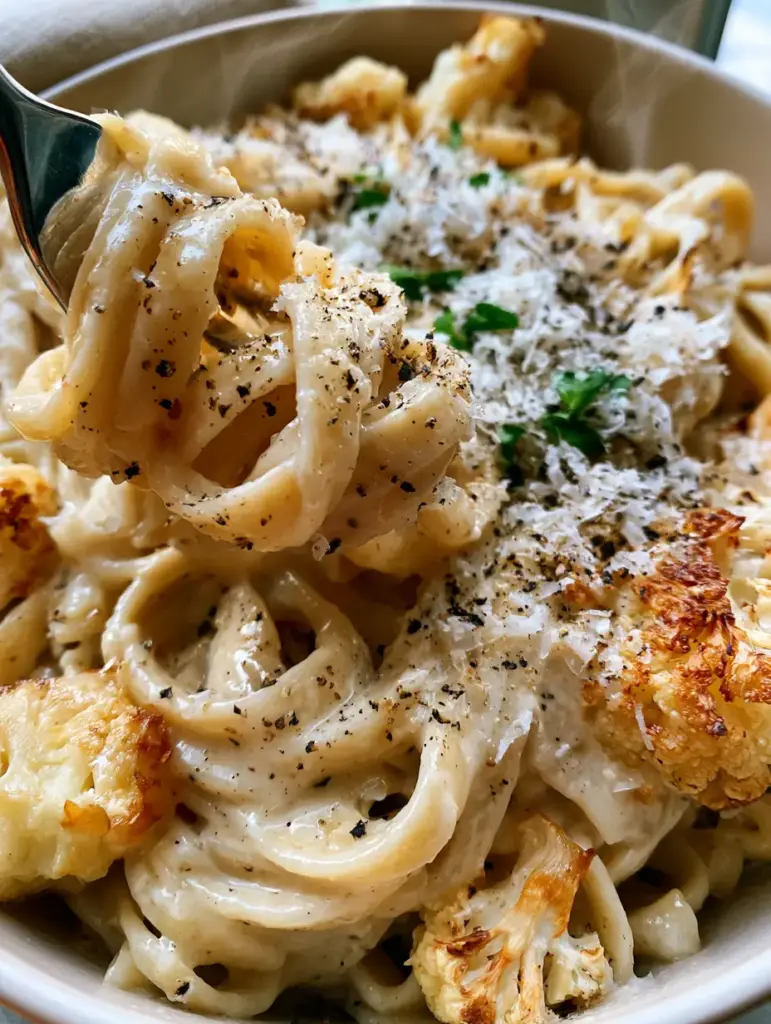
Imagine a bowl of thick, ribbon-like fettuccine perfectly drenched in a glossy, ultra-velvety off-white sauce that clings to every strand. As the wisps of steam rise from the plate, the scent of roasted garlic and aged parmesan fills the air, promising a meal that feels indulgent yet remains incredibly nourishing. This cauliflower alfredo pasta is not just a substitute for the classic; it is a culinary masterpiece in its own right, delivering a sophisticated texture that rivals any traditional cream-based sauce.
The secret lies in the forensic balance between the tender, golden-edged roasted cauliflower florets and the smooth-as-silk purée that forms the base of the dish. A heavy snowfall of finely grated parmesan and a generous scatter of freshly cracked coarse black pepper provide the sharp, pungent notes needed to cut through the richness. Whether you are looking for a plant-forward dinner or simply a better way to eat your vegetables, this recipe provides a restaurant-quality experience from the comfort of your own kitchen.
In this guide, we will break down the science of emulsification and the Maillard reaction to ensure your florets are perfectly browned while your sauce remains impeccably smooth. Every bite offers a contrast of textures, from the al dente bite of the pasta to the tiny flecks of bright green flat-leaf parsley that add a final touch of freshness.
Why You Will Love This Glossy Cauliflower Cream Sauce
- Unmatched Velvety Texture: Unlike some grainier vegetable sauces, our high-speed blending technique creates a sauce that is thick enough to coat every ribbon of fettuccine perfectly.
- Maillard-Driven Flavor: We don’t just boil cauliflower; we roast half of it to achieve those golden-brown edges that provide a deep, nutty complexity to the dish.
- Scientifically Balanced Seasoning: By utilizing aged parmesan and coarse cracked pepper, we hit the savory “umami” notes that make traditional alfredo so addictive.
- Whole-Food Nutrition: You get the creamy satisfaction of a white sauce without the heavy cream, making this a staple for those seeking nutritious and flavorful meals.
The Foundation: Components for a Silky Cauliflower Alfredo
To achieve the visual and textural perfection seen in professional food photography, every ingredient must serve a specific culinary purpose. We are building layers of flavor from the ground up, starting with the aromatics and ending with the delicate herbal garnish.
1 lb (450g) Fettuccine Noodles: The wide surface area of fettuccine is essential for catching the thick cauliflower cream sauce, ensuring no bite is left dry. Always aim for a high-quality bronze-cut pasta for the best sauce adhesion.
1 large head (approx. 900g) Fresh Cauliflower: We split the cauliflower into two roles: half is steamed for the sauce’s body, and the other half is roasted for texture. Look for tightly closed curds without dark soft spots.
3 tbsp (45ml) Extra Virgin Olive Oil: This foundational fat is required for roasting the florets to achieve those crispy, golden-brown edges seen in the blueprint. It also adds a fruity depth to the blended sauce.
4 cloves Fresh Garlic: Garlic provides the aromatic backbone that prevents the cauliflower from tasting one-dimensional. Roasting the garlic alongside the florets mellows its bite into a sweet, savory paste.
1 cup (240ml) Vegetable Broth or Pasta Water: This is the crucial liquid component that thins the cauliflower purée into a pourable, glossy sauce. Using starchy pasta water helps emulsify the sauce further.
1/2 cup (50g) Finely Grated Aged Parmesan: This “snowfall” of cheese adds the necessary salt and fat to mimic a traditional alfredo. For a vegetarian-friendly version, ensure the cheese is made with microbial rennet.
1 tsp (5g) Coarse Cracked Black Pepper: The pepper should be visibly large and unevenly cracked to provide intermittent bursts of heat. Avoid pre-ground pepper, which lacks the volatile oils found in fresh peppercorns.
1/4 cup (10g) Fresh Italian Flat-Leaf Parsley: Finely chopped parsley adds the “tiny flecks of bright green” that visually pop against the off-white sauce. It also provides a clean, grassy finish to the palate.
Kosher Salt: Essential for both the pasta water and seasoning the cauliflower. Salt is the invisible conductor that makes all other flavors sing.
Professional Tools for a Silky Finish
Achieving a professional-grade cauliflower alfredo pasta requires more than just a pot and pan. To get that “ultra-velvety” result described in our visual prompt, a high-speed blender is your best friend. The blades rotate fast enough to break down the cauliflower fibers into a completely smooth emulsion that mimics heavy cream.
You will also need a large rimmed baking sheet for the roasted florets. Crowding the pan will cause the cauliflower to steam rather than roast, so ensure there is enough space between the pieces to allow for air circulation. A microplane grater is the best tool for achieving that “heavy snowfall” effect with the parmesan cheese, creating wispy, light shards that melt instantly upon contact with the heat.
Mastering the Method: A Professional Culinary Walkthrough
Step 1: The Maillard Roasting Process
Preheat your oven to 425°F (220°C). Break half of the cauliflower into very small, bite-sized florets. Toss them on a baking sheet with 2 tbsp (30ml) of olive oil, a pinch of kosher salt, and the whole garlic cloves. Roast for 20-25 minutes, tossing halfway through, until the edges are deep golden-brown and tender. This creates the “roasted golden-edged” visual confirmed in our blueprint.
Step 2: Preparing the Velvety Sauce Base
While the florets roast, steam the remaining cauliflower until it is fork-tender and almost falling apart. Transfer the steamed cauliflower to your high-speed blender. Add the roasted garlic cloves (squeezed out of their skins), the remaining olive oil, and 1/2 cup (120ml) of hot vegetable broth. Blend on high until the mixture is completely smooth, glossy, and off-white. If the sauce is too thick to pour, add more liquid 1 tablespoon at a time.
Step 3: Achieving Al Dente Excellence
Bring a large pot of heavily salted water to a rolling boil. Add the fettuccine and cook for 1-2 minutes less than the package instructions. You are looking for an “al dente” texture—a firm bite in the center that will hold up once tossed in the hot sauce. Reserve 1 cup (240ml) of the starchy pasta water before draining. If you enjoy this texture, you might also like our cabbage carbonara for a similar mouthfeel.
Step 4: The Final Emulsion and Assembly
In a large skillet over low heat, combine the cauliflower purée and the drained fettuccine. Gently toss the noodles to coat them in the sauce. If the sauce looks too matte, add splashes of the reserved pasta water and stir vigorously. This creates the “glossy” finish where the sauce perfectly drenches every ribbon of pasta. Fold in the roasted cauliflower florets gently to keep them intact.
Step 5: The Forensic Finishing Touches
Plate the pasta in wide, shallow bowls. Use a microplane to shower the dish with a “heavy snowfall” of finely grated parmesan. Finish with a generous scatter of coarse cracked black pepper and the flecks of bright green parsley. Serve immediately while the wisps of steam are still visible, capturing that authentic social media food photography aesthetic.
Secret Techniques for the Smoothest Alfredo Texture
- The Blender Heat Trick: Blend the sauce while the cauliflower is still steaming hot. The heat helps the fibers break down more easily, resulting in a superior velvety texture.
- Don’t Skimp on Salt: Cauliflower is naturally sweet; it requires a surprising amount of salt to transform into a savory alfredo. Season the sauce in the blender and taste as you go.
- Pasta Water Magic: Never discard your pasta water! The starch is the “glue” that helps the cauliflower cream sauce stick to the fettuccine ribbons instead of sliding off.
- Size Matters: Cut your roasting florets into uniform small pieces. This ensures they develop those golden edges at the same time the centers become tender.
Keeping Your Leftovers Luscious
This cauliflower alfredo pasta is best enjoyed fresh, but it can be stored in an airtight container in the refrigerator for up to 3 days. Because cauliflower sauces can thicken significantly when cold, the reheating process is vital for maintaining that velvety texture.
To reheat, place the pasta in a skillet over medium-low heat. Add a splash of water, broth, or milk to loosen the sauce. Stir gently until the sauce becomes glossy again and the pasta is heated through. Avoid microwaving on high power, as this can cause the sauce to break and become grainy. If you’re looking for more meal prep ideas, our chicken parmesan casserole is another fantastic option for the week.
What to Pair with This Creamy Pasta
To balance the richness of the cauliflower cream sauce, pair this dish with bright, acidic sides. A crisp green salad with a lemon vinaigrette is a classic choice. For a more substantial meal, consider serving it alongside stuffed bell peppers or a side of Greek sheet pan gnocchi for a Mediterranean-inspired feast.
If you are hosting a dinner party, start the meal with a colorful appetizer like ricotta stuffed peppers or a tray of cold stuffed mini peppers. These light bites provide a refreshing contrast to the thick, comforting ribbons of fettuccine.
Common Culinary Curiosities
Absolutely. Simply replace the parmesan cheese with nutritional yeast or a vegan parmesan alternative, and ensure your pasta is egg-free.
The key to a velvety texture is using a high-speed blender and blending the cauliflower while it is still very hot. Adding a splash of starchy pasta water also helps emulsify the fibers for a smoother finish.
Yes! By replacing heavy cream and butter with a pureed cauliflower base, you significantly reduce the saturated fat and calorie content while increasing fiber and micronutrients like Vitamin C.
Fettuccine or pappardelle are ideal because their wide, flat surfaces provide more area for the thick, velvety sauce to cling to.
Roasting triggers the Maillard reaction, which adds a deep, nutty flavor and a crispy texture that contrasts beautifully with the smooth, creamy sauce.
The Official Cauliflower Alfredo Pasta Recipe
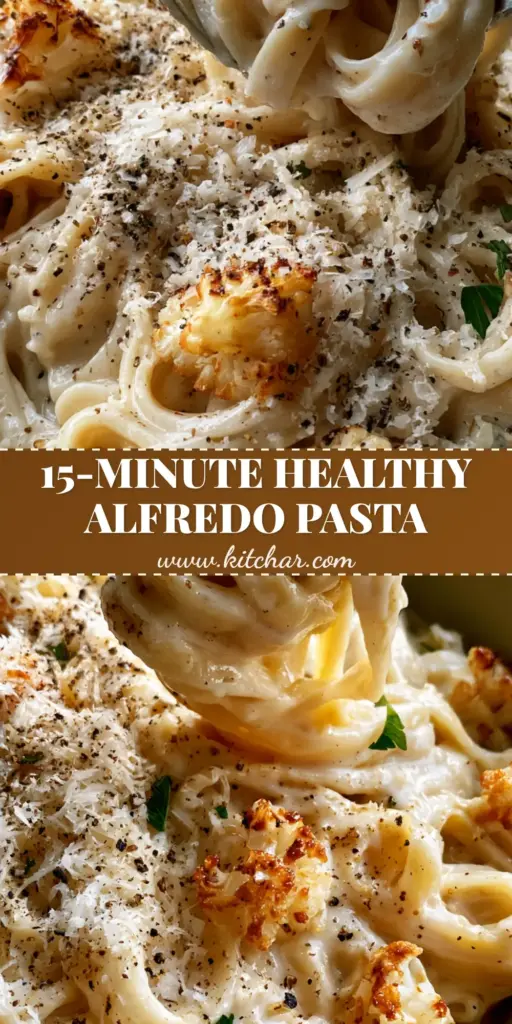
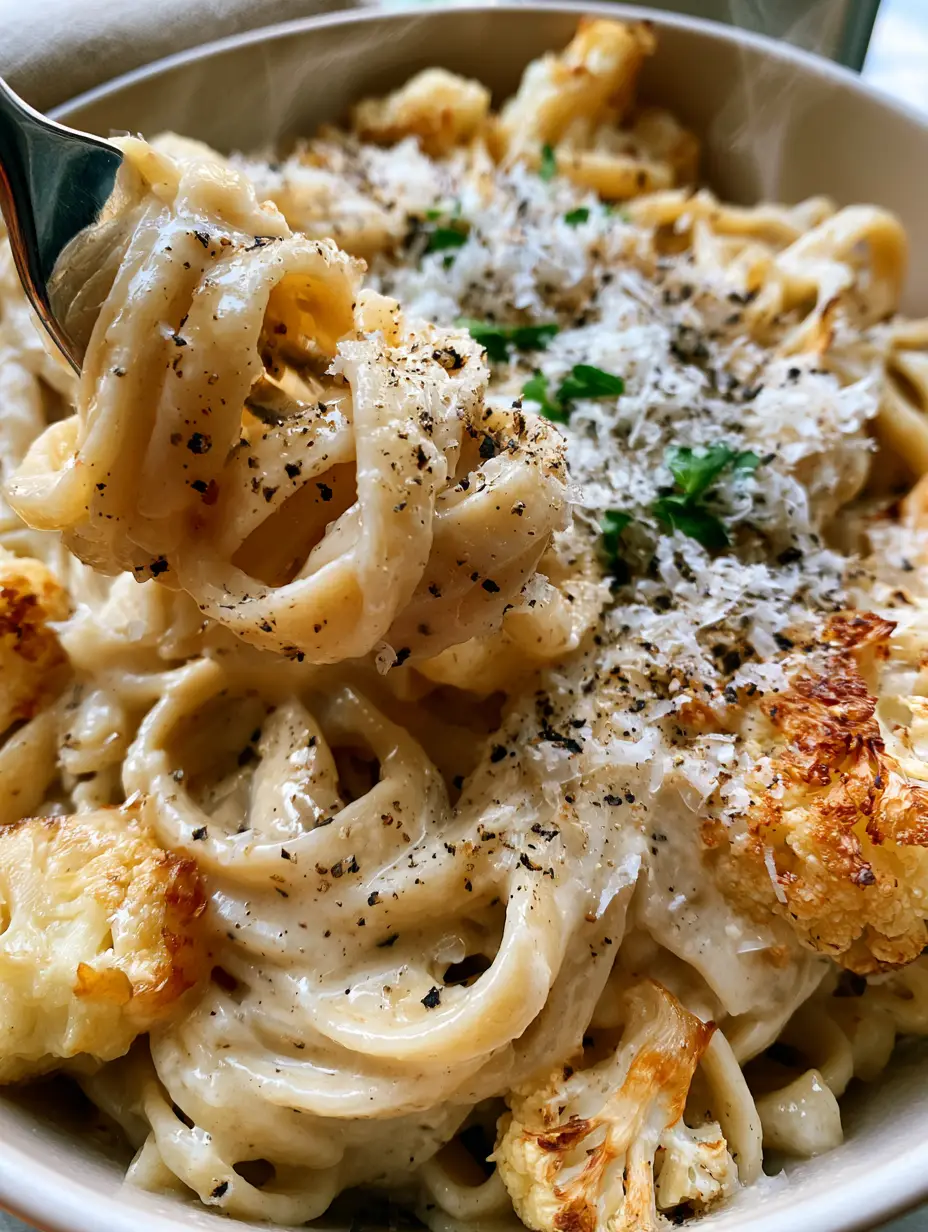
Cauliflower Alfredo Pasta: The Ultimate Velvety Healthy Comfort Food
Ingredients
Equipment
Method
- Preheat oven to 425°F (220°C). Toss half the florets with 2 tbsp olive oil and salt on a baking sheet. Roast for 20-25 minutes until golden-edged.
- Steam the remaining cauliflower florets until very tender, about 10 minutes.
- Combine steamed cauliflower, roasted garlic, 1 tbsp olive oil, and broth in a high-speed blender. Blend until glossy and ultra-smooth.
- Boil fettuccine in salted water until al dente. Reserve 1 cup of pasta water.
- Combine noodles and sauce in a skillet. Add pasta water as needed for glossiness. Top with roasted florets, parmesan, pepper, and parsley.
Notes
Always reserve pasta water to adjust the sauce consistency.
Conclusion: The Ultimate Guilt-Free Indulgence
This cauliflower alfredo pasta proves that you don’t need heavy cream to create a luxurious, comforting meal. By focusing on professional roasting techniques and high-speed blending, you can transform simple vegetables into a glossy, velvety sauce that satisfies every craving. The combination of al dente fettuccine, golden-edged florets, and sharp parmesan creates a sensory experience that is as beautiful as it is delicious.
We would love to see your culinary creations! If you make this dish, please leave a comment below and let us know how it turned out. Don’t forget to follow us on Pinterest for more visually stunning recipe inspiration and share this post with your fellow home cooks.