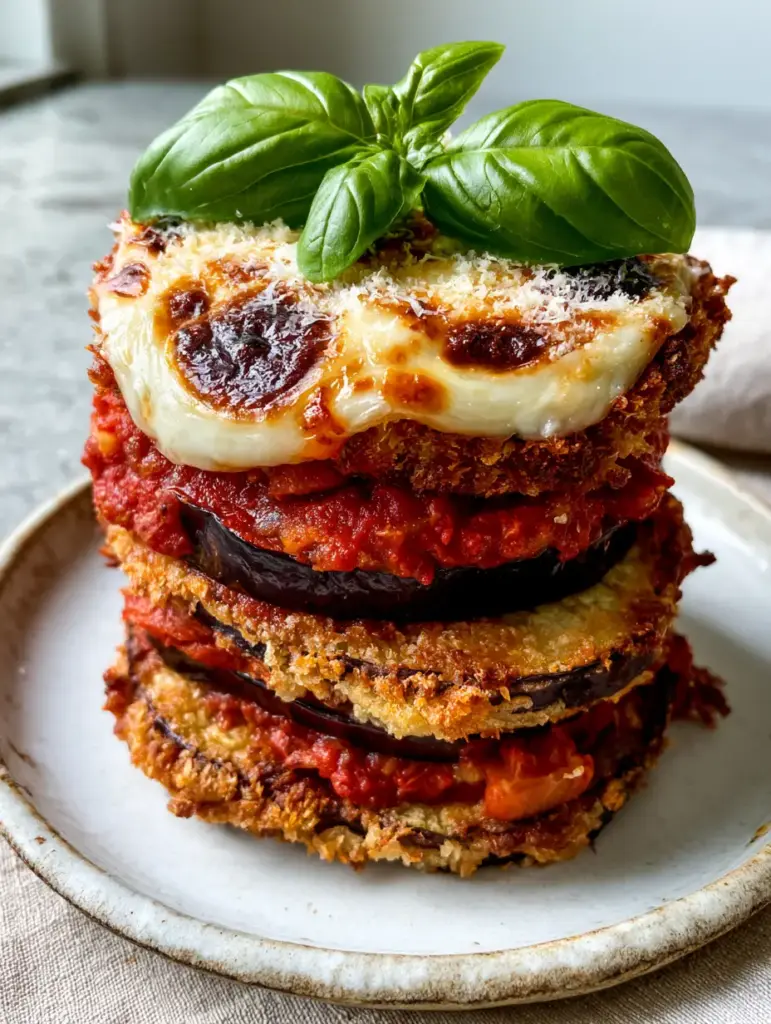
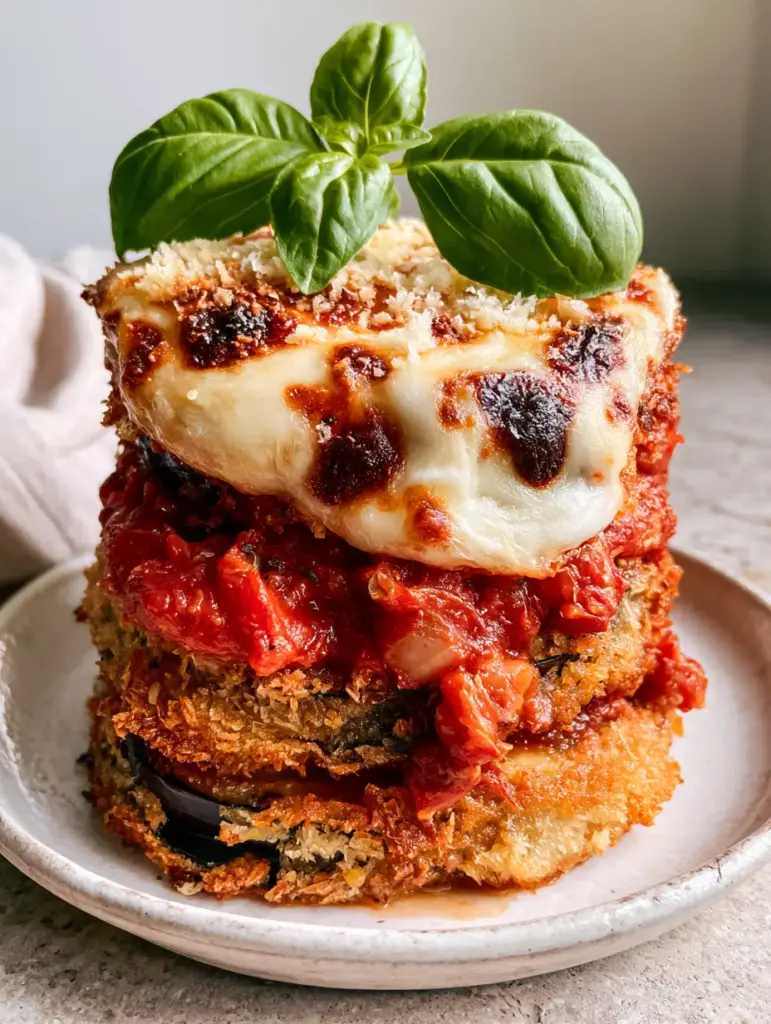
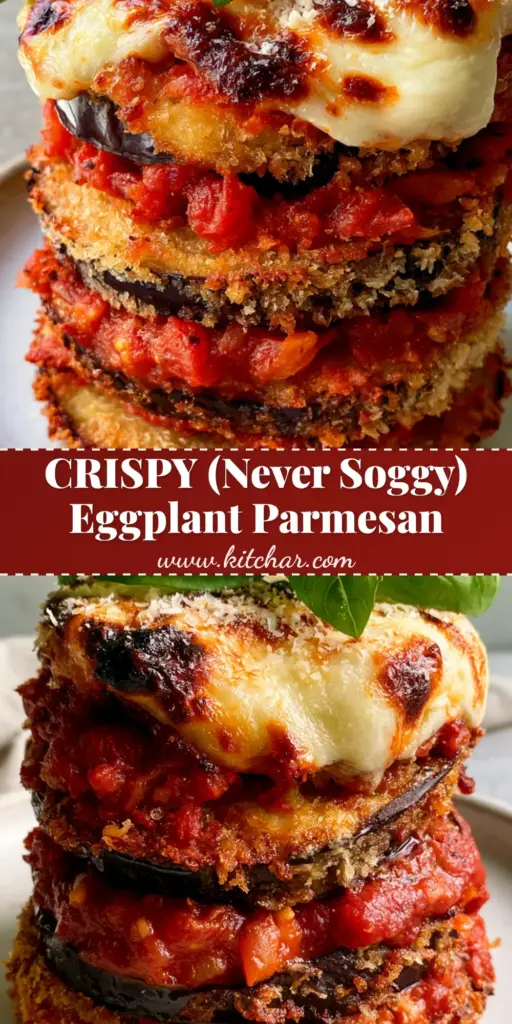
Mastering the perfect Oven Baked Eggplant Parmesan is a culinary milestone for any home cook. Imagine a towering stack of eggplant slices, each boasting a thick, golden-brown toasted panko crust with a jagged, crunch-heavy texture. Between these layers sits a dense, vibrant red marinara sauce, rich with chunks of stewed tomatoes that provide a bright acidity to balance the earthy eggplant.
The crowning glory is a generous mound of melted mozzarella cheese, finished under the broiler until it develops those signature charred, bubbly brown spots. A final dusting of finely grated aged parmesan and a garnish of glossy, bright green basil leaves completes this masterpiece. This isn’t a soggy casserole; it is a firm, upright structural achievement with absolutely no moisture leakage on the plate.
In this guide, we will dive deep into the science of “sweating” eggplant to ensure a firm bite. We will also explore the triple-dredge technique that guarantees your breading stays attached and achieves that restaurant-quality singe. Whether you are hosting a dinner party or craving a high-protein vegetarian meal, this technique-driven approach will redefine your expectations of Italian-American comfort food.
The Blueprint for a Non-Soggy Oven Baked Eggplant Parmesan
- Structural Integrity: By using a specific salt-sweating technique, we remove excess moisture, ensuring the eggplant stack stays firm and upright without leaking water onto your rustic white plate.
- The “Jagged” Texture: We utilize coarse panko breadcrumbs rather than traditional fine crumbs to create that visible, toasted golden-brown exterior seen in professional food photography.
- Aromatic Depth: Layers of finely grated aged parmesan and whole basil leaves provide a sharp, herbaceous contrast to the rich, melted mozzarella.
- Chunky Marinara Foundation: A thick sauce with visible stewed tomato pieces prevents the eggplant from becoming mushy while adding a robust mouthfeel.
Essential Ingredients for the Ultimate Eggplant Stack
Large Italian Eggplants (approx. 2 lbs / 900g): Choose firm, heavy eggplants with glossy purple skin. These will be sliced into thick rounds to act as the “steaks” of your dish, providing the necessary height for a tall stack.
Coarse Panko Breadcrumbs (2 cups / 120g): Panko is the secret to a jagged texture. Unlike standard breadcrumbs, these airy flakes toast to a deep golden-brown without absorbing excess oil, maintaining a “fry-like” crunch in the oven.
All-Purpose Flour (1 cup / 125g): This acts as the primary “glue” during the dredging process. It creates a dry surface for the egg wash to cling to, preventing the breading from sliding off during baking.
Large Eggs (3 units): Beaten thoroughly, the eggs provide the protein structure needed to bind the panko to the flour-coated eggplant slices.
Thick Chunky Marinara (24 oz / 700ml): Look for a sauce that lists “diced tomatoes” or “tomato chunks” early in the ingredients. A watery sauce is the enemy of a firm Oven Baked Eggplant Parmesan.
Whole Milk Mozzarella (12 oz / 340g): Freshly shredded mozzarella melts more evenly than pre-shredded varieties. It is essential for achieving those charred, bubbly brown singe marks under the broiler.
Aged Parmesan Cheese (1/2 cup / 50g): Finely grated parmesan adds a salty, umami kick and a beautiful white-dusted finish over the melted mozzarella.
Fresh Basil Leaves (1 bunch): Use whole, glossy leaves. Basil provides a fresh aromatic lift that cuts through the richness of the cheese and sauce.
Kosher Salt and Neutral Oil: Salt is required for the “sweating” process to draw out bitterness, while a light spray of neutral oil helps the panko achieve its toasted golden color.
Professional Tools for Culinary Success
To achieve the visual results of a handheld smartphone photo with professional quality, you will need a few specific tools. A large, rimmed baking sheet is non-negotiable for roasting the eggplant slices in a single layer to ensure even heat distribution. Use parchment paper or a silicone baking mat to prevent sticking and ensure the panko crust remains intact when flipping.
A wire cooling rack set inside the baking sheet is a pro-tip for the “sweating” stage, allowing air to circulate around the salted eggplant. For the final assembly, a rustic ceramic plate provides the perfect neutral background to contrast with the vibrant red sauce and bright green basil.
The Science of Prepping: Sweating and Dredging
Eliminating Moisture for a Firm Stack
Slice your eggplant into rounds approximately 3/4 inch (2cm) thick. Lay them on a wire rack and sprinkle generously with kosher salt. Let them sit for 30 minutes; you will see beads of water forming on the surface.
Pat the slices dry with a clean kitchen towel. This step is critical for Oven Baked Eggplant Parmesan because it seasons the vegetable deeply and prevents the final stack from collapsing due to moisture leakage.
The Triple-Dredge Technique for Maximum Crunch
Set up three shallow bowls: one with seasoned flour, one with beaten eggs, and one with panko. Coat each eggplant slice in flour, shaking off the excess. Dip into the egg wash, then press firmly into the panko.
Ensure the panko is pressed into every “jagged” crevice. This thick crust is what will support the weight of the marinara and mozzarella layers later on, maintaining that upright, side-angle profile.
Precision Baking and High-Heat Finishing
Achieving the Golden-Brown Toast
Preheat your oven to 425°F (220°C). Arrange the breaded slices on a lined baking sheet and lightly spray with oil. Bake for 15-20 minutes, flipping halfway through, until both sides are deeply golden-brown and crispy to the touch.
Listen for a “hollow” sound when you tap the crust—that is the sound of moisture leaving the eggplant and the panko setting into a rigid, crunchy structure.
The Assembly and Broiling Stage
On a baking sheet, create individual stacks. Start with a crispy eggplant slice, top with a tablespoon of thick marinara, and repeat until you have a tall stack. Top the final layer with a generous mound of mozzarella and a sprinkle of parmesan.
Switch your oven to the broiler setting. Watch closely for 2-3 minutes as the mozzarella begins to bubble and develop those beautiful charred brown singe marks. This high-heat finish is what differentiates a “home-cooked” meal from a professional Oven Baked Eggplant Parmesan.
Expert Tips for a Flawless Result
- Temperature Control: Ensure your oven is fully preheated. A cold oven will cause the eggplant to absorb oil rather than crisping the exterior.
- Sauce Management: Do not over-sauce between layers. Too much liquid will soften the panko crust. Use just enough to provide flavor and moisture while keeping the eggplant firm.
- The Resting Phase: Let the stacks sit for 5 minutes after broiling. This allows the cheese to set and the layers to bond, ensuring the stack stays upright when moved to the serving plate.
- Internal Link Inspiration: If you enjoy this method of vegetable preparation, you might also love our stuffed eggplant parmesan for a different take on these flavors.
Storing and Reheating Your Masterpiece
While this dish is best served fresh for maximum crunch, leftovers can be stored in an airtight container for up to 3 days. To reheat, avoid the microwave as it will make the panko soggy. Instead, place the stacks in a 375°F (190°C) oven for 10 minutes to revive the crust.
Freezing is possible but not recommended for the “panko-stack” style, as the structural integrity of the eggplant changes during thawing. For a meal-prep friendly version, consider our chicken parmesan casserole, which holds up better in the freezer.
What to Serve with Oven Baked Eggplant Parmesan
This dish is a star on its own, but it pairs beautifully with light, Mediterranean-inspired sides. A crisp green salad or a side of greek sheet pan gnocchi adds a wonderful texture variety to the meal. For a refreshing starter, try a viral cucumber salad to cleanse the palate before the rich, cheesy main course.
If you’re looking for a low-carb addition, a side of roasted vegetables like stuffed bell peppers can complement the Italian flavors without adding heavy pasta to the plate.
Frequently Asked Questions
You can, but the texture will be much finer and less crunchy. Panko provides the signature jagged, toasted crust that makes the oven-baked version feel fried.
It is not necessary. The skin helps hold the eggplant rounds together, which is essential for creating a tall, firm stack that doesn’t collapse.
After the eggplant is fully cooked and stacked, finish the dish under the broiler for 2-3 minutes. Keep a close eye on it so it bubbles without burning.
The key is to ‘sweat’ the eggplant by salting the slices for 30 minutes and patting them dry. This removes excess moisture that usually leaks out during baking.
Since this version is baked with minimal oil rather than deep-fried, it is significantly lower in calories and fat while still providing high fiber and protein.
The Ultimate Oven Baked Eggplant Parmesan Recipe
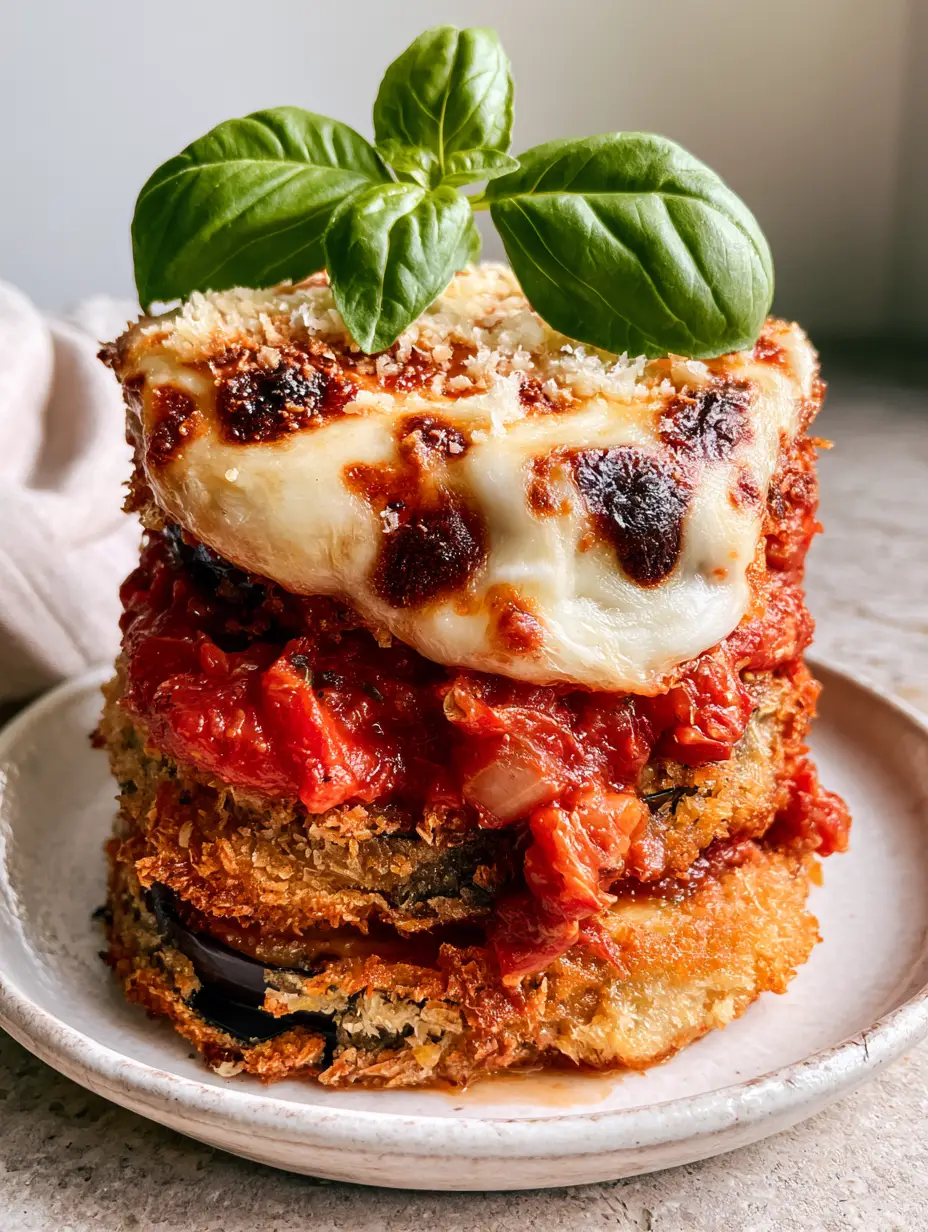
Oven Baked Eggplant Parmesan with Crispy Panko Crust
Ingredients
Equipment
Method
- Place eggplant rounds on a wire rack and sprinkle with kosher salt. Let sit for 30 minutes until moisture beads on the surface.
- Pat each slice thoroughly dry with a clean towel to ensure a crispy crust.
- Coat each slice in flour, then egg, then press firmly into panko crumbs for a thick, jagged coating.
- Bake at 425°F (220°C) for 20 minutes, flipping halfway, until golden-brown and toasted.
- Layer eggplant, marinara, and mozzarella into tall stacks. Finish with a mound of mozzarella and parmesan.
- Place under the broiler for 2-3 minutes until cheese is bubbly with brown singe marks. Garnish with basil and serve.
Notes
Use coarse panko instead of regular breadcrumbs for maximum crunch.
Closing & Call to Action
This Oven Baked Eggplant Parmesan proves that you don’t need a deep fryer to achieve world-class texture and flavor. By focusing on moisture control and the triple-dredge panko method, you can create a restaurant-worthy dish in your own kitchen. The combination of thick, chunky marinara and charred mozzarella makes every bite a celebration of classic Italian flavors.
If you loved this recipe, please leave a comment below and tell us how your stacks turned out! Don’t forget to sign up for our newsletter for more elite culinary guides, and share your beautiful photos with us on Pinterest.