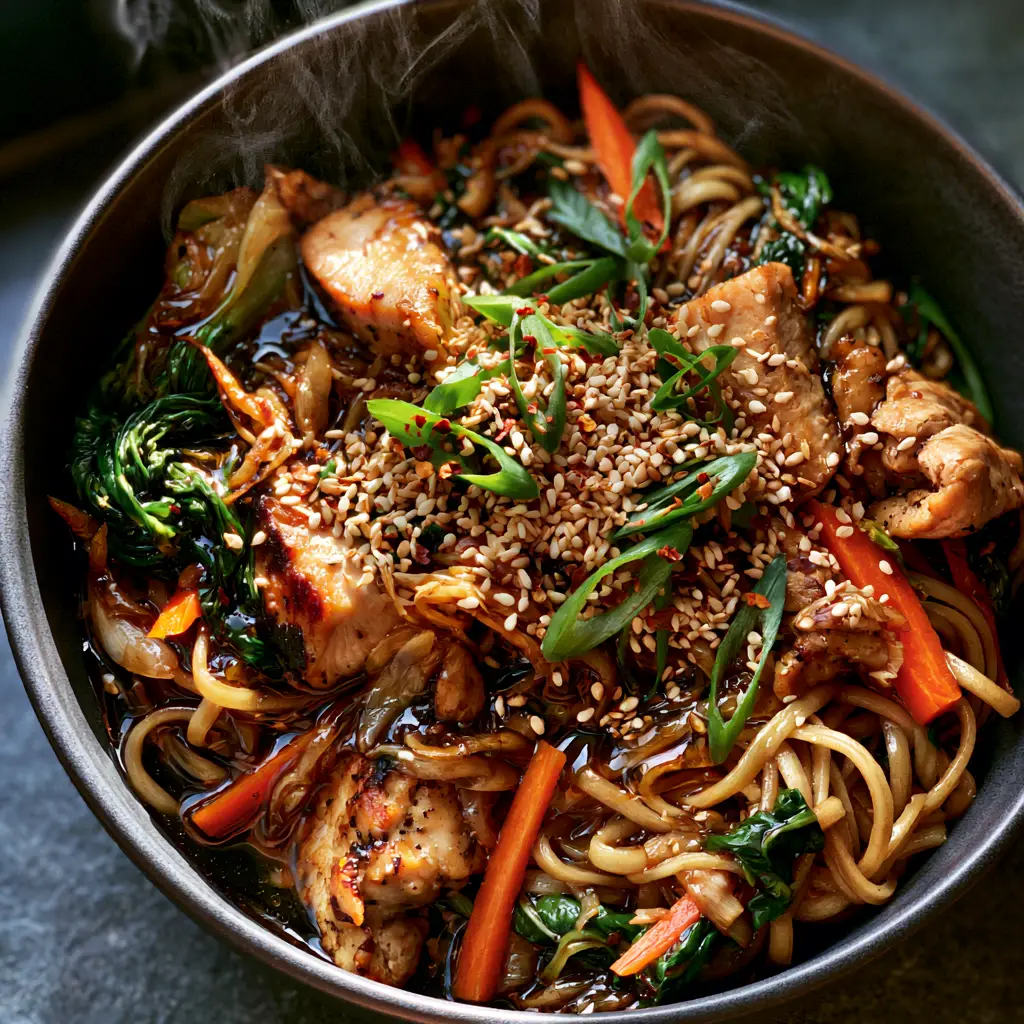
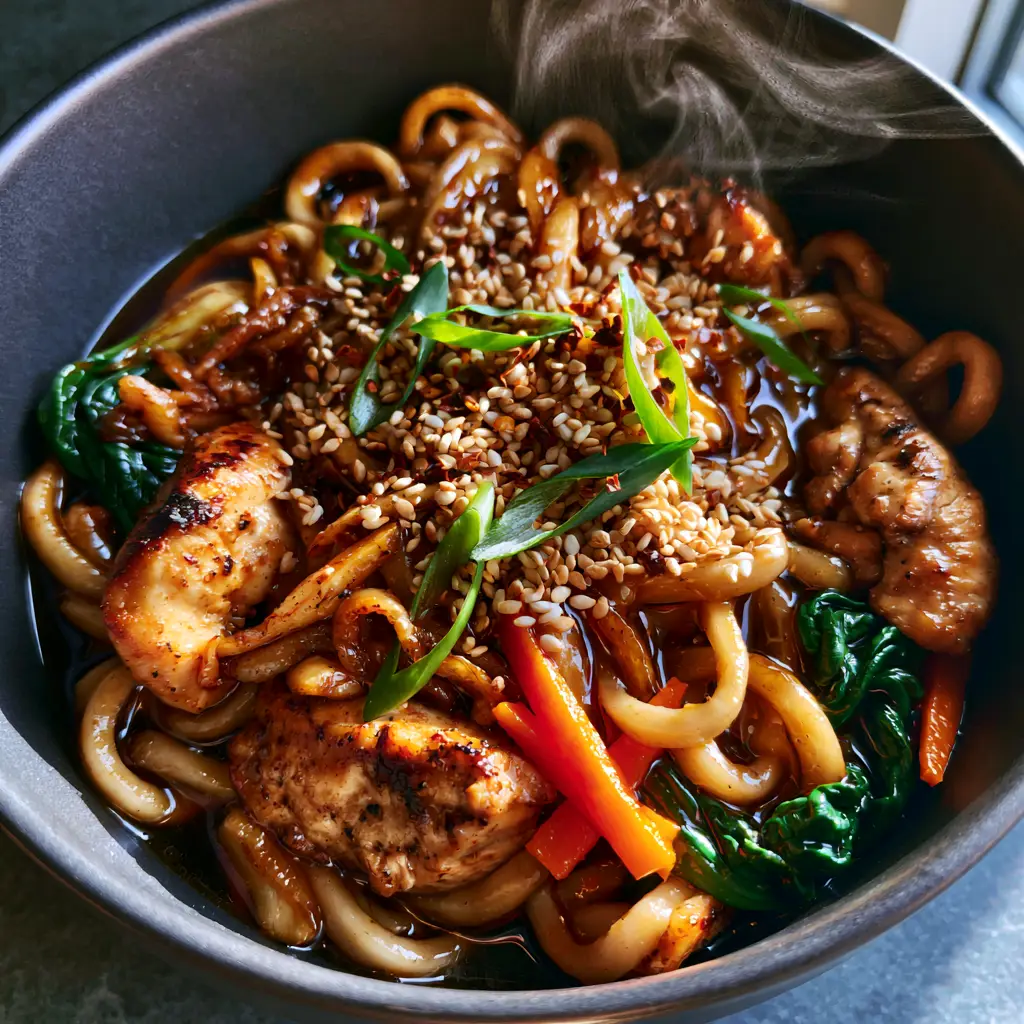
There is nothing quite like the sight of a steaming bowl of Garlic Chicken Lo Mein hitting the table after a long day. Imagine thick, chewy egg noodles drenched in a dark, glossy, translucent amber garlic-soy sauce that catches the light from every angle. This isn’t your average takeout; this is a culinary experience designed for the home cook who craves restaurant-quality results.
The secret lies in the contrast: large, tender chunks of chicken breast with visible golden-brown caramelization on the edges, paired with vibrant emerald green bok choy. Every bite offers a symphony of textures, from the crisp julienned bright orange carrots to the aromatic slivers of softened garlic that melt into the sauce. This dish is a visual and sensory masterpiece, served perfectly in a minimalist matte charcoal ceramic bowl.
Why This Garlic Chicken Lo Mein Works Every Single Time
- Visual Forensics: We’ve engineered this recipe to match the “macro smartphone photo” aesthetic—think glistening noodles and vibrant, high-definition garnishes.
- The Golden Sear: By using high-heat techniques, the chicken develops a deep golden crust while remaining incredibly juicy inside.
- Balanced Aromatics: We don’t just use garlic; we layered it—sautéed minced garlic for the base and softened slivers for a textural punch.
- Perfect Noodle Texture: We focus on the “al dente” bite of the lo mein egg noodles, ensuring they hold up against the heavy, glossy sauce without becoming mushy.
- Aesthetic Garnishing: A flurry of toasted white sesame seeds, electric green scallions, and red chili flakes provides the final “pop” of color and heat.
The Anatomy of a Perfect Garlic-Soy Glaze
To achieve that translucent amber glow seen in professional food photography, we use a specific blend of soy sauces and aromatics. Dark soy sauce provides the deep mahogany color, while light soy sauce brings the saltiness required to season the chicken and noodles deeply.
Like our sweet and savory chicken recipes, the key to a great stir-fry sauce is the balance of sugars and salts. A touch of brown sugar helps the sauce cling to the noodles, creating that signature “glossy” look that reflects soft, natural daylight. If you love bold flavors, this sauce will remind you of the richness found in our garlic-heavy pasta dishes.
Essential Ingredients for Your Stir-Fry Success
Lo Mein Egg Noodles: 12 oz (340g) of thick egg noodles. These are the foundation of the dish, providing the necessary “chew” to stand up to the heavy sauce.
Chicken Breast: 1 lb (450g), cut into large, uniform chunks. Chicken breast is preferred here for its clean look and ability to take on a beautiful golden-brown sear.
The Garlic Duo: 6 cloves (30g) total—4 minced for the sauce base and 2 thinly sliced for those aromatic “slivers” mentioned in the visual blueprint.
Baby Bok Choy: 3 heads (approx. 200g), quartered. This provides the vibrant emerald green color and a tender-crisp texture that balances the richness of the noodles.
Julienned Carrots: 1 large (100g) carrot, sliced into matchsticks. We add these at the very end to maintain their bright orange color and raw, crisp snap.
Dark and Light Soy Sauce: 2 tbsp (30ml) of each. Dark soy is for the “visual” depth; light soy is for the “flavor” depth.
Foundational Fats: 2 tbsp (30ml) of high-smoke point oil (like vegetable or canola) for searing the chicken, and 1 tsp (5ml) of toasted sesame oil for the finishing aroma.
Garnishes: 1 tsp (2g) toasted white sesame seeds, 2 thinly sliced scallions (green parts only), and a pinch of dried red pepper flakes for an electric finish.
Must-Have Tools for the Professional Home Cook
To recreate the high-resolution look of this Garlic Chicken Lo Mein, you need the right gear. A heavy-bottomed wok or a large carbon steel skillet is essential for achieving “wok hei”—the breath of the wok—which gives the chicken its caramelized edges.
You will also need a sharp chef’s knife to achieve the precise julienned carrots and thin scallion slivers. Much like preparing garlic-butter steak bites, heat management is everything. A high-heat-resistant spatula or tongs will help you toss the noodles effortlessly through the glossy sauce.
Mastering the Perfect Wok Sear: Step-by-Step
1. Prepping the Foundation
Begin by boiling a large pot of salted water. Cook your 12 oz (340g) of lo mein noodles just until they reach al dente—usually 1 minute less than the package instructions. Drain and immediately toss with a drop of oil to prevent sticking; this preserves their distinct, chewy shape.
2. Achieving the Golden Chicken Crust
Pat your chicken chunks dry with a paper towel—moisture is the enemy of caramelization. Heat 2 tbsp (30ml) of oil in your wok over high heat until it wisps with smoke. Add the chicken in a single layer and let it sit undisturbed for 2-3 minutes until a deep golden-brown crust forms on the edges. Flip and cook for another 2 minutes, then remove from the pan.
3. Sautéing the Aromatics
Lower the heat to medium. In the remaining oil, add your minced garlic and the sliced garlic slivers. Sauté for 30-45 seconds until they are fragrant and “softened” but not browned. This creates the aromatic base that infuses the entire Garlic Chicken Lo Mein.
4. The Glossy Sauce Reduction
Whisk together your soy sauces, brown sugar, and a splash of water (or chicken broth). Pour this into the wok, scraping up the golden bits (fond) left by the chicken. The sauce should begin to bubble and thicken into a translucent amber glaze that catches the light beautifully.
5. The Final Toss and Wilt
Add the noodles, seared chicken, and quartered bok choy back into the wok. Toss vigorously over medium-high heat. You are looking for the bok choy to turn a vibrant emerald green and just begin to wilt. At the very last second, fold in the julienned carrots so they stay crisp and bright orange.
Expert Tips for Visual and Flavor Success
- The “Gloss” Secret: If your sauce looks too thin, a tiny cornstarch slurry (1 tsp cornstarch mixed with 1 tsp water) added to the boiling sauce will give it that high-shine, photographic finish.
- Don’t Overcrowd: If your wok isn’t large enough, sear the chicken in two batches. Overcrowding leads to steaming, which prevents the golden-brown edges we see in the Midjourney prompt.
- The Steam Factor: To capture the “rising wisps of steam” in your own kitchen, serve the dish immediately in a pre-warmed charcoal ceramic bowl.
- Color Contrast: Ensure your scallions are sliced on a sharp bias. This exposes more of the “electric green” interior, making the dish look more professional.
Storage, Reheating, and Meal Prep
Garlic Chicken Lo Mein is an excellent candidate for meal prep, much like our high-protein chicken bowls. Store leftovers in an airtight container in the refrigerator for up to 3 days.
When reheating, add a teaspoon of water to the bowl before microwaving to loosen the sauce. The noodles will soak up the flavor over time, making day-two lo mein arguably even more delicious. We do not recommend freezing this dish, as the bok choy and noodles can lose their structural integrity upon thawing.
What to Serve with Garlic Chicken Lo Mein
While this is a complete meal on its own, it pairs beautifully with a light side. If you want to keep the meal vibrant and fresh, try a crisp spinach salad with a ginger-soy dressing. The acidity of a salad cuts through the rich, dark soy sauce of the noodles.
For those looking for a feast, consider serving this alongside other “better-than-takeout” classics. The garlic profile in this dish is quite heavy, so it complements the bold seasoning of garlic parmesan sides if you are doing a fusion-style dinner party.
Frequently Asked Questions
Absolutely! Chicken thighs are more forgiving and remain juicy at high heat, though chicken breast provides the clean, golden-brown chunks seen in professional stir-fry photos.
Adding a small amount of dark soy sauce provides the color, and a cornstarch slurry (1:1 ratio of starch to water) will give you that professional, translucent high-shine finish.
As written, no. To make it gluten-free, use Tamari instead of soy sauce and swap the egg noodles for rice noodles or gluten-free spaghetti.
The main difference is the preparation of the noodles. Lo Mein noodles are boiled and then tossed in sauce (making them chewy), while Chow Mein noodles are typically fried to become crispy.
Mushy noodles usually come from overboiling. Always cook your lo mein noodles ‘al dente’—slightly firm to the bite—since they will continue to cook when tossed in the hot wok.
The Complete Garlic Chicken Lo Mein Recipe
Garlic Chicken Lo Mein: The Ultimate Better-Than-Takeout Recipe
Ingredients
Equipment
Method
- Boil noodles in salted water until al dente. Drain and toss with a light coating of oil to prevent clumping.
- Heat oil in wok over high heat. Add chicken chunks in a single layer. Sear until golden-brown caramelization appears on edges (approx 3 mins per side). Remove chicken.
- Lower heat to medium. Sauté minced and slivered garlic for 45 seconds. Add soy sauces and brown sugar, stirring to create a thick, glossy amber glaze.
- Return chicken to the wok with noodles and bok choy. Toss over high heat until bok choy is emerald green and wilted. Fold in julienned carrots at the very end.
Notes
Ensure the wok is smoking hot before adding the chicken to get those golden edges.
Closing & Call to Action
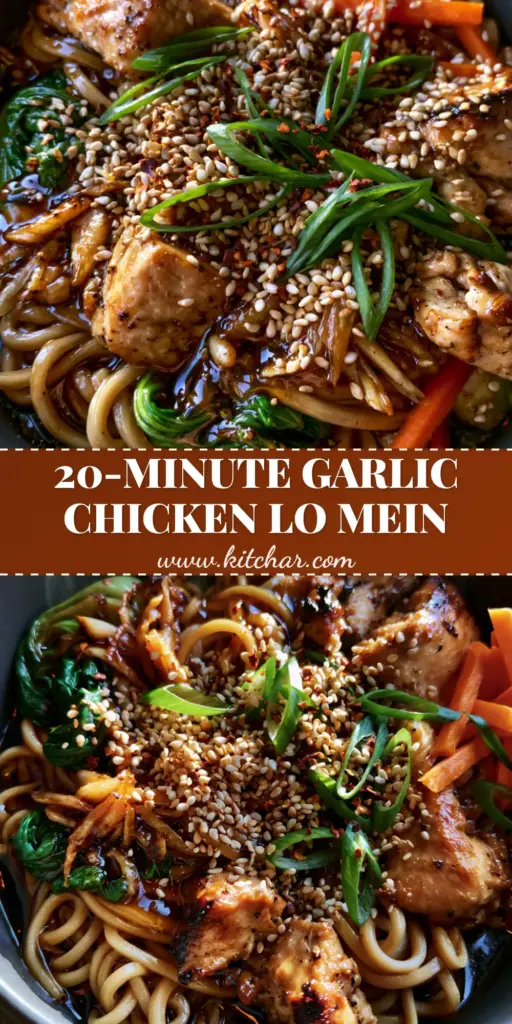
This Garlic Chicken Lo Mein is the perfect bridge between a quick weeknight dinner and a gourmet culinary experience. With its golden-brown chicken, chewy noodles, and that signature glossy amber sauce, it’s a dish that looks as good as it tastes. We hope you enjoy the process of building these layers of flavor in your own kitchen.
If you made this recipe, please leave a comment below and tell us how yours turned out! Did you get that perfect sear on the chicken? Don’t forget to share your creations on Pinterest and tag us so we can see your beautiful bowls!