There is a specific kind of culinary magic that happens when high-quality, simple ingredients meet mindful preparation. This greek chickpea salad is more than just a side dish; it is a vibrant, nutrient-dense masterpiece designed to capture the essence of a sun-drenched Mediterranean afternoon. If you have been searching for a lunch that offers both a satisfying crunch and a creamy, tangy finish, this recipe delivers on every sensory promise.
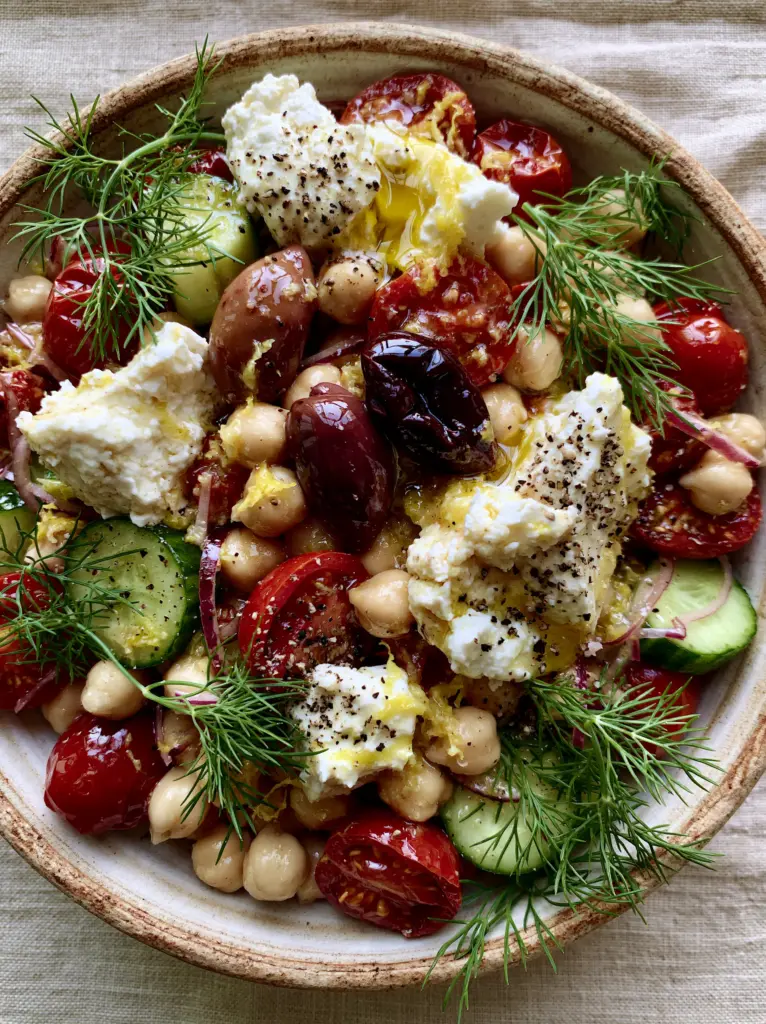
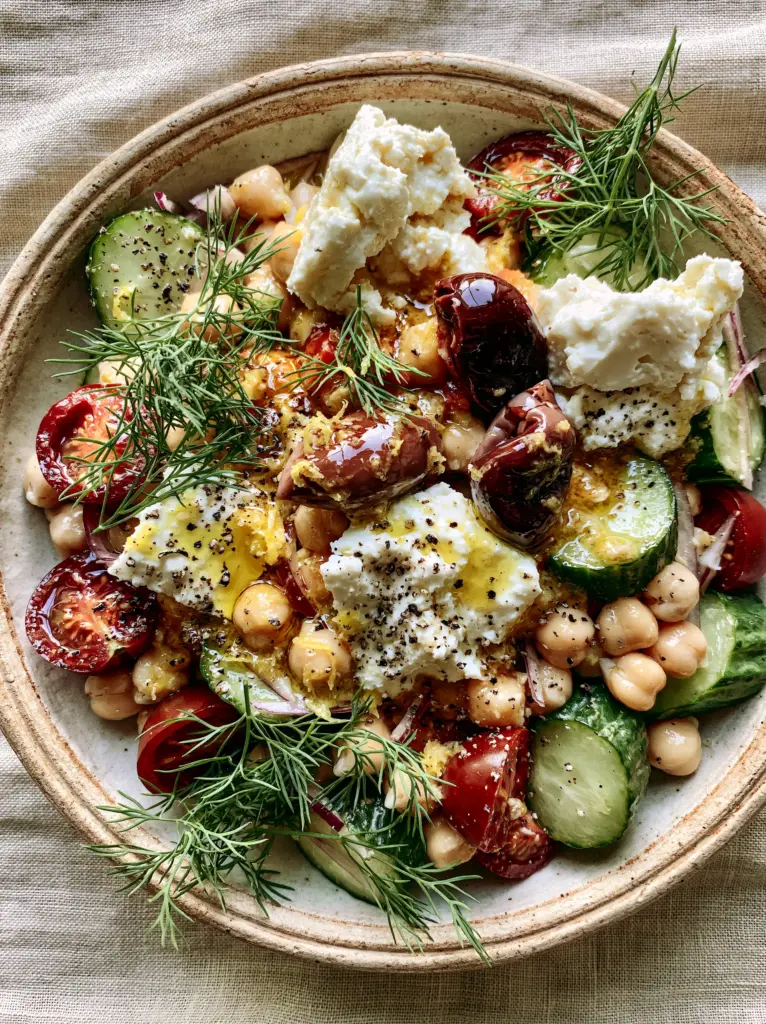
Inspired by a rustic, handcrafted aesthetic, this salad moves away from the finely minced textures of commercial deli salads. Instead, we lean into bold, structural elements: thick-sliced Persian cucumbers, substantial hand-crumbled chunks of feta, and plump, firm chickpeas. Each bite is designed to be a distinct experience of texture and flavor, perfectly captured by the way a golden, herb-infused dressing clings to every surface without ever pooling at the bottom of your ceramic bowl.
Whether you are preparing this for a mid-week meal prep or serving it as the centerpiece of a weekend brunch, the visual appeal is undeniable. The deep red of halved cherry tomatoes contrasts against the vibrant greens of fresh dill and parsley, while the glossy Kalamata olives provide a salty, umami-rich depth that anchors the entire dish. This is Mediterranean cooking at its most authentic and approachable.
Why This Vibrant Mediterranean Bowl Defined by Texture Works
- Structural Integrity: By using thick-sliced Persian cucumbers and large feta chunks, the salad maintains its “crunch factor” even after a few hours in the fridge, making it superior for meal prep.
- Emulsified Cling: The dressing technique ensures that the golden olive oil and lemon zest coat the ingredients thoroughly, providing flavor in every bite without a soggy bottom.
- Protein-Packed Satiety: Plump chickpeas provide a base of complex carbohydrates and plant-based protein, keeping you full longer than a traditional leaf-based salad.
- Visual Forensics: Every ingredient, from the thin slivers of red onion to the cracked black pepper, is chosen to create a high-contrast, “magazine-ready” look on your table.
The Curated Pantry: Ingredients for the Ultimate Greek Chickpea Salad
To achieve the specific visual and flavor profile of this greek chickpea salad, we must focus on the quality of our building blocks. Each component plays a vital role in the structural and aromatic success of the dish.
Plump Chickpeas: 2 cans (30 oz / 850g total). These serve as our hearty base; ensuring they are well-rinsed and dried allows the dressing to adhere to their skin rather than sliding off.
Thick-Sliced Persian Cucumbers: 3-4 medium (approx. 300g). These are preferred over English cucumbers for their thinner skin and concentrated crunch, providing the “thick-cut” visual required for a rustic feel.
Halved Cherry Tomatoes: 1.5 cups (250g). We use cherry tomatoes specifically for their lower water content and consistent sweetness compared to larger varieties that can become mealy.
Hand-Crumbled Feta Cheese: 6 oz (170g) block. Never buy pre-crumbled feta; crumbling it by hand creates those large, rustic, creamy chunks that define the visual blueprint of this dish.
Pitted Kalamata Olives: 1/2 cup (75g). These provide the necessary brine and dark, glossy contrast against the bright vegetables and white cheese.
Thin-Sliced Red Onion: 1/4 small onion (approx. 40g). We slice these into paper-thin slivers to provide a sharp aromatic bite without overwhelming the palate.
Fresh Herb Blend (Dill & Parsley): 1/4 cup (10g) each. Fresh dill sprigs provide a feathery texture and anise-like aroma, while chopped flat-leaf parsley adds a clean, peppery finish.
Golden Herb-Infused Dressing: 1/3 cup (80ml) Extra Virgin Olive Oil, 2 tbsp (30ml) fresh lemon juice, 1 tsp dried oregano, and zest of half a lemon. This combination creates the “clinging” citrus-herb coating.
Foundational Seasoning: 1/2 tsp (3g) Sea salt and 1/2 tsp (3g) freshly cracked black pepper. Salt draws out the natural juices of the tomatoes to mingle with the dressing, while coarse pepper adds visual grit and heat.
Essential Kitchen Tools for Professional Prep
Achieving the rustic, handcrafted look of this salad requires the right tactile approach. You don’t need fancy machinery, but these tools will help you replicate the “visual recipe blueprint” perfectly.
A large handcrafted ceramic bowl is essential for the presentation described in our visual guide. The wide surface area allows you to layer the heavy ingredients like feta and olives on top, preventing them from being crushed at the bottom. You will also need a sharp chef’s knife to achieve those clean, thick slices of Persian cucumber and the delicate slivers of red onion.
For the dressing, a small glass jar with a tight-fitting lid is superior to a whisk. Shaking the olive oil, lemon juice, and dried oregano vigorously creates a temporary emulsion that is much thicker than a stirred vinaigrette. This is the secret to getting the dressing to “cling” to the chickpeas and cucumbers rather than pooling at the base of the bowl.
The Step-by-Step Blueprint for a Crisp Mediterranean Bowl
Preparing the Protein Base and Vegetables
Begin by draining your chickpeas into a colander. Rinse them thoroughly under cold water until the foam disappears. This step is crucial for removing the metallic taste of the canning liquid and ensuring a “clean” flavor profile. Spread them on a clean kitchen towel and pat dry; if they are wet, the oil-based dressing will not stick. While the chickpeas dry, prepare your Persian cucumbers by cutting them into 1/2-inch (1.25cm) thick rounds. This thickness ensures they stay crunchy even after being tossed. Halve the cherry tomatoes longitudinally to reveal their vibrant interiors.
Mastering the Thin-Slicing Technique
For the red onion, slice off the stem end and cut the onion in half from pole to pole. Use your knife to create paper-thin slivers. If you find raw onion too pungent, soak these slivers in a bowl of ice water for 5 minutes; this removes the sulfurous “bite” while maintaining the crunch. Once soaked, pat them dry before adding to the mix. Combine the dried chickpeas, cucumbers, tomatoes, and onion in your large ceramic bowl.
Achieving the Herb-Infused Cling
In your glass jar, combine the golden olive oil, lemon juice, lemon zest, and dried oregano. Shake vigorously for 30 seconds until the liquid looks opaque and thickened. Pour about three-quarters of this dressing over the chickpea and vegetable mixture. Toss gently using large spoons. You are looking for a visual cue where the surfaces of the chickpeas look glossy and the herbs are evenly distributed. This “pre-dressing” step seasons the core ingredients before we add the delicate toppings.
The Final Rustic Assembly
Now, take your block of feta. Use your fingers to break it into large, uneven chunks directly over the salad. Do not over-mix after adding the feta; you want the chunks to remain distinct and creamy rather than breaking down into a grainy paste. Scatter the pitted Kalamata olives across the top. Finally, garnish with plenty of fresh green dill sprigs and the chopped parsley. The feathery dill should look like it was just plucked from the garden. Finish with a generous amount of cracked black pepper, ensuring the dark flecks are visible against the white feta.
Pro Secrets for the Perfect Crunch and Cling
- The Dryness Factor: The biggest enemy of a greek chickpea salad is excess water. Dry your chickpeas, cucumbers, and onions thoroughly. If the ingredients are damp, the dressing will emulsify with that water and run to the bottom.
- Temperature Control: For the best flavor, let the salad sit at room temperature for 15 minutes before serving. This allows the fat in the olive oil to soften and the dried oregano to “bloom” in the acidity of the lemon.
- The Feta Quality: Look for feta stored in brine. It has a much higher moisture content and a better “crumble” than the vacuum-sealed dry blocks, providing that rustic, creamy texture seen in high-end food photography.
- Herb Preservation: Only add the fresh dill and parsley at the very last moment. Fresh herbs oxidize and wilt quickly once they touch acid (lemon juice), so for that “high-detail smartphone photo” look, garnish just before the bowl hits the table.
Smart Storage and Meal Prep Guidelines
This salad is remarkably resilient. Because we used thick-cut cucumbers and sturdy chickpeas, it will stay fresh in an airtight container in the refrigerator for up to 4 days. In fact, many find the flavor improves on day two as the onions mellow and the chickpeas absorb the herb-infused oil.
If you are meal prepping this for the week, we recommend keeping the hand-crumbled feta in a separate small container and adding it daily. This prevents the cheese from absorbing the purple hue of the red onions and keeps the textures distinct. Do not freeze this salad; the high water content in the cucumbers and tomatoes will cause them to become mushy and unappealing upon thawing.
What to Pair with Your Greek Chickpea Salad
This salad is a complete meal on its own, but it also functions beautifully as part of a larger Mediterranean spread. If you are looking to add more variety to your table, consider serving this alongside a bright refreshing cucumber salad or a more hearty Italian bean salad for a legume-focused feast.
For those who want to add a different protein profile, this salad pairs excellently with a side of creamy chicken salad served on toasted sourdough. If you are leaning into a plant-based menu, a bowl of chilled broccoli salad provides a wonderful textural contrast to the soft chickpeas and creamy feta. The bright lemon notes also make it a natural companion to a zesty shrimp and avocado dish.
Common Questions Regarding Mediterranean Chickpea Salads
You can, but English cucumbers have a higher water content and thinner walls. If using them, slice them slightly thicker and consider removing the watery seed core to prevent the salad from becoming soggy.
Yes, you can use dried chickpeas. You will need about 1.5 cups of dried chickpeas, soaked overnight and simmered until tender but firm. Ensure they are fully cooled and dry before tossing with the vegetables.
The secret is emulsification and dryness. Shake the oil and lemon juice vigorously in a jar to create a thick emulsion, and ensure your chickpeas and vegetables are completely dry so the oil can adhere to the skins.
Absolutely. It is high in plant-based protein and fiber, which promotes satiety. Because it lacks leafy greens that wilt, it stays crisp and delicious in the fridge for up to four days.
Pre-crumbled feta is coated in anti-caking agents like potato starch, which prevents it from having a creamy texture. Hand-crumbling a block of feta results in large, rustic chunks that provide a superior mouthfeel and look more authentic.
The Ultimate Greek Chickpea Salad Recipe
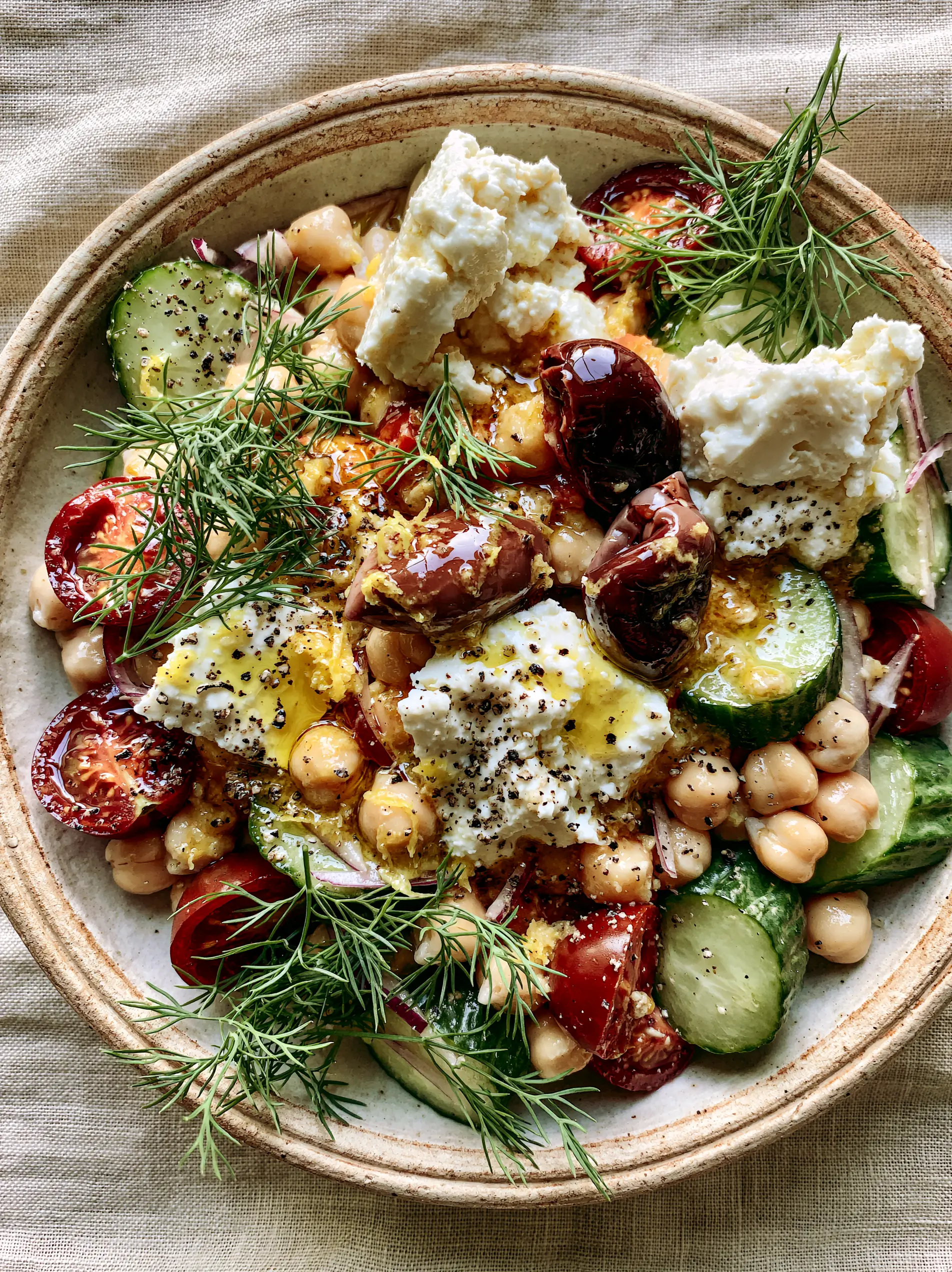
Greek Chickpea Salad with Herb-Infused Olive Oil and Rustic Feta
Ingredients
Equipment
Method
- Rinse chickpeas and pat very dry with a kitchen towel to ensure dressing clings later.
- Thick-slice the cucumbers, halve the tomatoes, and create paper-thin slivers of red onion.
- In a glass jar, combine olive oil, lemon juice, zest, and oregano. Shake vigorously until thickened and golden.
- Toss the chickpeas, cucumbers, onions, and tomatoes with 3/4 of the dressing in a large ceramic bowl.
- Hand-crumble the feta cheese into large chunks over the top. Add olives and fresh herbs.
- Drizzle the remaining dressing and finish with a heavy crack of black pepper. Serve immediately.
Notes
Ensure the chickpeas are bone-dry before dressing; otherwise, the oil will slide off and pool at the bottom.
Closing Thoughts on This Mediterranean Classic
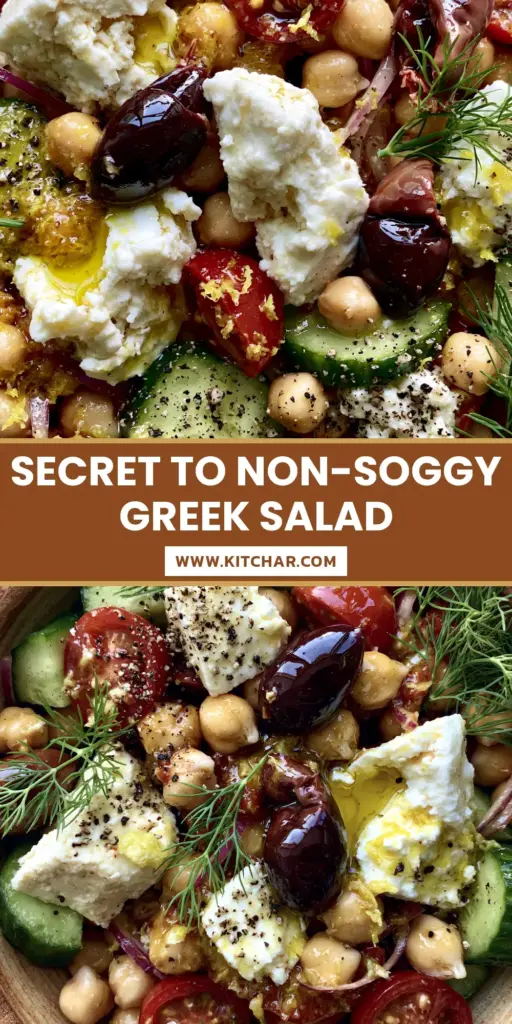
The beauty of the greek chickpea salad lies in its honesty. By focusing on the visual cues—the “clinging” dressing, the “rustic” feta, and the “glossy” olives—you create a dish that is as satisfying to look at as it is to eat. This recipe celebrates the simplicity of the Mediterranean diet while utilizing professional techniques to ensure every bite is perfectly seasoned and textured.
We invite you to try this version and see how the small details, like hand-crumbling your cheese and thick-slicing your cucumbers, make a world of difference. If you enjoyed this recipe, please leave a comment below and share your results! Don’t forget to follow us on Pinterest for more visually inspired culinary guides and meal prep inspiration.