Melting potatoes have taken the culinary world by storm, and for a very good reason. They offer a textural contrast that most potato dishes can only dream of: a thick, mahogany-colored crust that shatters under the fork, giving way to an interior so creamy it practically dissolves on your tongue.
The secret to achieving the perfect melting potatoes lies in the two-stage cooking process. We start by searing thick-cut Yukon Gold rounds in a heavy cast iron skillet to develop that iconic glistening sheen and deep caramelization, then finish them by braising in a savory bath of chicken broth and grass-fed butter.
Whether you are looking for a show-stopping side for a holiday feast or a comforting addition to a weeknight meal, these potatoes are designed to impress. In this guide, we will break down the forensic science of the perfect sear and the aromatics required to elevate this dish to restaurant-quality status.
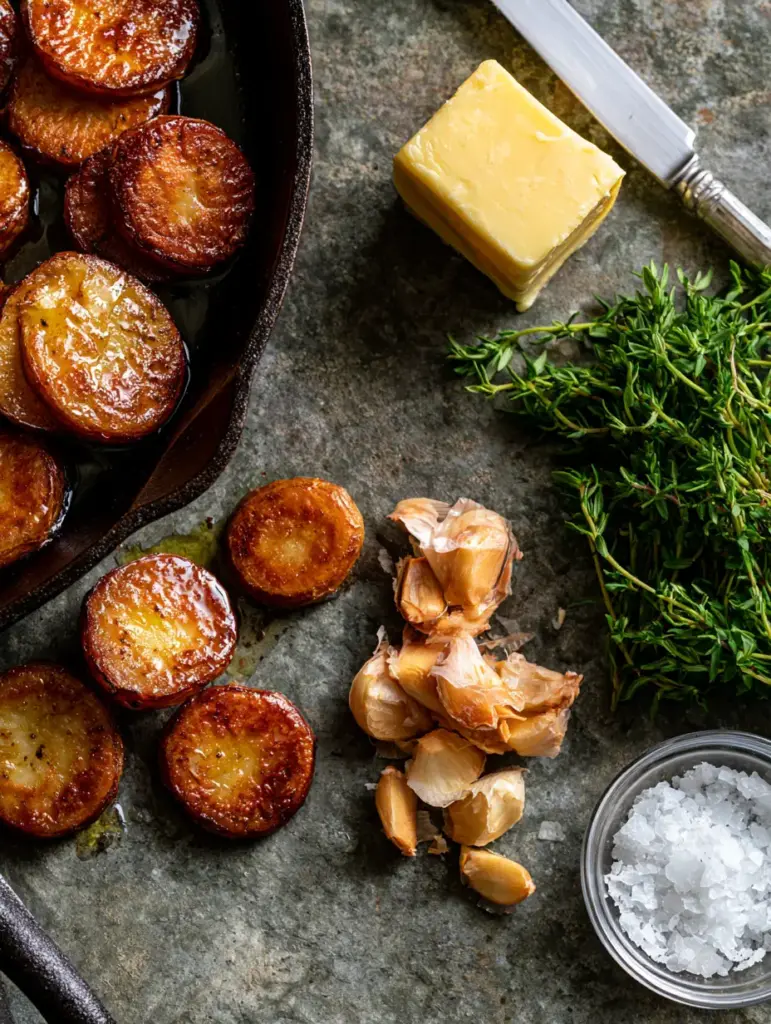
Why These Melting Potatoes Are a Culinary Revelation
- The Mahogany Crust: Unlike traditional roasted potatoes, these rounds feature a uniform, deep-brown exterior achieved through a high-heat sear in a cast iron skillet.
- Custard-Like Interior: By finishing the potatoes in chicken broth, the starch in the Yukon Golds hydrates and softens into a texture reminiscent of silk.
- Aromatic Infusion: Using whole smashed garlic cloves with their papery skins and vibrant green thyme sprigs creates a depth of flavor that permeates every bite.
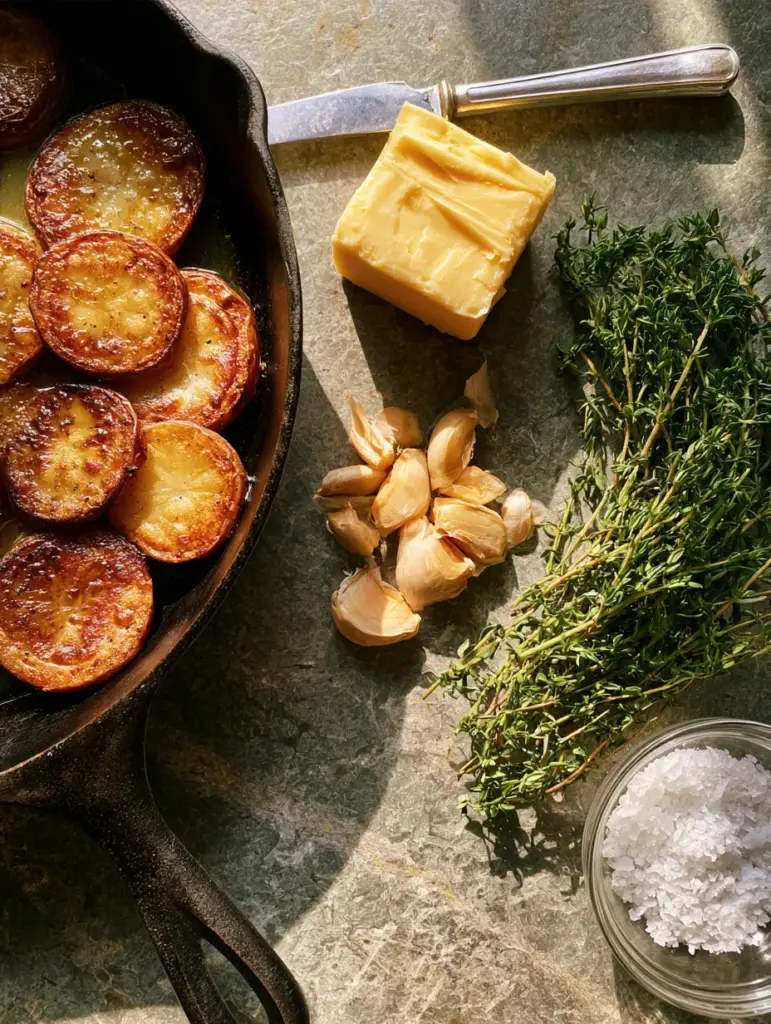
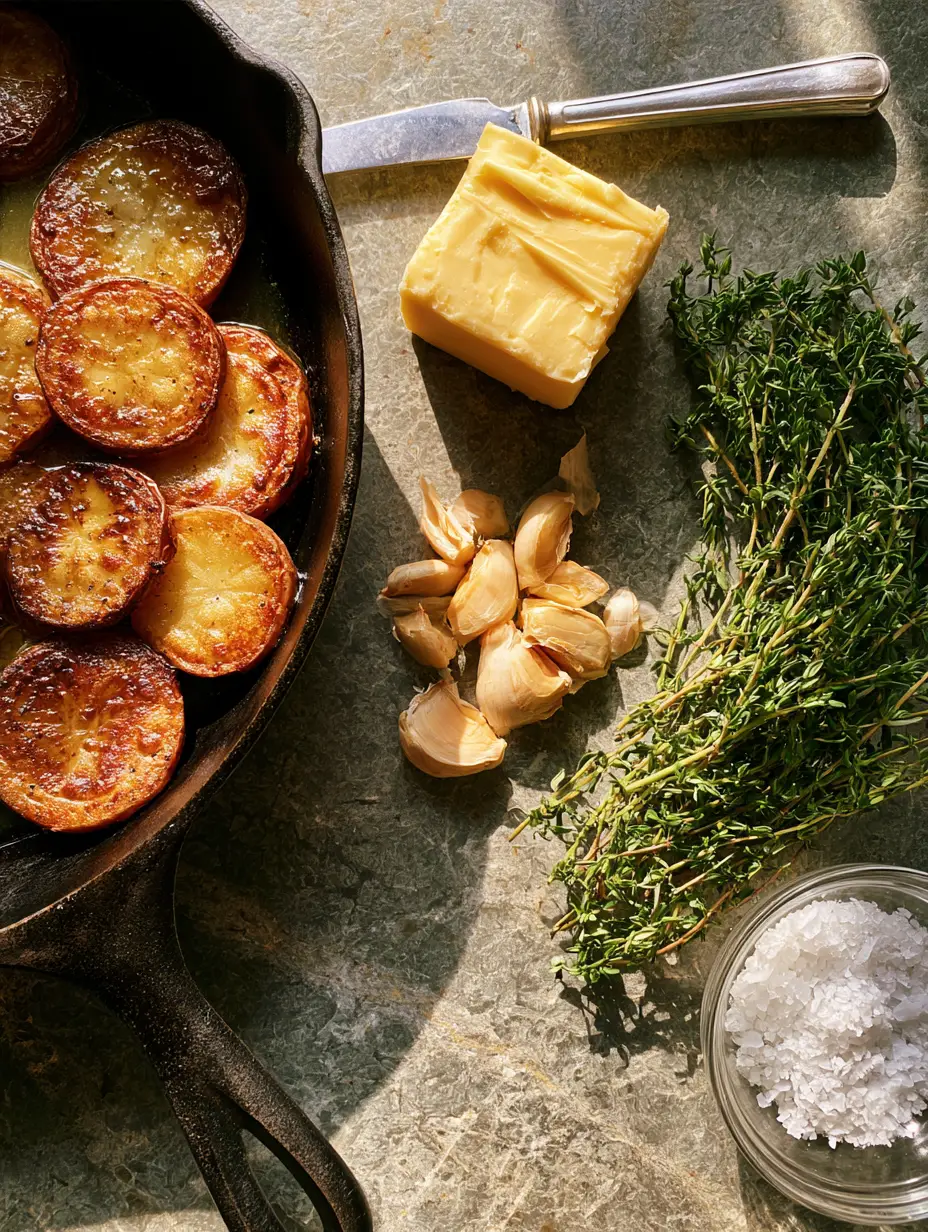
- Visual Brilliance: The contrast between the dark crust, the golden butter, and the green herbs makes this dish a centerpiece-worthy addition to any table.
If you enjoy exploring unique ways to prepare vegetables, you might also be interested in our marry me melting cabbage for another melt-in-your-mouth experience. These techniques elevate humble ingredients into something truly extraordinary.
Essential Ingredients for Potato Perfection
Yukon Gold Potatoes: We use Yukon Golds specifically for their medium starch content and natural buttery flavor. Cut them into thick 1-inch (2.5cm) rounds to ensure they hold their shape during the intense searing and braising process.
Grass-Fed Butter: High-quality yellow butter provides a rich, nutty flavor and a glistening sheen. You will need 4 tablespoons (56g) to create the emulsified sauce that coats each potato round.
Neutral Searing Oil: To achieve that mahogany crust without burning the butter, we start with 2 tablespoons (30ml) of avocado or grapeseed oil. These oils have a high smoke point, allowing for a professional-grade sear.
Chicken Broth Base: Use 1 cup (240ml) of high-quality chicken broth to provide the liquid for the braising stage. The broth reduces into a savory glaze that concentrates the flavors of the dish.
Smashed Fresh Garlic: We use 4-6 cloves of garlic, smashed but with the papery skins still attached. Leaving the skins on prevents the garlic from burning during the high-heat phase while still releasing all its essential oils.
Fresh Thyme Sprigs: A bundle of 6-8 vibrant green thyme sprigs adds a woody, floral note. The heat of the oven draws out the aromatics, scenting the butter and the potatoes simultaneously.
Maldon Sea Salt & Cracked Black Pepper: Flaky sea salt provides a final crunch and a burst of salinity, while fresh cracked pepper adds a subtle heat. Use 1 teaspoon (5g) of salt and 1/2 teaspoon (2g) of pepper, adjusted to your taste.
Critical Equipment for Success
A heavy black cast iron skillet is the most important tool for this recipe. Its superior heat retention ensures that every potato round achieves a perfectly uniform mahogany caramelized crust.
You will also need a sharp chef’s knife to ensure the potato rounds are cut to a consistent thickness. Consistency is key here; if some rounds are thinner than others, they will overcook before the thicker rounds reach that “melting” state.
Finally, a sturdy metal spatula is necessary for flipping the potatoes. Because we are looking for a deep sear, the potatoes may stick slightly at first—the metal spatula helps you get underneath that crust without breaking it.
Mastering the Art of the Melting Potato
Preparation and Precision Cutting
Begin by preheating your oven to 400°F (200°C). Wash your Yukon Gold potatoes thoroughly, but leave the skins on for added texture and nutrition. Slice the potatoes into thick rounds, exactly 1 inch (2.5cm) thick.
Pat the potato rounds bone-dry with a paper towel. This is a critical forensic step; any moisture on the surface of the potato will create steam, preventing the formation of that deep mahogany crust we are looking for.
The High-Heat Mahogany Sear
Place your cast iron skillet over medium-high heat and add the neutral oil. Once the oil is shimmering and just starting to wisps of smoke, carefully place the potato rounds in a single layer. Do not crowd the pan; work in batches if necessary.
Sear the potatoes for 4-6 minutes without moving them. You are looking for a sensory cue: the edges should look dark and crisp, and the aroma should be intensely toasted. Flip the potatoes to reveal a perfectly uniform, deep mahogany crust.
The Braising and Aromatic Infusion
Once flipped, add the block of grass-fed butter, the smashed garlic cloves, and the thyme sprigs directly into the skillet. As the butter melts and foams, spoon it over the seared tops of the potatoes to create a glistening sheen.
Carefully pour the 1 cup (240ml) of chicken broth into the skillet. The liquid should come about halfway up the sides of the potato rounds. Season generously with cracked black pepper and a pinch of the flaky sea salt.
The Oven Finish
Transfer the skillet to the preheated oven. Bake for 15-20 minutes. During this time, the broth will reduce and the potatoes will absorb the liquid, transforming the interior into a soft, custardy texture.
Test for doneness by inserting a knife into the center of a potato round; it should slide in with absolutely no resistance. If there is any firmness, give them another 5 minutes.
Expert Tips for Visual and Textural Excellence
- Don’t Skimp on the Broth: If your skillet is extra wide, you may need a little more broth. The potatoes should be sitting in a shallow pool of liquid to ensure they braise properly.
- Skins on Garlic: Keeping the skins on the garlic cloves acts as a heat shield. It allows the garlic to roast and sweeten without turning bitter or charred in the hot oil.
- The Flip Test: If the potato resists when you try to flip it, it hasn’t finished building its crust. Wait another 60 seconds and try again; it will release naturally once the Maillard reaction is complete.
- The Starch Factor: If you use Russet potatoes instead of Yukon Gold, the result will be fluffier but less “creamy.” For the authentic melting experience, stick to the yellow-fleshed variety.
Perfect Pairings for Your Melting Potatoes
These potatoes are incredibly versatile. They pair beautifully with a classic chicken parmesan casserole for a hearty family dinner. The acidity of the tomato sauce in the chicken dish cuts through the richness of the buttery potatoes perfectly.
For a lighter option, serve them alongside stuffed bell peppers. The earthy flavors of the rice and veggies complement the aromatic thyme and garlic in the potatoes.
If you are looking for more inspiration to round out your meal plan, explore our full collection of savory potato side dishes. From mashes to roasts, there is a potato preparation for every occasion.
Frequently Asked Questions
While they are best fresh, you can sear them ahead of time and perform the final broth braise in the oven just before serving to maintain the crust’s texture.
Yes, vegetable broth works well, though chicken broth provides a deeper savory note that complements the grass-fed butter perfectly.
Cast iron is recommended for its heat retention, which creates the best crust. However, any heavy, oven-safe stainless steel skillet will also work.
This usually happens if they are cut too thin or overcooked in the broth. Ensure they are a full 1-inch thick to maintain structural integrity.
The Ultimate Melting Potatoes Recipe
Melting Potatoes: The Ultimate Deep-Sear Mahogany Side Dish
Ingredients
Equipment
Method
- Preheat oven to 400°F (200°C). Slice Yukon Gold potatoes into 1-inch (2.5cm) thick rounds. Pat them completely dry with paper towels.
- Heat oil in a cast iron skillet over medium-high heat. Add potato rounds in a single layer and sear for 5 minutes until a deep mahogany crust forms. Flip them.
- Add butter, garlic, and thyme to the skillet. Pour in the chicken broth and season with salt and pepper. Transfer the skillet to the oven.
- Roast for 15-20 minutes until the potatoes are tender and the broth has reduced to a thick glaze. Serve hot with a sprinkle of extra sea salt.
Notes
Keep the garlic skins on to prevent burning during the high-heat sear.
Closing & Call to Action
Melting potatoes are more than just a side dish; they are a masterclass in texture and flavor. By following these steps, you have created a dish that is visually stunning and culinarily sophisticated. The combination of the mahogany crust and the butter-braised interior is something every home cook should experience.
Did your potatoes achieve that perfect glistening sheen? We would love to hear about your results! Leave a comment below and let us know how your mahogany sear turned out. Don’t forget to share your creations and follow us on Pinterest for more culinary inspiration.