The perfect Cauliflower steak is more than just a vegetable side dish; it is a masterclass in texture, flavor, and the Maillard reaction. When prepared correctly, these thick-cut slabs transform into a centerpiece that rivals any traditional steak in visual appeal and savory depth.
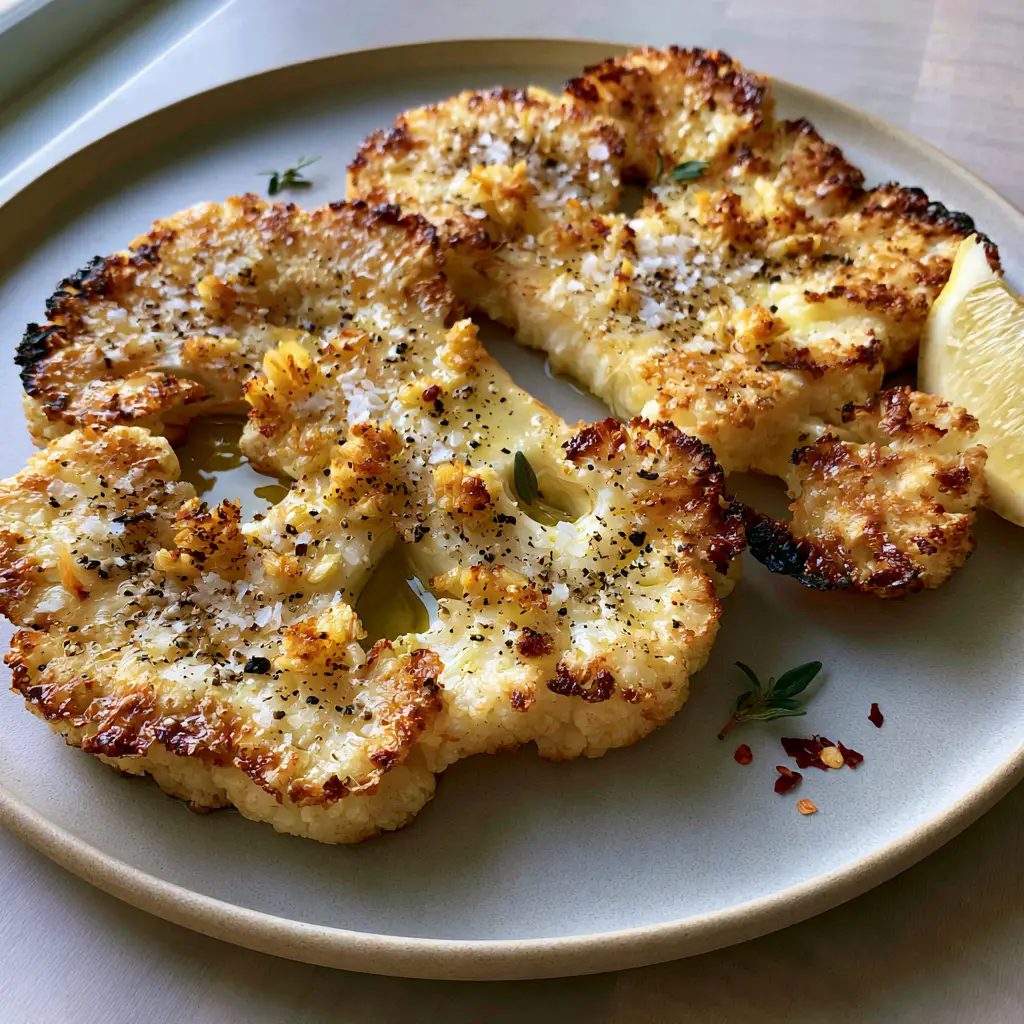
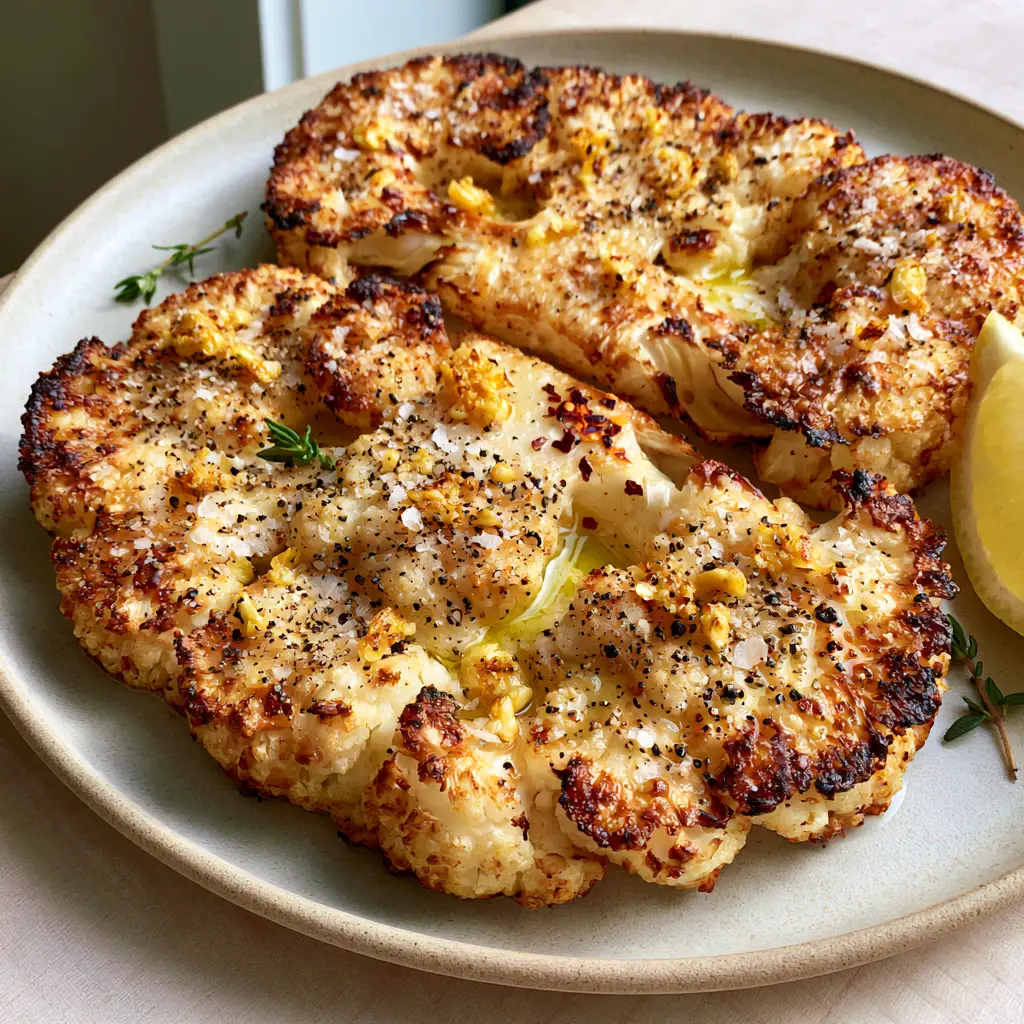
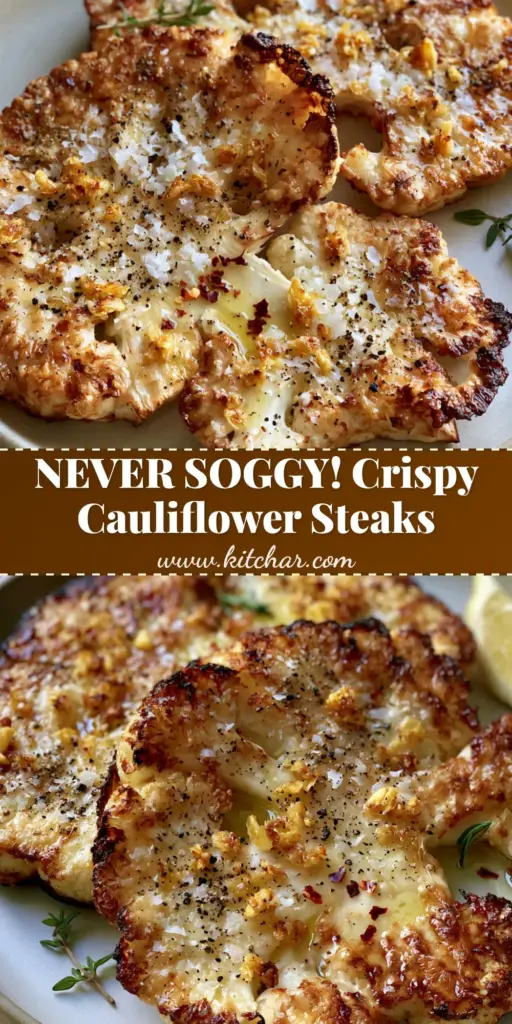
Imagine a handheld smartphone photo of two thick-cut cauliflower steaks served on a minimalist matte ceramic plate. The cauliflower features a deep golden-brown, double-seared crust with visible charred, crispy edges on every floret. The surface is glistening with a light coating of garlic-infused olive oil and melted butter.
Every steak is topped with a precise dusting of flaky sea salt, cracked black pepper, and tiny bits of golden toasted garlic. A few scattered fresh thyme leaves and a pinch of red chili flakes add color, while a fresh lemon wedge sits on the side, ready to brighten every bite.
Why This Double-Seared Method Works Every Time
Achieving that iconic charred floret edge requires a specific culinary approach known as the “double-sear.” This isn’t just about heat; it’s about managing moisture and fat to create a crust that stays crunchy even under a butter glaze.
- Unmatched Texture: The combination of a high-heat pan sear and a finishing roast ensures a tender center with crispy, “burnt” edges.
- Umami-Rich Glaze: By toasting garlic directly in the butter, we infuse the cauliflower with deep, nutty aromatic notes.
- Visual Showstopper: The contrast between the golden-brown crust and the vibrant green thyme makes this a 5-star restaurant-quality plate.
- Plant-Based Power: It fits perfectly into a rotation of high-protein dinners when paired with the right legumes or grains.
The Anatomy of a Perfect Cauliflower Steak
To recreate the visual blueprint exactly, you need high-quality, fresh ingredients. Each component serves a functional purpose in both the flavor profile and the final plating aesthetics.
Large Head of Cauliflower: Look for a dense, heavy head with tightly packed florets. This ensures the “steaks” hold together during the double-searing process without crumbling into loose florets.
Avocado Oil or Grapeseed Oil: You need a high-smoke point oil for the initial sear. 2 tbsp (30ml) of oil allows the cauliflower to develop that deep golden-brown crust without the oil breaking down and smoking.
Unsalted Butter: 3 tbsp (45g) of butter provides the glistening finish. Using unsalted butter allows you to control the seasoning with the flaky sea salt later in the process.
Fresh Garlic: 4 cloves, finely minced, are essential for the “toasted garlic bits” described in the blueprint. These bits provide a crunchy, pungent contrast to the tender vegetable.
Fresh Thyme Leaves: Use 1 tsp (2g) of fresh leaves rather than dried. The aromatic oils in fresh thyme are released by the residual heat of the butter glaze, providing a floral fragrance.
Red Pepper Flakes: A pinch (approx. 1/2 tsp) adds a subtle heat and a pop of red color against the golden-brown cauliflower. This is a key visual element for the final presentation.
Flaky Sea Salt & Cracked Black Peppercorns: These are the finishing touches. The large crystals of flaky salt provide a textural “crunch” that table salt simply cannot replicate.
Fresh Lemon Wedge: One large wedge per plate is mandatory. The citric acid cuts through the richness of the garlic butter glaze, balancing the entire dish.
Essential Tools for Professional Searing
To get those charred edges and the glistening finish, your equipment matters. A standard non-stick pan often fails to reach the temperatures required for a true sear.
A Heavy Cast Iron Skillet is the preferred tool for this recipe. Its heat retention capabilities ensure that the temperature doesn’t drop when the cold cauliflower hits the pan.
You will also need a Sharp Chef’s Knife to cut clean, 1-inch (2.5cm) thick slabs. A dull knife will cause the florets to shatter, leaving you with a pile of roasted cauliflower instead of a steak.
The Step-by-Step Blueprint for Success
Preparing the Slabs
Start by removing the outer green leaves of the cauliflower but keep the stem intact. The stem is the “glue” that holds the steak together; cutting it off will cause the steak to fall apart.
Place the head on a cutting board, stem-side down. Cut the head in half through the center, then cut 1-inch (2.5cm) thick slices from the middle of each half. You should get 2 to 4 perfect steaks from one large head.
The First High-Heat Sear
Heat 2 tbsp (30ml) of avocado oil in your skillet over medium-high heat until the oil is shimmering. Place the cauliflower steaks into the pan, ensuring they don’t overlap.
Press down lightly with a spatula to ensure maximum surface contact. Cook for 4-5 minutes without moving them. You are looking for a deep, dark golden-brown crust—if you peek and it’s pale, give it another minute.
The Infusion and Basting
Flip the steaks carefully. Reduce the heat to medium and add 3 tbsp (45g) of butter and your minced garlic to the skillet. As the butter melts and begins to foam, it will pick up the garlic flavor.
Tilt the pan slightly and use a large spoon to continuously pour the hot garlic butter over the cauliflower. This “basting” technique ensures the garlic bits stick to the florets and the butter penetrates the crevices.
The Oven Finish
Transfer the entire skillet to a preheated oven at 400°F (200°C) for 10-12 minutes. This “double-sear” (pan then oven) ensures the center is tender while the edges become crispy and charred.
During the last 2 minutes of roasting, sprinkle the fresh thyme leaves and red pepper flakes over the top. The heat will wake up the herbs without burning them.
Mastering the Visual Presentation
Plating is where the forensic accuracy of this recipe shines. Slide the steaks onto a minimalist matte ceramic plate to emphasize the rustic, charred textures.
Drip any remaining garlic butter from the pan over the steaks. The surface should be glistening. Apply a precise dusting of flaky sea salt and cracked black pepper from a height to ensure even coverage.
Place the fresh lemon wedge at a 45-degree angle on the side of the plate. This creates a professional, “handheld smartphone photo” look that is perfect for social media sharing.
Expert Tips for the Perfect Crust
- Dry the Cauliflower: If the cauliflower is wet from washing, it will steam rather than sear. Pat every slab dry with paper towels before it hits the oil.
- Don’t Crowd the Pan: Cooking more than two steaks at a time will drop the pan temperature too significantly. Cook in batches if necessary.
- Garlic Timing: If your garlic bits are turning dark brown too fast, move them on top of the cauliflower steaks to shield them from the direct heat of the pan.
- Flavor Variations: For a different profile, you can try serving these alongside savory garlic mushrooms for an ultimate umami experience.
Storage and Reheating Advice
While the Cauliflower steak is best served immediately to preserve the crispy edges, you can store leftovers in an airtight container for up to 3 days.
To reheat, avoid the microwave as it will make the florets soggy. Instead, place the steaks in a toaster oven or air fryer at 350°F (175°C) for 5 minutes until the edges crisp up again.
What to Serve with Charred Cauliflower
This dish is incredibly versatile. For a complete meal, consider serving it with a side of creamy mushroom julienne or a bed of protein-rich quinoa.
If you are looking for more plant-based inspiration, check out our spring dinner ideas which feature seasonal vegetables paired with bold, seared flavors. For those who love earthy flavors, a side of maitake mushrooms provides a wonderful textural contrast.
Frequently Asked Questions
Yes, though you won’t get the same basting effect. Air fry at 375°F (190°C) for 15 minutes, flipping halfway through and brushing with garlic butter during the last 3 minutes.
You can, but the visual and aromatic impact will be different. If using dried, use only 1/3 the amount and add it earlier in the basting process to allow the oils to rehydrate.
The secret is to keep the stem intact. The stem acts as the central anchor for the florets. When cutting your 1-inch slabs, ensure every piece includes a cross-section of the core.
On its own, cauliflower is relatively low in protein. However, when served as a ‘steak’ main, it is traditionally paired with high-protein sides like lentils, chickpeas, or a tahini-based sauce to create a balanced meal.
This usually happens if the pan isn’t hot enough or if the cauliflower is too wet. Ensure the oil is shimmering before adding the steaks and pat the cauliflower dry with a paper towel first.
The Ultimate Double-Seared Cauliflower Steak Recipe
Cauliflower Steak: The Ultimate Double-Seared Garlic Butter Guide
Ingredients
Equipment
Method
- Trim the leaves and cut the cauliflower into 1-inch (2.5cm) thick steaks, keeping the stem intact to prevent crumbling.
- Heat oil in a cast iron skillet over medium-high heat. Sear steaks for 4-5 minutes until a deep golden-brown crust forms.
- Flip the steaks, add butter and garlic. Spoon the foaming garlic butter over the cauliflower continuously for 2 minutes.
- Transfer the skillet to a preheated oven at 400°F (200°C) for 10-12 minutes until floret edges are charred and crispy.
- Sprinkle with fresh thyme, red pepper flakes, flaky sea salt, and cracked pepper. Serve with a fresh lemon wedge.
Notes
Use a high-smoke point oil like avocado or grapeseed oil for the initial high-heat sear.
Join the Kit Char Community
Creating the perfect Cauliflower steak is a rewarding culinary journey that proves vegetables can be just as satisfying as meat. The key lies in the double-sear and the generous application of garlic butter.
Did your steaks get that perfect charred edge? We want to see your results! Leave a comment below and share your photos with us. Don’t forget to follow kit_char on Pinterest for more visually-driven recipe inspiration and save this to your “Healthy Dinners” board!