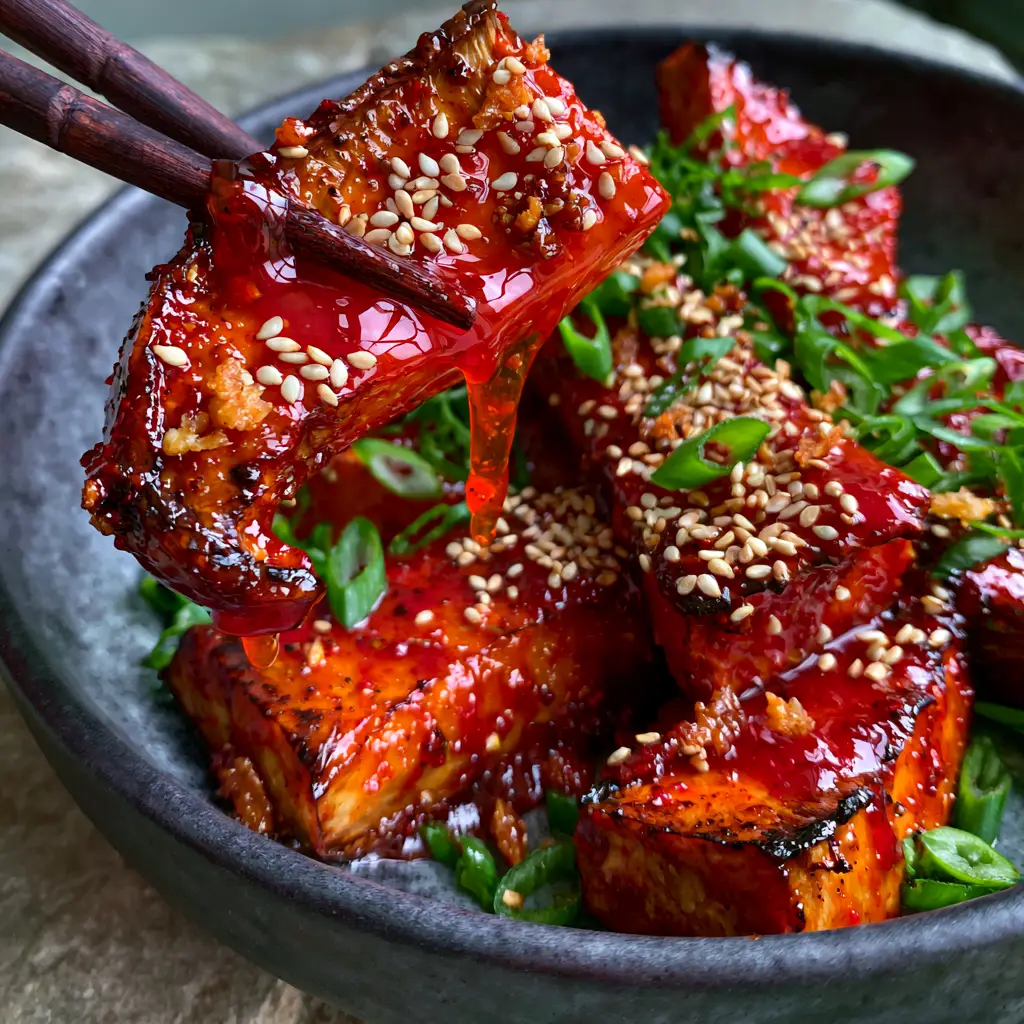
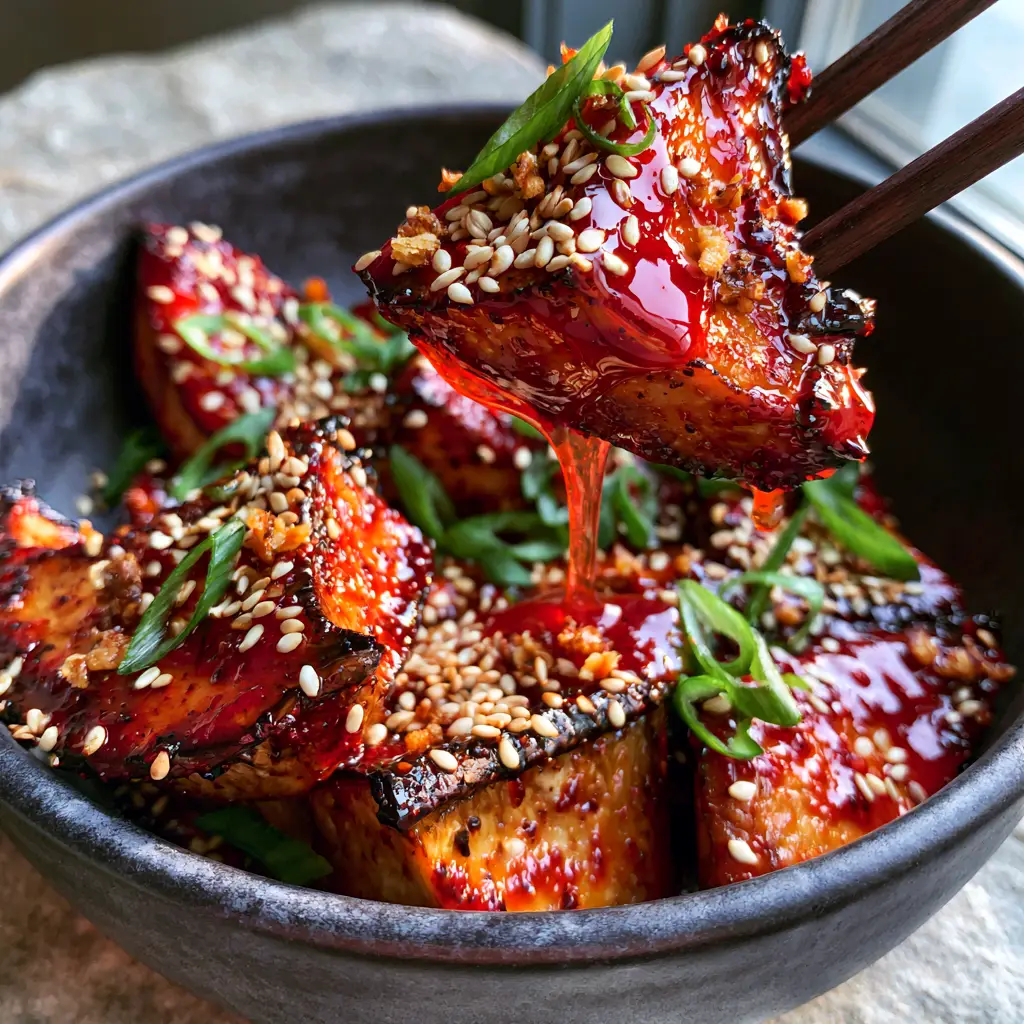
If you are searching for a plant-based dish that delivers a “meaty” satisfaction usually reserved for steak, these Gochujang Mushrooms are your new obsession. This recipe transforms humble king oyster mushrooms into thick, succulent medallions drenched in a vibrant, shimmering crimson sauce that is as beautiful as it is delicious.
Inspired by the bold flavors of Korean street food, this dish relies on the intense umami of fermented chili paste and the science of a perfect sear. Every bite offers a contrast between the charred, caramelized edges of the mushroom and the thick, translucent red glaze that clings to every surface.
Whether you are a seasoned vegan or a dedicated carnivore, the texture of these Gochujang Mushrooms will surprise you. When prepared correctly, they mimic the chew of a scallop or a tender pork belly, making them a standout star in any meal rotation.
Why This King Oyster Mushroom Recipe Works
- Meaty Mouthfeel: By using king oyster mushrooms, we achieve a dense, fibrous texture that holds up to high-heat searing without turning mushy.
- Visual Brilliance: The glossy crimson gochujang glaze creates a high-shine finish that looks professional and tastes incredibly complex.
- The Crunch Factor: We garnish with crispy fried minced garlic and toasted sesame seeds to provide a textural counterpoint to the tender mushrooms.
- Fast Umami: This dish comes together in under 30 minutes but tastes like it has been simmering for hours.
Essential Components for a High-Gloss Crimson Glaze
To achieve the visual and flavor profile described in our blueprint, we need a balance of spice, sweetness, and fat. Each ingredient serves a specific culinary purpose in the final Gochujang Mushrooms presentation.
King Oyster Mushrooms: 1 lb (450g). These are the “steak” of the mushroom world; their thick stalks are perfect for creating the meaty slices shown in the photos.
Gochujang (Korean Chili Paste): 3 tbsp (45g). This fermented paste provides the vibrant crimson color and a deep, funk-filled heat that defines the dish.
Maple Syrup or Honey: 2 tbsp (30ml). This is the secret to that “stretching and dripping” sauce consistency; it creates the sugar bond necessary for a thick, translucent sheen.
Soy Sauce: 1 tbsp (15ml). This adds essential salt and deepens the savory “umami” profile of the mushrooms.
Rice Vinegar: 1 tsp (5ml). A touch of acidity cuts through the heavy fermentation of the gochujang, brightening the entire flavor palette.
Toasted Sesame Oil: 1 tsp (5ml). Added at the end, this provides the nutty aroma that complements the toasted sesame seed garnish.
Fresh Garlic: 4 cloves, minced. We will fry these until they become tiny bits of crispy garlic gold, adding a pungent crunch to the finish.
Neutral Oil: 2 tbsp (30ml). Use avocado or grapeseed oil for searing; we need a high smoke point to achieve those charred caramelized edges without burning the mushrooms.
Garnishes: 1 tbsp (10g) toasted white sesame seeds and 2 stalks of thinly sliced green scallions. These provide the bright green and white contrast against the deep red sauce.
Professional Tools for Achieving the Perfect Sear
You cannot achieve the deep caramelization seen in the imagery with a crowded or flimsy pan. Use a heavy-bottomed cast iron skillet or a high-quality stainless steel pan to ensure even heat distribution and a superior crust.
A sharp chef’s knife is also required to slice the king oysters into uniform 1/2-inch (1.25cm) thick rounds. Finally, a pair of wooden chopsticks or long kitchen tongs is essential for flipping the mushrooms individually to monitor the browning process.
Step-By-Step Guide to Caramelized Gochujang Perfection
Preparing the Meaty Mushroom Slabs
Clean the king oyster mushrooms by wiping them with a damp paper towel; never soak them, as they will absorb water and fail to sear. Slice the stalks into thick, uniform medallions about 1/2-inch (1.25cm) thick. For a more “visual” look, you can lightly score a diamond pattern into the flat sides of the slices to help the glaze cling to the crevices.
Achieving the Golden-Brown Sear
Heat your neutral oil in a large skillet over medium-high heat until it shimmers. Place the mushroom slices in a single layer, ensuring they are not touching. Sear undisturbed for 3-4 minutes. You are looking for a specific visual cue: the edges should turn a deep, golden-brown and begin to look slightly crispy and charred.
Infusing with Crispy Garlic
Once flipped, move the mushrooms to the edges of the pan and add the minced garlic to the center. Sauté the garlic for about 60 seconds until it turns a light golden-brown and becomes fragrant. Be careful not to burn it, as it will continue to crisp up once the sauce is added.
Glazing for the Crimson Gloss
Whisk together the gochujang, maple syrup, soy sauce, and rice vinegar in a small bowl. Pour the mixture directly over the seared mushrooms. Reduce the heat to medium and toss the mushrooms constantly. The sauce will begin to bubble and reduce, transforming from a liquid into a thick, shimmering glaze that stretches as you lift the mushrooms.
The Final Flourish
Turn off the heat and drizzle with the toasted sesame oil. Toss one final time to coat. The mushrooms should now look drenched in a vibrant, intensely sticky red sauce. Transfer to a matte charcoal bowl to make the colors pop.
Expert Tips for High-Gloss Sauce Success
- Don’t Overcrowd the Pan: If you put too many mushrooms in at once, they will steam instead of sear. Work in batches to maintain that charred edge.
- The “Drip” Factor: If your sauce is too thick, add water one teaspoon at a time. If it’s too thin, let it bubble for an extra 30 seconds to concentrate the sugars.
- Sourcing Gochujang: Look for a tub that specifies “medium heat” if you are sensitive to spice; the color will still be a beautiful crimson regardless of the heat level.
- Texture Check: Use your chopsticks to feel the mushroom—it should feel firm and bouncy, not soft or flabby.
Storage, Reheating, and Meal Prep
Gochujang Mushrooms are best served immediately when the glaze is at its glossiest. However, they do store well in an airtight container in the refrigerator for up to 3 days. The sauce will thicken significantly when cold.
To reheat, add the mushrooms to a skillet with a splash of water over medium heat. Stir gently until the sauce thins back out and the mushrooms are warmed through. Avoid microwaving if possible, as it can make the mushrooms rubbery.
What to Serve with These Spicy Korean Bites
These mushrooms are flavor-dense, so they pair beautifully with neutral bases that can soak up the extra glaze. We highly recommend serving these Gochujang mushrooms over sticky rice for a complete meal.
If you are looking for a broader spread, consider adding these to your collection of easy mushroom recipes for a tapas-style dinner. They also fit perfectly into a rotation of high protein dinners when paired with tofu or edamame.
For those who love variety, try serving these alongside classic garlic mushrooms to compare the earthy buttery notes of the West with the spicy fermented notes of the East.
Frequently Asked Questions
They have a moderate, building heat. The fermentation gives the spice a deep, savory flavor rather than a sharp sting, and the sweetness from the maple syrup helps balance the fire.
While King Oysters provide the best ‘meaty’ texture, you can use thick-sliced Portobello caps or even whole Shiitakes. Just ensure you sear them well to avoid a soggy texture.
The secret is the combination of sugar (from the maple syrup) and the thick starch of the gochujang. Reducing it over medium heat until it bubbles vigorously creates that translucent, high-shine finish.
Traditional gochujang often contains barley malt or wheat flour. If you are gluten-sensitive, look for a certified gluten-free gochujang brand made with rice.
Rubbery mushrooms are usually a result of undercooking or steaming. Ensure your pan is very hot and you achieve a deep golden-brown sear before adding the sauce.
The Complete Gochujang Mushroom Recipe
Gochujang Mushrooms: The Ultimate Sticky and Spicy King Oyster Recipe
Ingredients
Equipment
Method
- Clean mushrooms and slice into 1/2-inch thick medallions.
- Sear mushrooms in oil for 3-4 minutes per side until charred and golden-brown.
- Add minced garlic to the pan and sauté for 60 seconds until crispy.
- Pour in the gochujang mixture and toss until the sauce is thick, glossy, and translucent.
- Finish with sesame oil, scallions, and toasted sesame seeds.
Notes
Use a high-heat oil like avocado oil to achieve the best charred edges.
Join the Culinary Conversation
We hope these Gochujang Mushrooms bring a burst of color and “meaty” satisfaction to your kitchen table. The combination of charred edges and sticky glaze is truly a game-changer for plant-based cooking.
If you made this recipe, please leave a comment and a rating below! Your feedback helps our community thrive. Don’t forget to save this to your favorite food boards on Pinterest so you never lose the link!