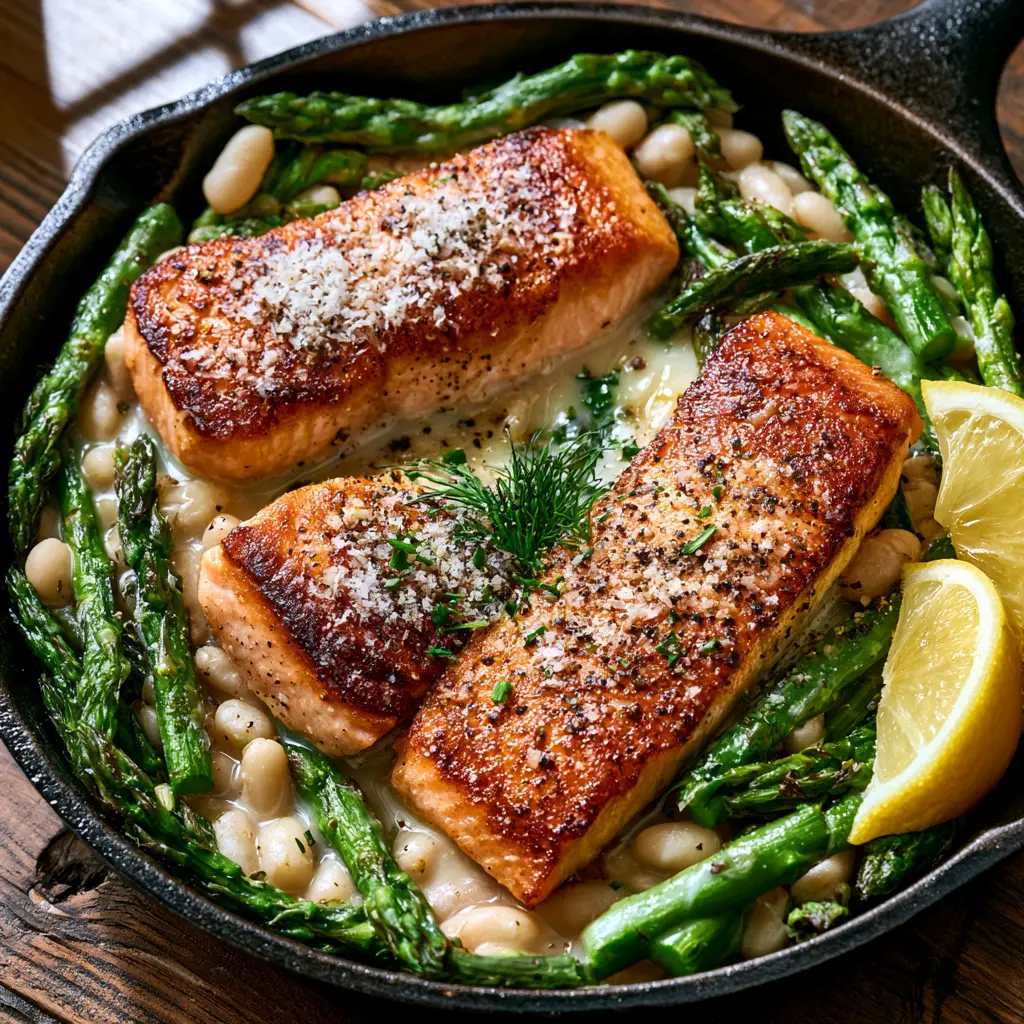
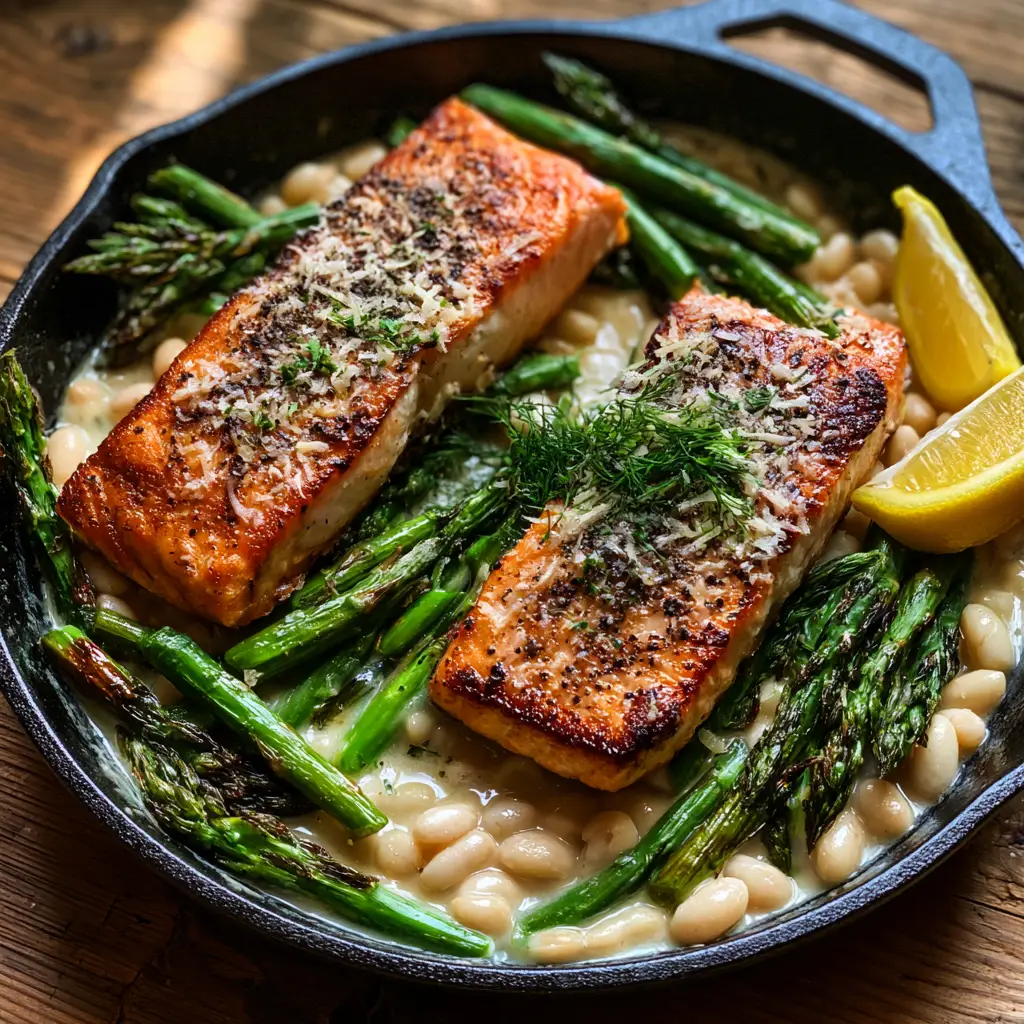
Finding the perfect balance of nutrition and gourmet flavor can often feel like a culinary tightrope walk. However, these high protein high fiber dinners prove that you don’t have to sacrifice a “sizzling skillet” experience for a healthy macro-profile. Imagine three thick salmon fillets, their skin rendered to a potato-chip crisp, nestled alongside snap-charred asparagus and buttery white beans, all draped in a luxurious, glossy garlic cream sauce.
This recipe isn’t just a meal; it’s a masterclass in texture and nutrient density. By combining the omega-3 richness of Atlantic salmon with the complex carbohydrates and prebiotic fiber found in cannellini beans, we create a dish that keeps you satiated for hours. The visual appeal—vibrant greens against golden-brown crusts—makes it a perfect candidate for your weekly meal rotation or an impressive date-night centerpiece.
Why This Is the Ultimate High Protein High Fiber Dinner for Your Health Goals
- Unmatched Protein Density: Each serving delivers over 35g of high-quality protein from the salmon and legumes, essential for muscle repair and metabolic health.
- Fiber-Forward Fuel: The combination of asparagus and cannellini beans provides a significant portion of your daily fiber needs, aiding digestion and blood sugar stability.
- Glossy, Professional Finish: We use specific emulsification techniques to ensure your garlic cream sauce is restaurant-grade—thick, glossy, and never broken.
- One-Pan Efficiency: Utilizing a heavy-bottomed cast iron skillet allows for superior heat retention, ensuring that the salmon skin crisps perfectly while the asparagus chars rapidly.
- Satiety and Flavor: The heavy dusting of micro-planed parmesan and fresh dill provides a punch of umami and brightness that satisfies the palate without the need for excessive sodium.
The Anatomy of Ingredients: Choosing the Best for Your High Protein High Fiber Dinners
Fresh Atlantic Salmon Fillets (6 oz / 170g each): Look for fillets with the skin on and a vibrant, firm flesh. The skin is the key to achieving that “crispy golden-brown” texture which provides a necessary structural contrast to the soft beans.
Cannellini Beans (15 oz / 425g can): These creamy white beans are the fiber powerhouse of this recipe. Once rinsed and drained, they absorb the garlic cream sauce, acting as a velvety base for the heavier proteins.
Fresh Asparagus (1 lb / 450g): Choose medium-thickness spears for the best “snap-charred” result. Too thin and they turn to mush; too thick and they remain fibrous in the center.
Heavy Cream (1/2 cup / 120ml): This serves as the lipid base for our glossy sauce. It carries the flavor of the garlic and parmesan across the entire skillet, binding the diverse ingredients together.
Fresh Garlic (4 cloves): We mince these finely to ensure they melt into the cream. The garlic provides the aromatic backbone that defines the entire flavor profile of the dish.
Micro-planed Parmesan Cheese (1/4 cup / 25g): Using a micro-plane creates a “heavy dusting” of airy, cloud-like cheese. This melts instantly into the sauce and provides a concentrated umami finish.
Fresh Dill (2 tbsp / 5g): Dill offers a grassy, anise-like brightness that cuts through the richness of the salmon and cream. It should be chopped finely and added at the very end to preserve its volatile oils.
Lemon Wedges: Essential for a “bright yellow” pop of color and a necessary hit of acid. Squeezing fresh lemon over the salmon just before eating cuts through the fats and awakens the palate.
Invisible Essentials: You will need 1 tbsp (15ml) of high-smoke point oil (like avocado oil) for the initial sear, 1/2 tsp (3g) of kosher salt for seasoning, and 1/2 tsp (2g) of freshly cracked black pepper for that signature visual and heat.
Essential Tools for the Perfect Pan-Sear
To achieve the results seen in our visual blueprint, a 12-inch (30cm) Cast Iron Skillet is non-negotiable. Cast iron provides the thermal mass required to sear the salmon skin without dropping in temperature when the cold fish hits the pan.
You will also need a Fish Spatula—a thin, flexible metal turner that can slide under the delicate salmon skin without tearing it. Finally, a Micro-plane Grater is required to achieve that specific, snowy texture of parmesan cheese that is essential for the “heavy dusting” effect.
Mastering the Sear: Step-by-Step Instructions for High Protein High Fiber Dinners
Preparing the Salmon for Maximum Crispiness
Remove your salmon fillets from the refrigerator 15 minutes before cooking. Use a paper towel to pat the skin extremely dry; any residual moisture will create steam and prevent that “crispy golden-brown” skin from forming.
Season the flesh side generously with kosher salt and cracked black pepper. Do not season the skin side yet; we want it to remain as dry as possible until it hits the hot oil.
The Sizzle: Achieving the Perfect Crust
Place your cast iron skillet over medium-high heat. Add 1 tbsp (15ml) of avocado oil and wait until it begins to shimmer and show faint wisps of smoke.
Carefully lay the salmon fillets skin-side down into the pan, pressing them gently with your spatula for 10 seconds to ensure full contact. You should hear a loud, aggressive sizzle immediately. Let them cook undisturbed for 5-6 minutes until the skin is naturally released from the pan and looks deep golden-brown.
Charring the Asparagus and Integrating the Beans
Once the salmon skin is crispy, flip the fillets. Immediately toss the asparagus spears into the open spaces of the skillet. The asparagus should make a snapping sound as it hits the hot oil and residual salmon fat.
Add the drained cannellini beans to the pan, surrounding the salmon. Allow the asparagus to “snap-char” for about 3-4 minutes, tossing them occasionally, until they are vibrant green with dark brown blister marks.
Emulsifying the Glossy Garlic Cream Sauce
Reduce the heat to medium-low. Push the ingredients slightly to the edges and add the minced garlic to the center of the skillet, sautéing for 30 seconds until fragrant but not browned.
Pour in the 1/2 cup (120ml) of heavy cream. Use your spatula to gently stir the cream around the beans and asparagus, letting it bubble and reduce slightly until it becomes a “thick, glossy” consistency that pools between the ingredients.
The Finishing Touches: Garnish and Presentation
Remove the skillet from the heat. Use your micro-plane to create a “heavy dusting” of parmesan cheese over the entire dish. The cheese will begin to melt into the sauce, adding to its glossy sheen.
Sprinkle the freshly chopped dill and extra cracked black pepper over the fillets. Finally, tuck two bright yellow lemon wedges into the side of the skillet for that authentic, home-cooked aesthetic seen in our rustic wooden table setting.
Expert Tips for Culinary Excellence
- The “Cold Pan” Myth: Never start with a cold pan. For high protein high fiber dinners involving salmon, the skillet must be hot enough to instantly seize the proteins in the skin, creating a barrier that prevents sticking.
- Don’t Over-crowd: If your skillet is smaller than 12 inches, cook the salmon in two batches. Overcrowding lowers the pan temperature and leads to steamed, grey fish rather than a golden sear.
- Bean Texture: If you prefer a creamier base, mash a small handful of the cannellini beans into the cream sauce as it reduces. This releases natural starches that thicken the sauce without needing flour or cornstarch.
- Salmon Temperature: Aim for an internal temperature of 125°F (52°C) for medium-rare. The salmon will continue to cook as it rests in the warm cream sauce.
Storage, Reheating, and Meal Prep Guidelines
This dish is best served immediately to maintain the “crispy golden-brown skin” of the salmon. However, leftovers can be stored in an airtight container in the refrigerator for up to 2 days.
When reheating, avoid the microwave as it will turn the salmon rubbery. Instead, place the leftovers in a small pan with a splash of water or cream over low heat. Cover the pan to allow the steam to warm the fish gently while the sauce thins back out to its glossy state.
What to Serve With This High Protein High Fiber Meal
While this skillet is a complete meal on its own, you can enhance the experience with complementary textures. For those looking to stay within the high-protein theme, consider serving this alongside a collection of other protein-rich options.
If you are a fan of earthy flavors, these garlic-infused mushrooms make an excellent side dish that mirrors the aromatics in our cream sauce. For a lighter, seasonal touch, look into spring-inspired high protein plates that utilize fresh produce. If you have extra parmesan and mushrooms on hand, this savory clafoutis is a unique way to round out a multi-course dinner.
Common Culinary Questions Regarding Salmon and Fiber
Cannellini beans are excellent as they provide about 6-9g of fiber per half-cup. They also have a creamy texture that pairs perfectly with the garlic cream sauce in this high protein dinner.
Yes, but it must be fully thawed and patted extremely dry. Frozen salmon often contains more moisture, which can hinder the crisping process if not handled carefully.
The key is to sear the skin until it’s very firm and then flip. When adding the cream sauce, pour it around the fish rather than over it, keeping the top of the crispy skin dry and exposed.
Use heavy cream and keep the heat at medium-low once the liquid is added. Avoid boiling it vigorously; a gentle simmer allows the fats to emulsify with the parmesan for a glossy finish.
A micro-plane creates tiny, light shards of cheese that melt instantly upon contact with the sauce. This creates a much smoother, glossier texture than larger shreds from a box grater.
High Protein High Fiber Garlic Cream Salmon with Asparagus
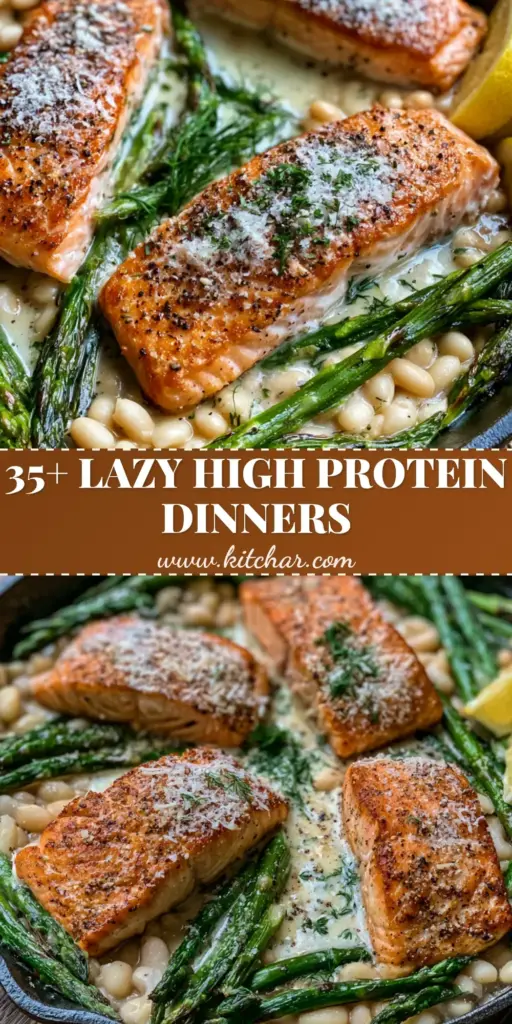
High Protein High Fiber Dinners: Garlic Cream Salmon with Charred Asparagus and Cannellini Beans
Ingredients
Equipment
Method
- Pat the salmon fillets extremely dry with paper towels. Season the flesh side with salt and pepper.
- Heat oil in a cast iron skillet over medium-high heat. Place salmon skin-side down and press for 10 seconds. Cook for 5-6 minutes until skin is crispy golden-brown.
- Flip the salmon. Add asparagus and beans to the skillet. Cook for 3-4 minutes until asparagus is snap-charred and beans are warmed.
- Lower heat, add garlic and cream. Stir gently until the sauce is thick and glossy, pooling around the ingredients.
Notes
Use a heavy cast iron pan to maintain the heat needed for charring.
Join the Kit Char Community
This recipe for high protein high fiber dinners is designed to prove that healthy eating can be both visually stunning and incredibly delicious. The contrast of the crispy salmon skin against the creamy beans and charred asparagus creates a sensory experience that is hard to beat. We invite you to try this at home and see how the natural window light hits that glossy sauce!
Did you make this skillet? We would love to hear your thoughts! Leave a comment below, sign up for our newsletter for more elite recipes, and be sure to share your creations with us on Pinterest to help other home cooks find their next favorite meal.